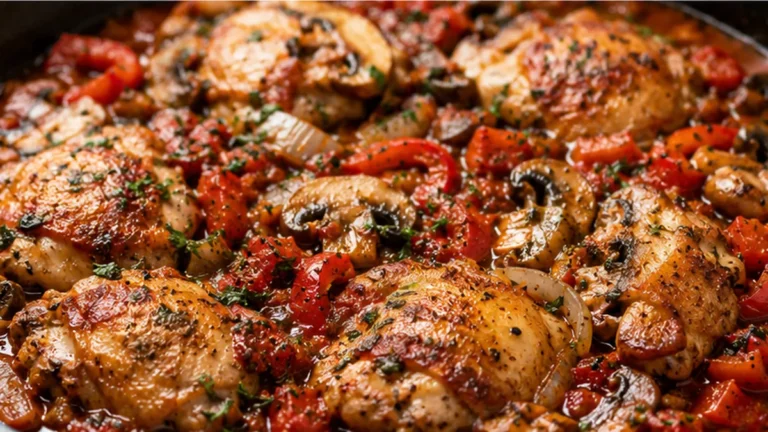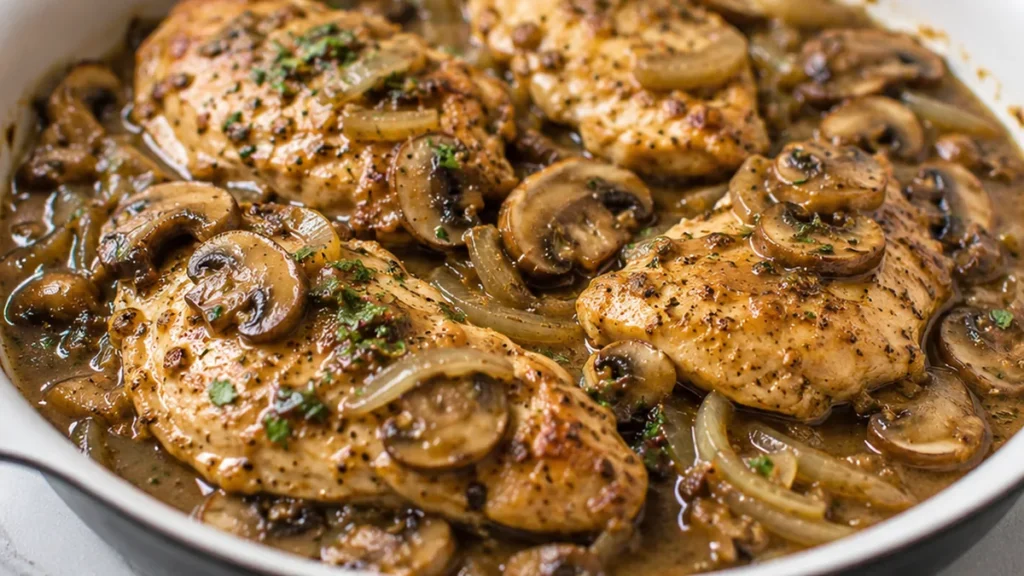
Chicken Marsala is a beloved Italian-American classic, celebrated for its tender chicken and deeply savory, slightly sweet Marsala wine sauce. The key to this dish’s irresistible flavor lies in properly searing the chicken and building a rich sauce by deglazing the pan. This recipe simplifies the process, making restaurant-quality chicken Marsala achievable even on a weeknight. This version focuses on achieving that perfect balance of flavors and textures with minimal fuss. We’ll guide you through pounding the chicken thin for maximum tenderness and creating a luscious sauce that coats every bite beautifully.
Key takeaways
- Mastering the Maillard reaction is key for flavor development.
- Proper heat control prevents dry chicken and ensures a good sear.
- Deglazing the pan captures essential flavors for the sauce.
- Allow the sauce to reduce for a rich, velvety texture.
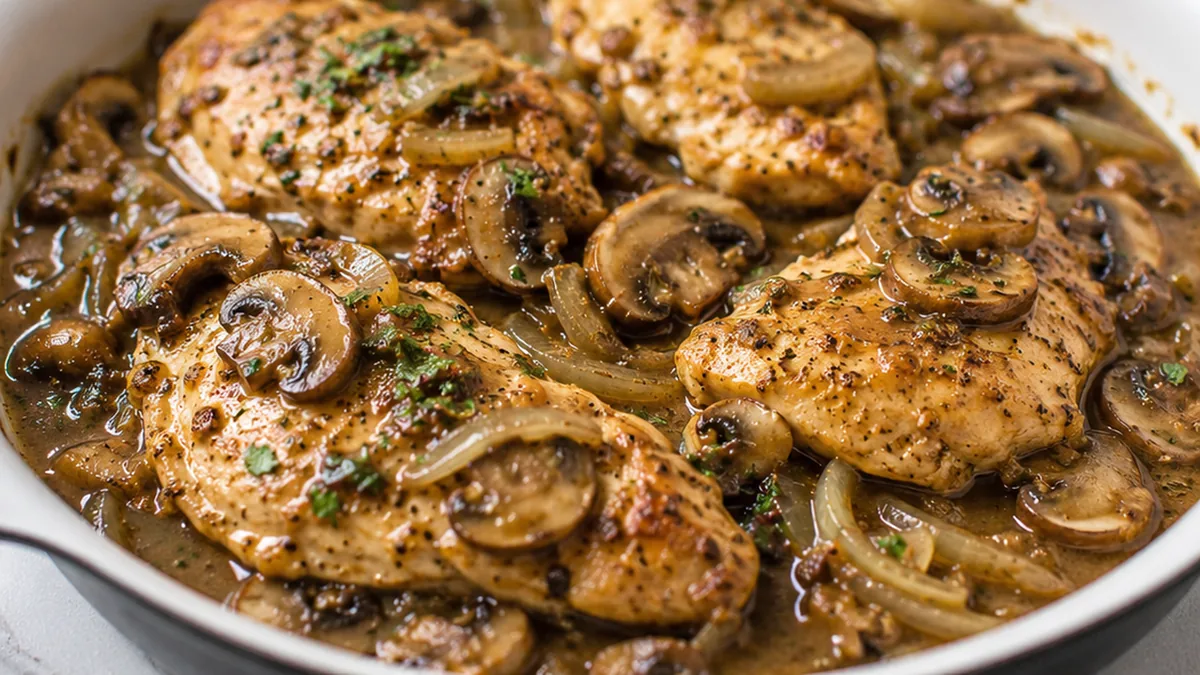
Chicken Marsala: An Italian Dream!
Ingredients
Method
- Cut chicken breasts in half lengthwise. Place one chicken breast at a time in a heavy-duty freezer bag (unsealed) and pound to 1/4″ thickness using a mallet or rolling pin.
- Combine ½ tsp salt, black pepper, and Italian seasoning with the all-purpose flour in a shallow bowl. Lightly coat the chicken breasts, shaking off excess.
- Heat 1 Tbsp vegetable oil in a large skillet over medium-high heat. Sear chicken breasts for 3-4 minutes per side until golden brown. Transfer chicken to a plate and cover with foil.
- Turn heat to medium. Add 1 Tbsp vegetable oil to the skillet. Add sliced mushrooms and ½ tsp salt. Sauté for about 3 minutes until mushrooms are browned.
- Add sliced white onion to the skillet and sauté for another 2-3 minutes until softened and slightly browned.
- Pour in the Marsala wine and ½ cup chicken broth into the skillet, scraping up any browned bits. Simmer until the liquid reduces by about 1/3, about 4 minutes.
Video
Notes
– Don’t overcrowd the pan when searing chicken; cook in batches if needed.
– Reserve a splash of pasta water if you want to thin the sauce slightly.
– Ensure the pan is hot when adding chicken for a good sear. Nutrition information is an estimate, calculated automatically. Values vary with brands, substitutions and portion sizes.
The technique that makes it
Chicken Marsala relies heavily on the Maillard reaction, which is the browning of proteins when they are exposed to high heat. This reaction not only develops rich flavors but also creates a desirable texture. Properly seasoning the chicken breasts with salt and black pepper before dusting them with flour enhances the flavor and aids in the browning process. When cooking the chicken, ensure the oil is hot enough to sear the meat without steaming it. This requires a balance of heat; too low will result in soggy chicken, while too high can burn the flour. After searing, deglazing the pan with Marsala wine and chicken broth captures the fond, the caramelized bits left behind, which adds depth to the sauce. Simmering the sauce allows it to reduce, concentrating the flavors and creating a velvety texture that clings to the chicken.
Troubleshooting
- Problem: Chicken is dry.
Fix: Ensure you do not overcook the chicken. Use a meat thermometer to check for an internal temperature of 165°F (75°C) and allow it to rest for a few minutes before slicing. - Problem: Sauce is too thin.
Fix: Allow the sauce to simmer longer to reduce it further, or add a slurry of cornstarch and water to thicken it. - Problem: Lack of flavor in the sauce.
Fix: Make sure to deglaze the pan thoroughly and scrape up all the browned bits, and consider adding more seasoning or a splash of balsamic vinegar for acidity. - Problem: Mushrooms released too much water.
Fix: Sauté the mushrooms in batches instead of overcrowding the pan, which allows them to brown properly and reduces moisture.
Substitutions
- Chicken breasts: Use chicken thighs for a juicier result; they have more fat and flavor.
- Marsala cooking wine: Substitute with dry sherry or Madeira for a similar flavor profile.
- Baby bella mushrooms: Cremini or button mushrooms can be used interchangeably, although baby bellas offer a deeper flavor.
- Chicken broth: Vegetable broth can be used for a lighter flavor, but may slightly alter the overall taste.
Pro tips
- For best flavor, use a good quality Marsala cooking wine.
- Don’t overcrowd the pan when searing chicken; cook in batches if needed.
- Reserve a splash of pasta water if you want to thin the sauce slightly.
- Ensure the pan is hot when adding chicken for a good sear.
Enjoy this classic Chicken Marsala tonight and savor a taste of Italy right in your own kitchen!
Frequently asked questions
Can I make Chicken Marsala ahead of time?
Yes, you can prepare Chicken Marsala ahead of time. Cook the chicken and sauce, then store them separately in the refrigerator. When ready to serve, reheat gently on the stove, adding a splash of broth if the sauce thickens too much.
What can I serve with Chicken Marsala?
Chicken Marsala pairs well with various sides such as mashed potatoes, pasta, or a simple green salad. The rich sauce complements starchy sides that can absorb its flavors.
Is Chicken Marsala gluten-free?
No, traditional Chicken Marsala is not gluten-free due to the all-purpose flour used for dredging. However, you can substitute with gluten-free flour or cornstarch for a gluten-free version.
How can I enhance the flavor of the sauce?
To enhance the flavor of the sauce, consider adding minced garlic, fresh herbs like thyme or parsley, or a touch of balsamic vinegar for acidity. These additions can elevate the overall taste profile of the dish.
More from High-Protein Dinners →