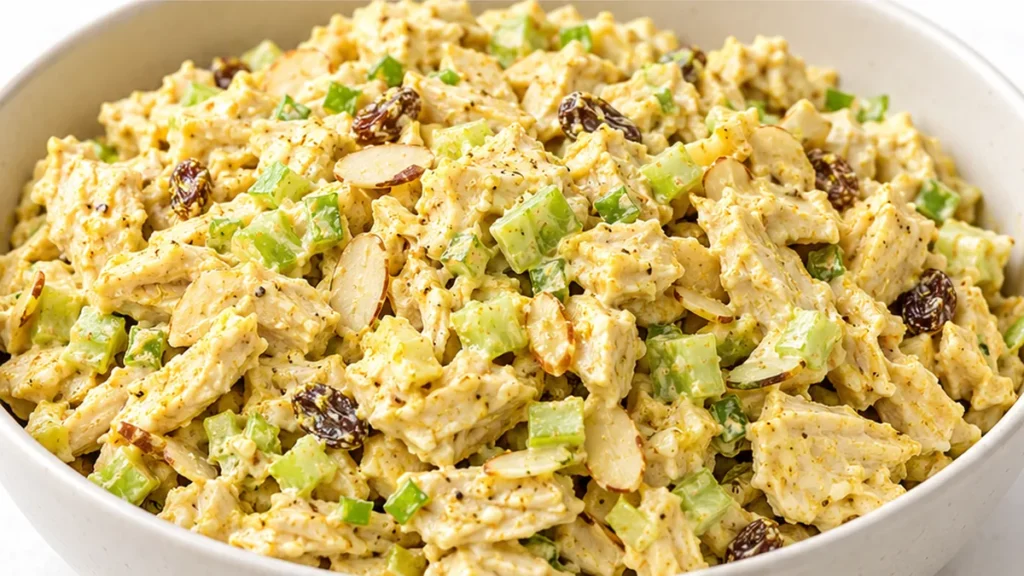
Curry chicken salad is a dish that elevates a simple lunch to a flavor-packed experience. This recipe takes humble ingredients and transforms them into a creamy, bright salad bursting with aromatic spices. Forget dry, bland chicken salads of the past; this version is surprisingly simple to make, ideal for meal prep or a quick, satisfying meal anytime.
Key takeaways
- A balanced emulsion of mayonnaise and yogurt is key for creaminess.
- Adjust sweetness with honey to balance the spice from curry powder.
- Ingredient substitutions can change flavor and texture; choose wisely.
- Common issues like dryness or overpowering flavors can be easily fixed.
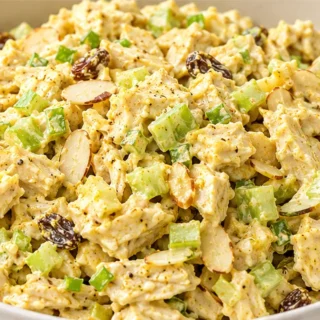
Creamy Curry Chicken Salad
Ingredients
- ¼ cup mayonnaise
- ¼ cup plain yogurt
- 1 tsp lemon juice
- ½ tsp honey
- 1 tsp curry powder
- ¼ tsp salt
- 2.5 cups chopped cooked chicken
- 2 stalks celery
- ¼ cup raisins
- ¼ cup toasted almonds
Instructions
- Make the dressing by stirring together the mayonnaise, yogurt, lemon juice, honey, curry powder, salt, and pepper in a small bowl.
- Season both sides of the chicken breasts with a light sprinkle of salt and pepper.
- Cook the chicken breast in either a countertop grill or in a skillet until cooked through, about 6-8 minutes per side.
- Allow the cooked chicken breast to cool for 10 minutes while you prepare the rest of the salad.
- Finely dice the celery. Place the celery in a large bowl.
- Chop the cooled chicken into small cubes and place them in the bowl with the celery. Pour the dressing over top and stir to combine.
Video
Notes
Understanding the Creamy Emulsion in Curry Chicken Salad
The base of the creamy curry chicken salad relies on a well-balanced emulsion of mayonnaise and yogurt. The mayonnaise provides fat, which is essential for a stable emulsion, while yogurt adds moisture and acidity. The ideal ratio for this emulsion is 1:1, as seen in this recipe, ensuring a creamy consistency without overwhelming the dish. The addition of lemon juice not only enhances flavor but also helps in stabilizing the emulsion, preventing separation.
When making this salad, it’s crucial to mix the mayonnaise and yogurt thoroughly before adding the other ingredients. This ensures that the flavors are evenly distributed and that the emulsion remains stable throughout the preparation. If the emulsion breaks, it can lead to a watery salad, detracting from the intended creamy texture.
Balancing Flavors: Sweetness and Spice
The complexity of flavors in curry chicken salad comes from the careful balance between sweetness and spice. The honey in this recipe serves to counteract the heat of the curry powder, creating a harmonious blend. A typical curry powder can contain various spices, including turmeric, cumin, and coriander, each contributing to the overall flavor profile. Adjusting the amount of honey can alter the sweetness, which can be tailored to personal preference.
For those who prefer a spicier salad, consider increasing the amount of curry powder or adding a pinch of cayenne pepper. Conversely, if the salad becomes too spicy, adding more yogurt can help to mellow the heat while maintaining the creamy texture. This balance is essential for achieving a well-rounded dish.
Ingredient Substitutions and Their Effects
Substituting ingredients in curry chicken salad can lead to varied textures and flavors. For instance, using Greek yogurt instead of plain yogurt will yield a thicker texture, enhancing the creaminess. However, it may also increase the tanginess of the dish. On the other hand, if you’re looking for a lighter option, using low-fat mayonnaise can reduce the calorie count but might compromise on the richness.
Another common substitution is replacing raisins with dried cranberries or apricots. This change will introduce a different sweetness and tartness, altering the overall flavor profile. Toasted sunflower seeds can be used instead of almonds for a nut-free version, providing a similar crunch without the allergens.
Common Issues and How to Fix Them
Even a simple dish like curry chicken salad can encounter issues during preparation. Here are some common problems and their solutions:
- Problem: Salad is too dry. Solution: Add more yogurt or mayonnaise to achieve the desired creaminess.
- Problem: Overpowering curry flavor. Solution: Balance with additional honey or yogurt to mellow the spice.
- Problem: Ingredients not mixing well. Solution: Ensure the emulsion is well-prepared before adding other components.
- Problem: Salad becomes watery. Solution: Avoid over-mixing and add ingredients like chopped nuts or celery last to maintain texture.
Unique Characteristics of Curry Chicken Salad
What sets curry chicken salad apart from other chicken salads is the distinct flavor profile created by the curry powder. This spice blend not only offers warmth but also a depth of flavor that is rarely found in traditional chicken salads. The use of both mayonnaise and yogurt is also a unique trait, providing a creamy texture while keeping the dish lighter and more refreshing.
Moreover, the combination of sweet raisins and crunchy almonds adds a delightful contrast, enhancing the overall eating experience. This dish can be served on its own, in a sandwich, or atop a bed of greens, making it a versatile option for various meals.
Understanding the Make-Ahead Benefits of Curry Chicken Salad
One of the greatest advantages of curry chicken salad is its make-ahead capabilities. This dish can be prepared in advance and stored in the refrigerator, allowing the flavors to meld together. Ideally, you should prepare the salad at least a few hours before serving, but it can be made up to 2 days ahead. When stored properly in an airtight container, the salad maintains its freshness and flavor. However, be cautious of the ingredients; while the chicken and dressing hold up well, the texture of the celery may soften over time. To preserve the crunchiness, consider adding the celery just before serving. This approach not only saves time but also enhances the overall taste experience.
Scaling the Recipe for Large Gatherings
When planning for a larger gathering, scaling the curry chicken salad recipe can be straightforward, but there are some considerations to keep in mind. If you double or triple the recipe, maintain the same ratios of ingredients to ensure consistent flavor. For instance, if you increase the mayonnaise and yogurt, keep the curry powder and salt proportional to avoid overpowering the dish. Additionally, consider the mixing bowl size; a larger bowl will help combine the ingredients more thoroughly. When scaling, also account for serving sizes—approximately 1 cup per person is a good estimate. Finally, remember that the salad can be made a day in advance, making it a convenient choice for entertaining.
Choosing Equipment for Optimal Mixing and Serving
The equipment you use for preparing curry chicken salad can significantly impact the final texture and ease of serving. A large mixing bowl is essential for combining the ingredients evenly, particularly when dealing with larger batches. A wooden spoon or spatula is recommended for mixing, as it helps incorporate the mayonnaise and yogurt without over-mixing, which can lead to a less appealing texture. If you prefer a smoother consistency, consider using a food processor to blend the dressing ingredients before mixing them with the chicken and vegetables. For serving, a large salad bowl allows for easy scooping, while individual portion cups can be used for gatherings to facilitate serving and reduce mess.
Seasonal Variations and Ingredient Quality Impact on Flavor
Seasonality and ingredient quality play a crucial role in the overall flavor profile of curry chicken salad. Fresh, high-quality chicken will yield a more tender and flavorful salad, while the freshness of celery and raisins can enhance the dish’s crunch and sweetness. During different seasons, you might also consider incorporating seasonal fruits or vegetables—such as diced apples in the fall or fresh herbs like cilantro in the summer—for a refreshing twist. Additionally, the type of curry powder used can vary in flavor intensity based on the brand and freshness, so experimenting with different blends can yield unique results. Understanding these seasonal factors allows you to adapt the recipe to highlight the best ingredients available, ensuring a delicious outcome year-round.
Understanding the Make-Ahead Benefits for Curry Chicken Salad
One of the notable advantages of curry chicken salad is its ability to be prepared in advance. This dish not only saves time but also allows the flavors to meld together, enhancing the overall taste. When made ahead, the creamy dressing becomes absorbed by the chicken and vegetables, creating a more cohesive flavor profile. For optimal results, prepare the salad up to 24 hours in advance and store it in an airtight container in the refrigerator. This allows the spices from the curry powder and the sweetness from the honey to infuse throughout the dish. However, it’s essential to keep in mind that the texture of the celery may soften over time, so if you prefer a crunchier texture, consider adding the celery just before serving.
Scaling the Recipe for Larger Gatherings
Scaling your curry chicken salad recipe for larger gatherings requires careful consideration of ingredient ratios and mixing techniques. To maintain the balance of flavors, it’s crucial to keep the proportions of the creamy dressing consistent with the amount of chicken and vegetables used. A general rule of thumb is to increase the mayonnaise and yogurt in equal parts, alongside the curry powder and other seasonings, to ensure that the flavor remains robust. For instance, if you double the chicken, also double the dressing components. When preparing large batches, using a large mixing bowl or a food-safe container can help ensure even distribution of ingredients. Additionally, taste testing throughout the mixing process is essential to adjust seasoning as needed, especially with increased quantities.
Pro tips
- For extra flavor, toast the almonds lightly before adding them.
- If you don’t have plain yogurt, sour cream can be a substitute, though it will alter the tanginess.
- Adjust the curry powder to your taste – start with less and add more if you prefer a stronger spice profile.
- Ensure chicken is fully cooled before chopping to prevent it from becoming mushy.
Enjoy this flavorful and satisfying curry chicken salad as a delicious upgrade to your everyday meals.
Frequently asked questions
Can I use leftover rotisserie chicken for this recipe?
Yes, leftover rotisserie chicken is an excellent choice for this salad. It adds flavor and saves time, making the preparation quicker and easier.
How long can I store the curry chicken salad in the fridge?
The curry chicken salad can be stored in the refrigerator for up to three days. Ensure it is kept in an airtight container to maintain freshness.
Can I make this salad in advance for a party?
Absolutely! This salad can be made a day ahead of time. Just keep it refrigerated and stir well before serving to refresh the texture.
What can I serve with curry chicken salad?
This salad pairs well with various sides, such as pita bread, crackers, or a fresh green salad. It also makes a great filling for sandwiches or wraps.
More from High-Protein Meal Prep →