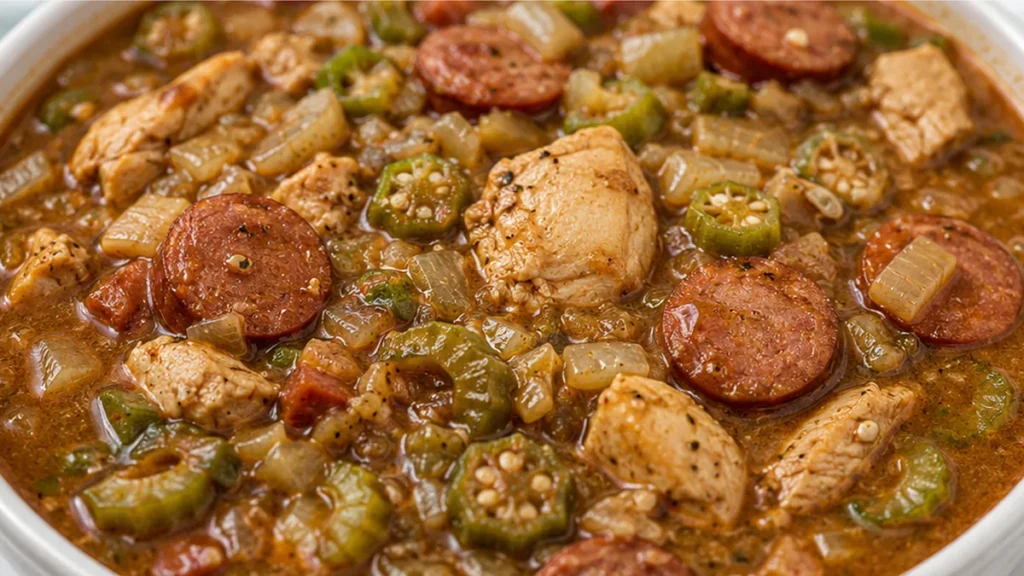
Louisiana gumbo is a staple of Southern cuisine. This recipe focuses on mastering the deep, dark roux, essential for an authentic gumbo.
Key takeaways
- Achieving a deep brown roux is crucial for flavor.
- Use a combination of andouille sausage and chicken thighs for a rich taste.
- Incorporate the holy trinity of vegetables for authentic depth.
- Okra acts as a natural thickener; fresh is ideal but frozen works too.
CRAVE-WORTHY GUMBO
Ingredients
- ¾ cup vegetable oil
- 13.5 oz andouille sausage (cut in ½ inch rounds)
- 1 lb chicken thighs (boneless, skinless, cubed 1-inch)
- 2 tbsp Creole or Cajun seasoning (divided)
- 1 cup all-purpose flour
- 1 onion (diced)
- 1 green pepper (diced)
- 3 ribs celery (sliced)
- 2 garlic cloves (minced)
- 12 oz frozen okra
Instructions
- Brown sausage: Heat 1 Tbsp of vegetable oil in a large skillet over medium heat. Add the sausage and brown both sides for 5 minutes each. Remove and set aside.
- Brown chicken: Toss chicken in 1 Tbsp of Creole seasoning. Add to skillet and sear for 5 minutes, then flip and cook an additional 5 minutes. Remove and set aside.
- Make roux: Lower heat to medium-low. Add remaining oil and flour. Cook, stirring constantly, until dark brown (about 30 minutes).
- Add aromatics: Once roux is dark brown, turn heat back to medium. Add diced onions, green pepper, and celery. Stir until softened, about 5 minutes.
- Add garlic and okra: Stir in minced garlic and frozen okra. Cook for 2 minutes until garlic is fragrant.
- Simmer: Return sausage and chicken to skillet. Stir together. Add 6 cups of water and bring to a simmer. Cover and let simmer for at least 30 minutes.
Video
Notes
Mastering the Roux for Louisiana Gumbo
The roux is the backbone of any great gumbo, providing both flavor and thickness. To achieve the perfect roux, combine ¾ cup of vegetable oil with 1 cup of all-purpose flour. Cook over medium heat, stirring constantly for 20-30 minutes until it reaches a deep brown color, similar to chocolate. This slow cooking allows the flour to toast, developing complex flavors that are essential to authentic Louisiana gumbo.
Balancing Protein and Flavor
In this gumbo, the combination of andouille sausage and chicken thighs contributes to a rich and hearty flavor profile. The sausage adds a spicy note while the chicken provides a tender texture. Season both proteins with 1 tablespoon of Creole or Cajun seasoning before cooking to enhance their flavors. The key is to brown the sausage first to render its fat, then add the chicken for a deeper umami taste.
Vegetable Medley and Aromatics
The holy trinity of Louisiana cooking consists of onion, green pepper, and celery. Dicing one onion, one green pepper, and three ribs of celery creates a flavorful base for your gumbo. Add these vegetables after the roux has reached the desired color and sauté until softened, about 5-7 minutes. Incorporating minced garlic at this stage will further elevate the dish’s aroma and flavor.
Okra: The Essential Thickener
Frozen okra, added towards the end of cooking, serves as a natural thickener for gumbo. About 12 ounces will add both texture and a unique flavor. If fresh okra is available, consider using it instead, but remember that it should be sliced and sautéed beforehand to reduce its sliminess. This step is crucial for achieving the right consistency in your gumbo.
Common Pitfalls and How to Avoid Them
- Roux is too light: If your roux is pale, it won’t provide the depth of flavor needed. Cook it longer until it reaches a dark brown color.
- Too watery: If your gumbo is too thin, allow it to simmer uncovered for an additional 10-15 minutes to reduce the liquid.
- Overcooked vegetables: Adding vegetables too early can lead to mushiness. Add them after the roux has cooked to maintain texture.
- Underseasoned: Taste and adjust seasoning throughout the cooking process. Don’t forget to add the remaining tablespoon of Creole or Cajun seasoning before serving.
How to Optimize Flavor Development in Your Louisiana Gumbo
To achieve a rich and complex flavor profile in your gumbo, focus on the layering of ingredients. Start with a well-developed roux, cooking it until it reaches a deep brown color (approximately 30-40 minutes over medium heat). This Maillard reaction is crucial for depth. Next, add the aromatics—onion, green pepper, celery, and garlic—allowing them to sweat for about 5-7 minutes. Incorporating the sausage early in the cooking process allows its fat and spices to infuse the dish. Adjust the seasoning gradually, tasting as you go, to ensure balance.
Scaling Your Louisiana Gumbo: Tips for Larger Batches
When scaling your gumbo recipe, it’s essential to maintain the ratio of ingredients for consistent flavor and texture. For every additional pound of chicken or sausage, increase your oil and flour by 2 tablespoons each to maintain the roux’s integrity. Keep the total liquid volume consistent, adding more stock as needed. Be mindful of pot size; a larger pot allows for better heat distribution. Cooking time may also increase, so check for doneness and adjust seasoning towards the end of the cooking process.
Understanding Equipment Differences for Perfect Gumbo
The type of cookware used can significantly impact the outcome of your gumbo. A heavy-bottomed cast-iron pot or Dutch oven is ideal for even heat distribution, preventing scorching during the roux-making process. Avoid non-stick pans, as they can hinder the development of fond, which adds flavor. If using an electric stovetop, monitor the heat closely, as it may not provide the same intensity as gas. Also, consider using a slow cooker for a hands-off approach, but be aware that the roux will need to be prepared separately.
Seasonal Adjustments: How Ingredients Affect Your Gumbo
Seasonal ingredients can dramatically influence the taste and texture of your gumbo. In summer, fresh okra and tomatoes can enhance the dish’s brightness, while in winter, heartier vegetables like root vegetables can add depth. Adjust your spices based on ingredient quality; fresh herbs should be added at the end, while dried spices can be added early for better infusion. Always taste and adjust seasonings according to the freshness and intensity of your ingredients, ensuring that the gumbo reflects the best of the season.
Understanding the Impact of Ingredient Quality on Your Louisiana Gumbo
The quality of your ingredients can dramatically influence the final taste and texture of your gumbo. For instance, fresh, high-quality andouille sausage will provide a more robust flavor compared to lower-quality options. Similarly, using fresh vegetables rather than frozen can enhance the overall freshness of the dish. When selecting okra, look for firm, bright green pods, as these will contribute a better texture and flavor. Seasonings should also be fresh; old spices can lose potency, leading to a bland gumbo. In terms of chicken, opting for organic or free-range varieties can yield a richer taste. Overall, investing in quality ingredients can elevate your gumbo from good to exceptional.
Batch Scaling: Adjusting Your Louisiana Gumbo for Larger Gatherings
Scaling your gumbo recipe for larger gatherings requires careful consideration of ingredient proportions and cooking times. When doubling or tripling the recipe, maintain the same ratio of ingredients; however, be mindful that cooking time may need to be extended. For example, a larger batch may take an additional 15-30 minutes to reach the desired thickness and flavor. Additionally, ensure you have a pot large enough to accommodate the increased volume without overflowing. A heavy-bottomed stockpot is ideal for even heat distribution. Finally, taste frequently as you scale up; flavors can intensify with larger quantities, so adjustments may be necessary.
Optimal Serving Techniques for Louisiana Gumbo
Serving your gumbo correctly can enhance the dining experience. Traditionally, gumbo is served over a bed of rice, which absorbs the rich broth and balances the flavors. For a classic presentation, use a scoop of jasmine or long-grain rice in the center of the bowl and ladle the gumbo around it. Garnish with chopped green onions or parsley for a pop of color and freshness. Pairing gumbo with crusty French bread or cornbread can add a satisfying texture contrast. Additionally, consider serving a side of hot sauce for those who enjoy an extra kick. The right serving techniques can elevate the dish, making it more appealing and enjoyable.
How to Prepare Louisiana Gumbo Ahead of Time
Making Louisiana gumbo in advance can enhance its flavors, as the spices and ingredients meld together over time. To prepare ahead, follow these steps: cook the sausage and chicken, then combine them with the vegetables and okra. Allow the mixture to cool before storing it in an airtight container in the refrigerator for up to 3 days. When ready to serve, reheat gently on the stove, adding a little water or broth if necessary to adjust the consistency. For longer storage, gumbo can be frozen for up to 3 months. Thaw it overnight in the refrigerator before reheating.
Understanding Equipment for Perfect Louisiana Gumbo
The choice of cooking equipment significantly impacts the outcome of your gumbo. A heavy-bottomed pot or Dutch oven is ideal for even heat distribution, essential for achieving the perfect roux without burning. The pot should be large enough to accommodate the ingredients without crowding, typically a 6-quart or larger. Additionally, using a wooden spoon or a silicone spatula helps prevent scratching the pot’s surface while stirring. If you’re using an electric stovetop, maintain a consistent medium heat to avoid hot spots that could lead to uneven cooking.
Understanding the Role of the Roux in Louisiana Gumbo
The roux is a crucial component of Louisiana gumbo, serving as both a thickening agent and a flavor base. To achieve the perfect roux, combine 1 cup of all-purpose flour with ¾ cup of vegetable oil over medium heat. Stir continuously for about 20-30 minutes until it reaches a deep brown color, resembling chocolate. This Maillard reaction enhances the flavor profile of your gumbo, adding depth and richness. If your roux burns, it will impart a bitter taste, ruining the dish. If it’s too light, the gumbo may lack the necessary depth. Aim for a balance; the darker the roux, the more intense the flavor.
Optimizing Ingredient Quality for Authentic Flavor
The quality of ingredients significantly impacts the final taste of your gumbo. For instance, using high-quality andouille sausage provides a rich, smoky flavor that is essential for authenticity. Fresh, organic chicken thighs will yield a more succulent texture compared to frozen. When selecting okra, choose firm and vibrant pods; older okra can become tough and diminish the dish’s overall quality. Additionally, the freshness of your vegetables—onions, green peppers, and celery—will contribute to the aromatic base of the gumbo. Always opt for fresh ingredients when possible, as they enhance the dish’s flavor and nutritional value.
Pro tips
- Patience is key for the roux! Stir constantly over medium-low heat to avoid burning. If it burns, you must start over.
- Taste and adjust seasoning (Creole/Cajun seasoning, salt, pepper) before serving. Add a dash of hot sauce if desired.
- Gumbo tastes even better the next day as flavors meld. Store leftovers in an airtight container in the refrigerator for up to 3 days.
Enjoy this hearty bowl of Louisiana comfort, perfect served over rice with a side of crusty bread.
Frequently asked questions
Can I use other types of meat in my gumbo?
Yes, you can substitute other meats such as shrimp, crab, or even vegetables for a vegetarian version. However, keep in mind that cooking times may vary based on the protein used.
What if I can’t find andouille sausage?
If andouille sausage is unavailable, you can use smoked sausage or kielbasa as a substitute. This will alter the flavor slightly, but it will still provide a good base for your gumbo.
How can I thicken my gumbo if I don’t have okra?
If you don’t have okra, you can use a cornstarch slurry (1 tablespoon cornstarch mixed with 2 tablespoons water) or simply allow the gumbo to simmer longer to reduce the liquid.
Is gumbo better the next day?
Yes, gumbo often tastes better the next day as the flavors meld together during refrigeration. Just reheat gently on the stove, adding a little water if necessary to adjust the consistency.
More from High-Protein Dinners →