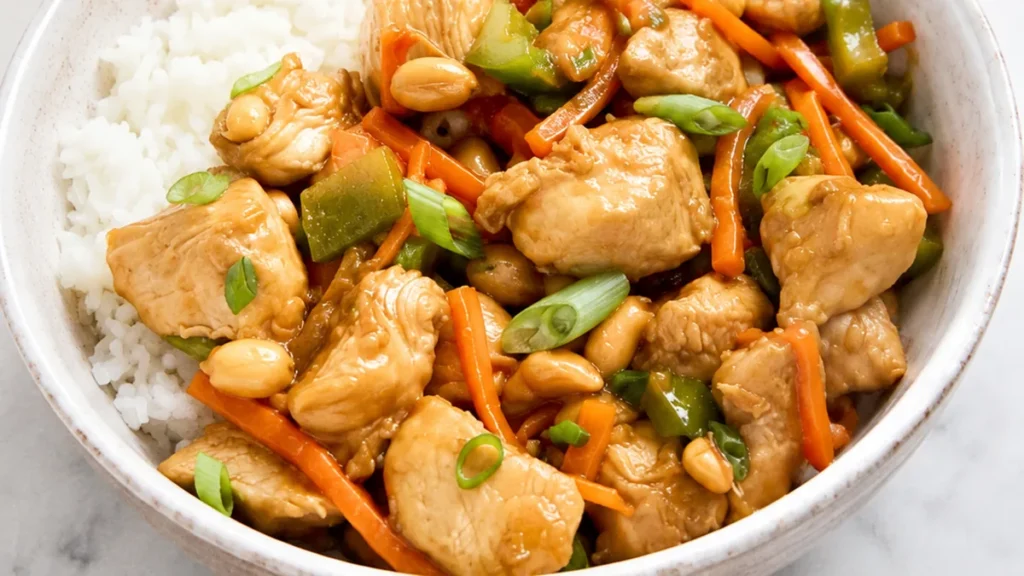
This spicy kung pao chicken recipe combines chicken, peanuts, and bell peppers. It’s a straightforward method that yields a flavorful dish.
Key takeaways
- High heat is essential for achieving the Maillard reaction in chicken.
- Cornstarch in the marinade helps retain moisture and tenderness.
- Sichuan peppercorns provide a unique numbing heat that distinguishes this dish.
- Monitor cooking times closely to avoid overcooking the chicken.
Spicy Kung Pao Chicken
Ingredients
- 2 tbsp corn starch (divided)
- 2 tbsp water (divided)
- 3 tbsp vegetable oil (divided)
- 3 tbsp soy sauce (divided)
- 3 tbsp rice wine (divided)
- 2 cloves garlic (minced)
- 1 lb boneless skinless chicken breasts
- 2 tbsp brown sugar
- 2 tbsp sambal (chili sauce)
- 1 tsp sesame oil
Instructions
- Prepare the marinade: Dissolve 1 Tbsp corn starch in 1 Tbsp water. Stir in 1 Tbsp vegetable oil, 1 Tbsp soy sauce, 1 Tbsp rice wine, and minced garlic. Combine well.
- Cut chicken into small chunks. Place in a bowl, pour marinade over, stir to coat. Cover and refrigerate for at least 30 minutes.
- Make the sauce: Dissolve 1 Tbsp corn starch in 1 Tbsp water. Add 2 Tbsp soy sauce, 2 Tbsp rice wine, 2 Tbsp sambal, 2 Tbsp brown sugar, and 1 tsp sesame oil. Stir until sugar dissolves. Set aside.
- Prepare vegetables: Dice bell pepper, slice carrots thinly, and slice green onions (whites and greens). Measure out 1/2 cup peanuts.
- Cook rice: Combine 1.5 cups jasmine rice with 2.5 cups water in a pot. Bring to a boil, reduce heat to low, simmer for 20 minutes. Turn off heat, let sit for 10 minutes, then fluff with a fork.
- Heat 2 Tbsp vegetable oil in a large skillet over medium-high heat until shimmering. Add white parts of green onions, stir for 30 seconds. Add marinated chicken. Cook until firm and cooked through, about 5 minutes.
- Add vegetables and peanuts to the skillet. Stir briefly. Immediately pour in the sauce and cook until thickened, about 2-3 minutes. Serve immediately over rice.
The Science Behind the Perfect Spicy Kung Pao Chicken
To achieve the perfect spicy kung pao chicken, understanding the role of heat and timing is crucial. Cooking the chicken at high heat (around 200°C or 400°F) allows for a quick sear, locking in moisture while developing a rich flavor profile. The Maillard reaction occurs when proteins and sugars in the chicken are exposed to high heat, creating those desirable brown bits that enhance the dish’s complexity.
Moreover, incorporating cornstarch in the marinade not only tenderizes the chicken but also creates a protective layer that helps retain moisture, ensuring the chicken remains juicy throughout the cooking process. Aim for a marinating time of at least 30 minutes to maximize tenderness and flavor absorption.
Common Issues and Their Solutions
One common issue when preparing spicy kung pao chicken is overcooking the chicken, leading to dryness. To prevent this, monitor cooking time closely; chicken pieces should be cooked for about 4-5 minutes until just done. Another frequent problem is the sauce not thickening properly. This can be resolved by ensuring the cornstarch is fully dissolved in the sauce before adding it to the pan, allowing it to thicken uniformly.
Additionally, if the dish lacks the desired heat, consider adjusting the amount of Sichuan peppercorns or dried red chilies. Start with a smaller amount and gradually increase until the preferred spice level is achieved. Conversely, if the dish is too spicy, balancing it with a bit of sugar or additional vegetables can help mellow the heat.
Ingredient Swaps and Their Effects
When preparing spicy kung pao chicken, certain ingredient swaps can yield different flavor profiles while maintaining the dish’s integrity. For instance, swapping chicken with tofu provides a vegetarian option, though it will require a longer marinating time to absorb flavors. Additionally, using peanuts instead of cashews will impart a nuttier flavor, but be mindful of allergies.
Another swap could be using rice vinegar instead of the traditional Chinkiang vinegar, which will result in a slightly sweeter and less complex flavor. The trade-off is that the authentic tanginess may be diminished, but the dish will still be delicious. Lastly, for a gluten-free version, tamari can replace soy sauce without sacrificing flavor.
Unique Characteristics of Spicy Kung Pao Chicken
What sets spicy kung pao chicken apart from other stir-fry dishes is its distinctive use of Sichuan peppercorns, which provides a unique numbing heat. Unlike traditional chili heat, the numbing sensation enhances the overall flavor experience, allowing the other ingredients to shine. This characteristic is essential to the dish and is not commonly found in other stir-fry recipes.
Furthermore, the balance of flavors—spicy, sweet, and savory—is meticulously crafted through the combination of soy sauce, sugar, and vinegar, creating a harmonious dish that is both complex and satisfying.
How to Scale Your Spicy Kung Pao Chicken for Larger Gatherings
Scaling a recipe can often lead to inconsistencies in flavor and texture if not done correctly. For spicy kung pao chicken, consider maintaining the same ratio of chicken to vegetables and sauce. If doubling the recipe, use 1.5 times the amount of sauce to ensure each piece of chicken is adequately coated. This dish benefits from a high heat stir-fry; therefore, if scaling up significantly, it may be beneficial to cook in batches to avoid overcrowding the pan, which can lead to steaming rather than searing.
Impact of Ingredient Quality on Flavor and Texture
The quality of your ingredients can greatly affect the final outcome of spicy kung pao chicken. Fresh ingredients, particularly the chicken and vegetables, will yield a more vibrant flavor. When selecting chicken, look for thighs over breasts for a juicier result. The freshness of your peanuts also matters; stale peanuts can detract from the dish’s overall texture and taste. Additionally, the type of soy sauce used can influence the dish’s saltiness and umami depth. Opt for a high-quality soy sauce and consider using a mix of light and dark varieties for balance.
Equipment Variations and Their Effects on Cooking
The type of equipment you use can significantly impact the cooking process of spicy kung pao chicken. A wok is traditionally preferred for its high sides and ability to retain heat, allowing for quick stir-frying. If using a non-stick skillet, ensure it can withstand high temperatures. The material of your pan affects heat distribution; for example, cast iron retains heat well, which is essential for achieving the desired sear on the chicken. Additionally, using a gas stove can provide higher heat levels compared to electric, which can alter cooking times and texture.
Serving Suggestions and Pairing for Enhanced Enjoyment
Spicy kung pao chicken is best served hot, right after cooking, to enjoy its bold flavors and crispy textures. Pair it with steamed jasmine rice or fried rice to balance the heat. For a refreshing contrast, serve with a side of cucumber salad or pickled vegetables. If you want to elevate the meal, consider pairing it with a light, crisp white wine or a cold beer, which can help to cool the palate between bites. For those who enjoy a kick, a spicy Asian lager complements the dish perfectly.
How to Achieve the Right Balance of Heat and Flavor
One of the defining characteristics of spicy kung pao chicken is its balance of heat and flavor. The heat primarily comes from Sichuan peppercorns and dried red chilies. To achieve the perfect level of spiciness, consider the ratio of these ingredients. For instance, using 10-15 grams of Sichuan peppercorns per 500 grams of chicken can provide a robust flavor profile without overwhelming the dish. Additionally, the timing of adding these spices is crucial; introducing them early in the cooking process allows their flavors to infuse the oil, enhancing the overall taste. Conversely, adding them at the end can provide a more pronounced heat. Adjusting the amount of soy sauce and vinegar can also modulate the flavor balance, ensuring that the dish remains savory and tangy alongside its spiciness.
Adapting Cooking Techniques for Different Equipment
The equipment used can significantly impact the outcome of spicy kung pao chicken. For instance, using a traditional wok allows for better heat distribution and quicker cooking, which is essential for achieving the desired texture of the chicken and vegetables. If using a non-stick skillet, ensure that the heat is adequately high to create a slight char on the chicken. This can be achieved by preheating the skillet for several minutes before adding the oil. Additionally, if you’re using an electric stovetop, consider adjusting the cooking time, as these tend to have less responsive heat control compared to gas stoves. Understanding your equipment’s nuances can help replicate the authentic taste and texture of this beloved dish.
Storage and Reheating for Optimal Flavor Preservation
When it comes to storing spicy kung pao chicken, proper techniques can help maintain its flavor and texture. Ideally, the dish should be stored in an airtight container in the refrigerator and consumed within 3-4 days. To reheat, use a skillet over medium heat to ensure even warming, which helps to retain the chicken’s moisture and prevent it from becoming rubbery. Adding a splash of water or broth during reheating can also help revive the dish’s original sauciness. For longer storage, consider freezing the dish; however, be aware that freezing may alter the texture of the vegetables. It’s best to freeze the chicken separately from the sauce to maintain the integrity of both components.
How to Prepare Spicy Kung Pao Chicken in Advance
When planning to serve spicy kung pao chicken for a gathering or meal prep, you can streamline the process by preparing certain components in advance. Marinate the chicken pieces in the sauce for at least 30 minutes, or even overnight, to enhance flavor absorption. Additionally, chop the vegetables and measure out the spices a day ahead. Store the marinated chicken and prepped vegetables separately in airtight containers in the refrigerator. This not only saves time but also allows the flavors to meld beautifully. When ready to cook, simply stir-fry the chicken first, then add the vegetables and sauce, ensuring everything is cooked fresh. This method keeps the dish vibrant and ensures that the chicken is tender and juicy.
The Importance of Ingredient Freshness in Spicy Kung Pao Chicken
Using fresh ingredients is crucial for achieving the best flavor in spicy kung pao chicken. Fresh vegetables, such as bell peppers and scallions, contribute a crisp texture and vibrant color, while fresh garlic and ginger enhance the aromatic profile of the dish. On the other hand, stale or old ingredients can lead to a dull taste and unappealing texture. For instance, dried peanuts should be fresh and crunchy, as stale peanuts can detract from the dish’s overall enjoyment. Additionally, the quality of the chicken matters; using high-quality, fresh chicken breast or thighs will yield a more tender and flavorful result. Always inspect your ingredients before cooking to ensure maximum flavor and texture.
Pro tips
Pro tip: Best served immediately while hot!
Frequently asked questions
What can I substitute for Sichuan peppercorns?
If you can’t find Sichuan peppercorns, you can use black peppercorns for a different kind of heat. However, the unique numbing sensation will be lost. Consider adding a bit of lemon zest to mimic the citrus notes.
How can I make the dish less spicy?
To reduce the spiciness of spicy kung pao chicken , you can decrease the amount of dried red chilies used or add more vegetables to balance the heat. A touch of sugar can also help mellow the spice.
Can I use a different protein?
Yes, you can substitute chicken with tofu, shrimp, or even beef. Each protein will require slightly different cooking times, so adjust accordingly to ensure they are cooked through without becoming tough.
How should I store leftovers?
Store leftover spicy kung pao chicken in an airtight container in the refrigerator for up to three days. Reheat in a skillet over medium heat to maintain the texture of the chicken and sauce.
More from High-Protein Dinners →