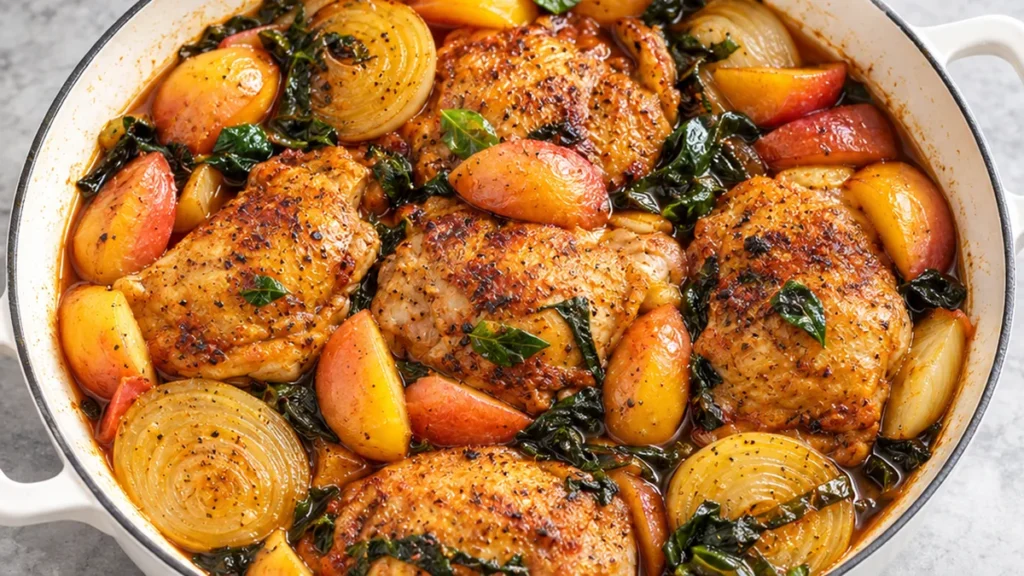
Stop scrolling! This mouthwatering dish combines juicy chicken and sweet peaches for a delightful twist! Your family will love it!
This Braised Chicken and Peaches recipe is a match made in heaven! Tender chicken thighs, fresh peaches, and savory spices come together in one pot for an unforgettable meal. Perfect for dinner any night of the week!
Key takeaways
- Balance sweetness and savory elements for a harmonious dish.
- Ensure proper browning to enhance flavor complexity.
- Cook at a low temperature for tender chicken.
- Use fresh peaches for unique sweetness and texture.
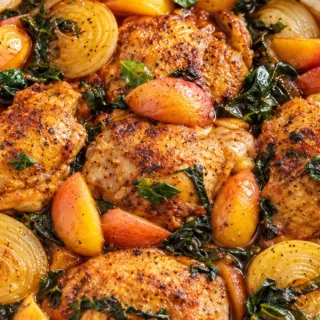
Savory Braised Chicken with Peaches – A Must-Try Dish!
Ingredients
- 1-2 Vidalia onions (12 oz total)
- 4 garlic cloves (peeled and sliced very thin)
- 3 fresh peaches (pitted and cut into hearty slices)
- 2 ½ lbs chicken thighs (boneless, skinless)
- 1 tsp smoked paprika
- ½ tsp crushed red pepper flakes
- 1 tsp salt (divided)
- 1 tsp black pepper (freshly cracked, divided)
- 3 tbsp vegetable oil
- 3 cups collard greens (chopped)
Instructions
- Gather ingredients. Preheat oven to 350°F.
- Prep the ingredients.
- Prepare fresh ingredients; peel and half Vidalia onions, slice garlic, and slice peaches into hearty slices.
- Season the chicken.
- Pat chicken dry with a clean paper towel and then rub chicken thighs with smoked paprika, chili flakes, ½ tsp salt, and ½ tsp black pepper.
- In a large oven-safe skillet, add vegetable oil, onions, and remaining ½ tsp salt. Sear onions on medium-high heat for 5-8 minutes until they begin to soften and show some color.
- Brown the chicken.
Video
Notes
Understanding the Balance of Flavors in Braised Chicken with Peaches
The combination of savory and sweet in this dish is crucial. The natural sweetness of fresh peaches contrasts beautifully with the richness of the chicken thighs. The use of Vidalia onions adds a mild sweetness that complements the peaches, while garlic provides depth. The smoked paprika introduces a smoky element that enhances the overall flavor profile. Cooking at a low temperature allows the flavors to meld, resulting in a harmonious dish.
Essential Techniques for Perfect Braising
Braising is a cooking method that involves both moist and dry heat. Start by searing the chicken thighs in vegetable oil until golden brown, which develops a rich crust through the Maillard reaction. This step is essential as it adds complexity to the flavor. After browning, the chicken should be cooked slowly in a mixture that includes the onions, garlic, and peaches, allowing the chicken to absorb the flavors over time. Maintaining a temperature of around 160-180°C (320-350°F) during braising ensures that the chicken becomes tender without drying out.
Common Pitfalls and How to Avoid Them
- Overcooking the Chicken: If the chicken is cooked for too long, it can become dry. Aim for an internal temperature of 74°C (165°F) for perfectly cooked chicken.
- Imbalance of Sweetness: If the dish turns out too sweet, consider reducing the number of peaches or adding a splash of vinegar to balance the flavors.
- Undercooked Collard Greens: Ensure that collard greens are chopped uniformly and cooked until tender; this usually takes about 15-20 minutes.
- Insufficient Browning: Skipping the browning step will result in a less flavorful dish. Always brown the chicken and vegetables properly.
Ingredient Swaps and Their Effects
- Chicken Thighs for Chicken Breasts: Thighs are more forgiving and remain moist during cooking, while breasts may dry out.
- Fresh Peaches for Canned: Canned peaches can be used but may result in a softer texture and sweeter dish due to added syrups.
- Smoked Paprika for Regular Paprika: This swap will change the flavor profile, losing the smoky depth that enhances the dish.
- Collard Greens for Kale: Kale can be used, but it has a different texture and may require less cooking time.
The Unique Element of This Dish
What sets this dish apart from other braised chicken recipes is the inclusion of fresh peaches. While many braised dishes focus solely on savory flavors, the peaches introduce a sweet, juicy component that elevates the dish. The caramelization of the peaches during cooking adds another layer of flavor that is not commonly found in traditional braised chicken recipes.
Understanding the Impact of Seasonal Ingredients on Flavor
The flavor profile of savory braised chicken with peaches can vary significantly based on the seasonality and ripeness of the peaches used. Fresh, ripe peaches in the summer will impart a sweeter, more aromatic flavor, enhancing the overall dish. In contrast, using peaches that are out of season may lead to a more tart or bland outcome. Selecting local, in-season fruits not only supports local agriculture but also ensures the best flavor. Aim for peaches that are slightly soft to the touch, indicating ripeness, and have a fragrant aroma.
Scaling the Recipe for Different Occasions
When scaling the recipe up or down, it’s crucial to maintain the balance of flavors and cooking times. For instance, doubling the recipe for a larger gathering will require careful attention to the braising process. The chicken should still be arranged in a single layer in the pot to ensure even cooking. If using a larger pot, you may need to increase the braising liquid proportionally to prevent the chicken from drying out. Additionally, taste the sauce before serving and adjust the seasoning as necessary since larger batches can dilute flavors.
Equipment Considerations for Optimal Braising
The choice of equipment can greatly influence the outcome of your braised chicken with peaches. A heavy-bottomed Dutch oven is ideal for braising, as it retains heat evenly and helps achieve the Maillard reaction when browning the chicken. If using a slow cooker, the cooking time may need to be adjusted; typically, braising in a slow cooker takes about 6-8 hours on low. It’s also important to ensure that the lid fits tightly to retain moisture, which is essential for the braising process.
Serving Suggestions to Enhance the Experience
When serving savory braised chicken with peaches, consider complementary sides that balance the dish’s flavors. Creamy polenta or mashed potatoes can provide a rich base, while a simple arugula salad with a light vinaigrette can add a refreshing contrast. Additionally, pairing this dish with a light-bodied white wine, such as a Sauvignon Blanc or a dry Riesling, can elevate the dining experience. Garnishing with fresh herbs, like basil or cilantro, right before serving adds a pop of color and freshness.
How to Optimize Flavor Development in Braised Chicken with Peaches
The success of braised chicken with peaches lies in the depth of flavor achieved during the cooking process. To enhance this, consider the order of ingredient addition. Start by sautéing the Vidalia onions until they are translucent, allowing their natural sweetness to develop before adding the garlic. This step ensures that the garlic does not burn, which can impart a bitter taste. Once the garlic is aromatic, introduce the chicken thighs, browning them on all sides. Browning is crucial as it creates the Maillard reaction, which develops complex flavors. After browning, deglaze the pan with a splash of chicken broth or white wine to lift the fond—those flavorful bits stuck to the bottom. Finally, add the peaches. Their sugars caramelize slightly, contributing to a sweet and savory balance that is characteristic of this dish.
Understanding the Role of Collard Greens in This Dish
Collard greens are not just a side; they play a pivotal role in the overall flavor profile and texture of braised chicken with peaches. When chopped and added to the braising liquid, collard greens absorb flavors and provide a hearty, slightly bitter counterpoint to the sweetness of the peaches. This contrast is essential for a balanced dish. To prepare collard greens, it’s best to wash and chop them thoroughly before adding them to the pot. Their fibrous texture requires longer cooking times, so they should be added early in the braising process. If using older greens, consider blanching them briefly to reduce bitterness before incorporating them into the dish.
Make-Ahead Strategies for Braised Chicken with Peaches
This dish can be made ahead of time, making it perfect for meal prep or entertaining. To do this effectively, cook the dish as per the recipe but stop just before the final simmer. Allow the dish to cool completely before refrigerating it in an airtight container. When ready to serve, reheat gently on the stove, adding a splash of chicken broth if the sauce has thickened too much. This method allows the flavors to meld even further, often resulting in a more robust taste. For best results, consume within three days, as the quality of the peaches may decline. If you wish to freeze the dish, it can be stored for up to three months. However, be aware that the texture of the peaches may change upon thawing.
Understanding the Impact of Cooking Time on Texture and Flavor
The cooking time for braised chicken with peaches is crucial for achieving the ideal texture and flavor. Chicken thighs generally require a braising time of 45 to 60 minutes at a low simmer for optimal tenderness. The Maillard reaction, which occurs between 140-165°C (285-330°F), is vital for developing deep, savory flavors. If the chicken is braised for too long, it may become mushy, losing its structural integrity. Conversely, undercooking can result in tough meat. To ensure perfect doneness, consider using a meat thermometer; the internal temperature should reach at least 74°C (165°F). This attention to detail will elevate your dish, ensuring the chicken remains juicy and flavorful while harmonizing beautifully with the sweet and tart notes of the peaches.
The Role of Seasonal Peaches in Flavor Profile
Seasonal peaches significantly impact the overall flavor of braised chicken with peaches. The best peaches are typically harvested in late summer, when they are at their peak ripeness, offering a balance of sweetness and acidity that enhances the dish. When selecting peaches, look for those that yield slightly to gentle pressure and have a fragrant aroma. Off-season peaches may lack the depth of flavor and juiciness, resulting in a less satisfying dish. If fresh peaches are unavailable, consider using frozen peaches, which can be a good alternative as they are often frozen at peak ripeness. However, the texture may differ slightly, as thawed peaches can become mushy. Understanding the importance of using high-quality, in-season ingredients will elevate your braised chicken dish to new heights.
Pro tips
Pro tip: Best served immediately while hot!
Frequently asked questions
Can I use frozen peaches instead of fresh?
Yes, you can use frozen peaches, but they may release more moisture during cooking. It’s best to thaw and drain them before adding to the dish to maintain the intended texture.
What can I serve with braised chicken and peaches?
This dish pairs well with rice, quinoa, or crusty bread to soak up the delicious sauce. A fresh salad can also complement the rich flavors.
How long can I store leftovers?
Leftover braised chicken with peaches can be stored in an airtight container in the refrigerator for up to 3 days. Reheat gently to preserve the texture and flavor.
Can I make this dish in advance?
Yes, braised chicken with peaches can be made in advance. The flavors often improve after a day in the refrigerator, making it a great option for meal prep.
More from High-Protein Dinners →