
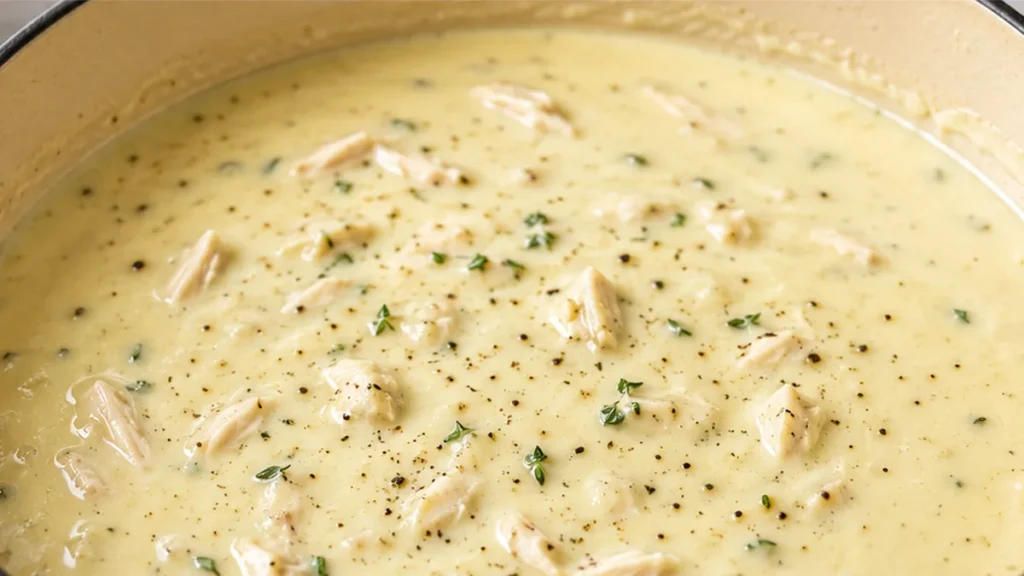
This homemade cream chicken soup base is a simple solution for your recipes. It enhances flavor and texture, making it a better choice than canned options.
Key takeaways
- Use room temperature dairy for better emulsification.
- Control heat to prevent curdling and achieve the right consistency.
- Adjust seasonings to enhance flavor and avoid blandness.
- Utilize cornstarch for thickening without altering the flavor.
Creamy Chicken Soup Base
Ingredients
- 2 tbsp salted butter
- 2 tsp chicken bouillon
- 1 tsp garlic powder
- 1 tsp onion powder
- ½ tsp salt
- ½ cup heavy whipping cream (room temperature)
- 1 cup whole milk (room temperature)
- 1 tsp cornstarch
Instructions
- Melt the salted butter in a saucepan over medium heat.
- Stir in the chicken bouillon, garlic powder, onion powder, and salt until well combined.
- Gently simmer the mixture for about 1 minute, stirring constantly, until fragrant.
- Pour in the room temperature heavy cream and whole milk, stirring well to combine.
- Allow it to gently simmer and reduce by about 1/4, stirring often for 8-10 minutes.
- In a small bowl, whisk together the cornstarch with about 2 tablespoons of the warm mixture to create a smooth slurry.
- Pour the cornstarch slurry back into the saucepan, stirring constantly until thickened, about 2-3 minutes.
- Once thickened, remove from heat and use immediately or store in an airtight container.
Video
Notes
Understanding the Creaminess of Cream Chicken
The key to a successful creamy chicken soup base lies in the proper emulsion of fats and liquids. Using heavy whipping cream and whole milk at room temperature ensures that they combine smoothly without curdling. The ideal ratio of cream to milk in this recipe is 1:2, providing a rich texture while maintaining a balanced flavor profile.
Controlling Heat for Perfect Consistency
Heat control is crucial when preparing the cream chicken base. Begin by melting the salted butter over medium heat, then gradually incorporate the chicken bouillon, garlic powder, onion powder, and salt. This process releases the flavors and creates a flavorful roux. Maintain a gentle simmer when adding the cream and milk to prevent separation, ideally around 180°F (82°C), which is just below boiling.
Common Issues and Their Solutions
- Issue: The soup is too thin.
- Fix: Mix 1 tsp of cornstarch with a small amount of cold water to create a slurry, then stir it into the soup and heat until thickened.
- Issue: The cream curdles.
- Fix: Ensure the cream is at room temperature before adding it to the hot mixture, and avoid boiling the soup after adding the cream.
- Issue: The flavor is bland.
- Fix: Adjust the seasoning by adding more salt or a splash of lemon juice for brightness.
Ingredient Swaps and Their Effects
- Substitute heavy cream with half-and-half: This will result in a lighter soup but may sacrifice some creaminess.
- Use vegetable bouillon instead of chicken bouillon: This will make the soup vegetarian but will alter the flavor profile significantly.
- Replace whole milk with low-fat milk: This will reduce calories but may make the soup less rich.
Unique Aspects of Cream Chicken Soup
Unlike many other creamy soups, this cream chicken base emphasizes the use of both butter and dairy to create a unique mouthfeel. The combination of chicken bouillon with the cream not only enhances the flavor but also provides a satisfying richness that is characteristic of classic comfort foods.
Understanding the Impact of Ingredient Quality on Cream Chicken
The quality of your ingredients significantly influences the final taste and texture of your creamy chicken soup base. Using fresh, high-quality butter and dairy products like heavy whipping cream and whole milk can enhance the richness and flavor profile. For instance, organic or grass-fed butter often contains a higher fat content and better flavor, which contributes to a more luxurious mouthfeel. Additionally, the freshness of your chicken bouillon can affect the depth of flavor; outdated bouillon may lead to a flat taste. Aim for products with minimal processing to ensure maximum flavor impact.
Batch Scaling for Creamy Chicken Soup Base
Scaling your recipe can be straightforward, but precision is key to maintaining the right balance of flavors and textures. When doubling or halving the recipe, keep the ratios of the primary ingredients consistent. For instance, if you double the recipe, use 4 Tbsp of salted butter, 4 tsp of chicken bouillon, and so forth. However, be mindful of the cooking time; larger batches may require additional time to heat through properly. For a smaller batch, ensure that the cooking vessel is appropriately sized to maintain even heat distribution and avoid scorching.
Essential Equipment for Perfect Cream Chicken Consistency
The equipment you use can significantly affect the outcome of your creamy chicken soup base. A heavy-bottomed saucepan is ideal for even heat distribution, preventing hot spots that can scorch the cream. A whisk is essential for incorporating the cornstarch smoothly into the liquid, avoiding clumps. If you have an immersion blender, it can be beneficial for achieving a velvety consistency, especially if you wish to blend in additional ingredients like cooked chicken or vegetables. Always use a thermometer to monitor the temperature of your cream and milk; ideally, these should be at room temperature to prevent curdling when combined with the hot butter and bouillon mixture.
Seasonal Adjustments for Cream Chicken Flavor
Seasonal ingredients can elevate your creamy chicken soup base, introducing fresh flavors and textures. In the spring, consider adding peas or asparagus for a pop of color and sweetness. In the fall, root vegetables like carrots or parsnips can provide a heartier flavor. Adjusting the seasoning to reflect the season is also crucial; fresh herbs like basil or thyme in the summer can brighten the dish, while dried herbs may be more suitable in the winter months. Always taste and adjust seasonings based on the quality and freshness of your ingredients to ensure a balanced flavor.
How to Store Cream Chicken Soup Base for Future Use
Proper storage of your creamy chicken soup base is crucial for maintaining its flavor and texture. After preparing the soup base, allow it to cool to room temperature. Transfer it to an airtight container and refrigerate if you plan to use it within 3-4 days. For longer storage, consider freezing. When freezing, use freezer-safe containers or bags, leaving some space for expansion. The soup can be frozen for up to 3 months. To reheat, thaw in the refrigerator overnight and gently warm on the stove over low heat, stirring frequently to maintain the emulsion.
Adjusting the Recipe for Larger Portions
Scaling the creamy chicken soup base recipe is straightforward but requires attention to ingredient ratios for consistent results. For every additional cup of liquid (milk and cream combined), increase the butter by 1 tablespoon, the chicken bouillon by 1 teaspoon, and the cornstarch by 1 teaspoon. This maintains the flavor intensity and thickness. Be cautious with large batches; cooking times may vary. Stirring continuously helps prevent lumps and ensures even heating, especially when scaling up to 4 or 5 times the original recipe.
Choosing the Right Equipment for Optimal Creaminess
The equipment used can significantly affect the final texture of your creamy chicken soup base. A heavy-bottomed saucepan is ideal, as it distributes heat evenly, preventing scorching. Avoid non-stick pans for this recipe, as they can retain heat unevenly, leading to inconsistent emulsification. A whisk is essential for blending the cornstarch smoothly into the liquid. If using an immersion blender, ensure that the soup is at a low simmer to avoid splattering and ensure an even blend. The right tools can enhance the creaminess and overall quality of the dish.
Understanding the Role of Temperature in Cream Chicken Preparation
Temperature plays a crucial role in the preparation of a creamy chicken soup base. Using room temperature ingredients, specifically the heavy whipping cream and whole milk, helps to prevent curdling and ensures a smooth emulsion. When adding dairy to a hot mixture, aim for a temperature around 70°F (21°C) to avoid shocking the cream and causing it to separate. Additionally, maintaining a gentle simmer rather than a rolling boil helps prevent the proteins in the cream from denaturing, which can lead to a grainy texture. For optimal results, keep the heat between 180°F to 190°F (82°C to 88°C) during the cooking process, allowing the flavors to meld without compromising the creamy consistency.
Choosing the Right Equipment for Cream Chicken Soup Base
The choice of equipment can significantly affect the outcome of your creamy chicken soup base. A heavy-bottomed pot or Dutch oven is recommended as it provides even heat distribution, preventing hot spots that can scorch the soup. Additionally, using a whisk or a hand blender can help achieve a smooth texture when incorporating the cream and milk. If you prefer a chunkier soup, consider a wooden spoon for stirring, but be aware that this may not achieve the same level of emulsion. For those looking to infuse additional flavors, a fine mesh strainer can be used to strain out solids after simmering, resulting in a silky base. Remember to avoid non-stick pans when making this soup, as they can prevent the Maillard reaction from developing, which adds depth to the flavor.
How to Prepare and Store Creamy Chicken Soup Base for Later Use
Making a creamy chicken soup base ahead of time can save you valuable cooking time during busy weekdays. To do this, prepare the soup base following the recipe instructions, but stop before adding the heavy whipping cream and whole milk. Once cooled, transfer the base to an airtight container and refrigerate for up to 3 days. For longer storage, freeze the cooled base in a freezer-safe container for up to 3 months. When ready to use, thaw in the refrigerator overnight and reheat gently on the stove. Once heated, add the heavy whipping cream and whole milk to restore the creamy consistency. This method allows you to enjoy a rich and flavorful soup without the need for extensive preparation each time.
Understanding the Effect of Ingredient Quality on Creaminess in Cream Chicken
The quality of your ingredients significantly impacts the final creaminess of your chicken soup base. For instance, using high-quality heavy whipping cream (at least 36% fat) will yield a richer and silkier texture compared to lower-fat alternatives. Similarly, whole milk should be fresh and preferably organic, as it contains a higher fat content and fewer additives. Chicken bouillon quality also plays a crucial role; opt for low-sodium, organic options to enhance flavor without overpowering the dish. Additionally, using fresh garlic and onion powders rather than stale versions will contribute to a more vibrant taste. This attention to ingredient quality not only affects flavor but also the overall mouthfeel of the soup, making it more enjoyable and satisfying.
Pro tips
- Use good quality chicken bouillon for the best flavor.
- Ensure your cream and milk are at room temperature to prevent curdling.
- Stir frequently while simmering to create a smooth texture and prevent a skin from forming.
- For a thicker soup, add a little more cornstarch slurry, but be careful not to over-thicken.
Transform your everyday meals with this homemade cream of chicken soup base. It’s the secret ingredient your favorite comfort foods have been missing!
Frequently asked questions
Can I make this soup base without butter?
Yes, you can substitute butter with olive oil or a dairy-free alternative. However, this may slightly alter the flavor and richness of the soup.
How can I store leftover cream chicken soup?
Store leftover soup in an airtight container in the refrigerator for up to 3 days. Reheat gently on the stove to avoid curdling.
Is it possible to freeze this cream chicken base?
Freezing is not recommended due to the potential for cream to separate upon thawing. If you need to freeze, consider omitting the cream and adding it fresh when reheating.
What can I add to the soup for extra flavor?
Consider adding fresh herbs like thyme or parsley, sautéed vegetables, or cooked chicken for added depth and texture in your cream chicken soup.
More from High-Protein Dinners →