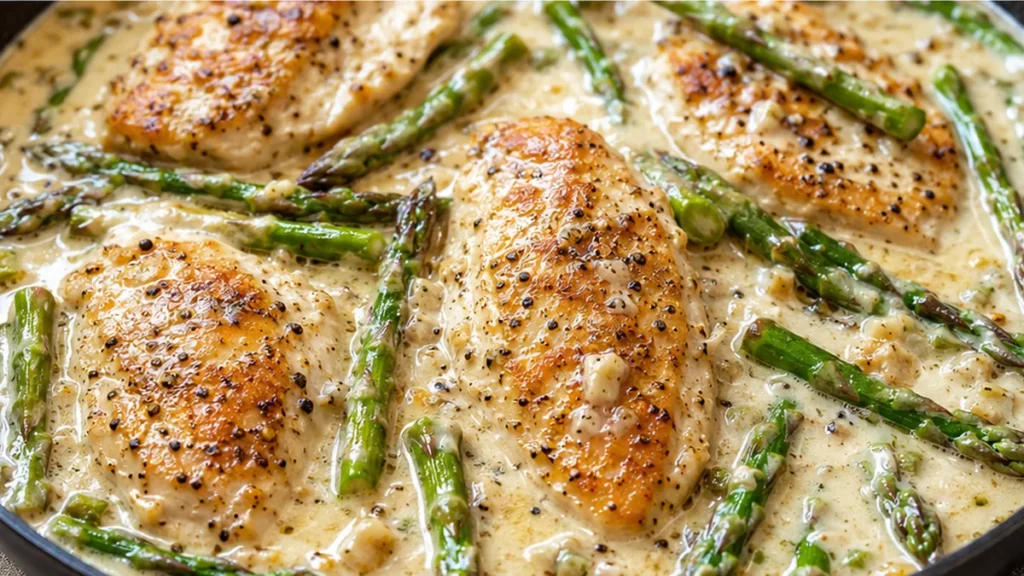
This creamy chicken recipe features tender chicken breasts paired with a rich sauce. The garlic and asparagus add flavor and texture to this quick dish.
Key takeaways
- Using room temperature heavy cream prevents curdling.
- Filleting chicken breasts ensures even cooking and tenderness.
- Blanch asparagus to maintain color and crunch.
- Let cooked chicken rest to retain juices.

Juicy Creamy Asparagus Chicken!
Ingredients
- 2 chicken breasts (filleted in half, (about 1.3 lbs total)
- 1 tsp salt
- 1 tsp black pepper (freshly cracked)
- ¼ cup all-purpose flour
- 2 tbsp vegetable oil
- 2 tbsp salted butter
- 4 garlic cloves (peeled and smashed)
- ¼ cup heavy cream (room temperature)
- 1 cup chicken broth
- 1 bunch asparagus (trimmed and cut into 1-2 inch pieces)
Instructions
- Season chicken breasts with salt and pepper, then coat in flour.
- Heat skillet over medium-high heat, add vegetable oil and butter.
- Cook chicken for 3-5 minutes per side until golden brown.
- Remove chicken, add garlic to skillet, sauté for 30 seconds.
- Pour in chicken broth and heavy cream, simmer and scrape the pan.
- Add asparagus, cook for 3-5 minutes until tender-crisp.
- Return chicken to skillet, spoon sauce over, and serve.
Video
Notes
Achieving the Perfect Creamy Sauce
The key to a luscious creamy sauce in this dish lies in the balance of heavy cream and chicken broth. To achieve the ideal emulsion, start with room temperature heavy cream. This helps prevent curdling when combined with hot ingredients. Use a ratio of 1:4 cream to broth for the perfect consistency. Stir the mixture gently to maintain the sauce’s smooth texture.
Mastering Chicken Cooking Techniques
Properly cooking the chicken breasts is crucial for achieving tenderness. Filleting the chicken into halves allows for quicker, even cooking. Searing at a medium-high heat (around 375°F or 190°C) for 5-7 minutes per side ensures the Maillard reaction occurs, creating a flavorful crust while keeping the inside juicy. Always let the chicken rest for at least 5 minutes post-cooking to allow juices to redistribute.
Why Asparagus is Essential for Texture and Flavor
Asparagus adds not only flavor but also a delightful crunch to the dish. By trimming the asparagus and cutting it into 1-2 inch pieces, you ensure even cooking. Blanching the asparagus for 2-3 minutes before adding it to the sauce helps maintain its vibrant color and crisp texture. This step also enhances the overall dish’s visual appeal.
Common Issues and Their Solutions
- Issue: Sauce is too thin.
- Fix: Increase the heat slightly and simmer the sauce uncovered for a few minutes to reduce it. Adding a bit more flour can also thicken the sauce.
- Issue: Chicken is dry.
- Fix: Ensure the chicken is not overcooked. Use an instant-read thermometer to check for doneness at 165°F (74°C).
- Issue: Sauce curdles.
- Fix: Gradually whisk in the cream while the pan is off the heat, then return to low heat to warm through.
- Issue: Asparagus is mushy.
- Fix: Blanch the asparagus separately before adding it to the dish, ensuring it retains its crispness.
Ingredient Swaps and Their Effects
- Substitution: Use chicken thighs instead of breasts.
- Effect: Thighs are more forgiving and can stay juicier, but they have a richer flavor.
- Substitution: Replace heavy cream with half-and-half.
- Effect: The sauce will be lighter and less rich, but may lack the same creaminess.
- Substitution: Use vegetable broth instead of chicken broth.
- Effect: The flavor profile will change to a more plant-based taste, suitable for vegetarians.
- Substitution: Swap vegetable oil with olive oil.
- Effect: Olive oil adds a distinct flavor but has a lower smoke point, which may affect searing.
How to Make This Dish Ahead of Time
Preparing Juicy Creamy Asparagus Chicken ahead of time can streamline your cooking process, especially for busy weeknights. You can marinate the chicken breasts with salt and pepper, then store them in the refrigerator for up to 24 hours before cooking. The sauce can also be made in advance; simply sauté the garlic and prepare the cream mixture, then refrigerate it. When you’re ready to serve, just reheat the sauce gently and add the asparagus and chicken. However, avoid cooking the chicken fully in advance, as reheating it can lead to dryness. If you do cook it ahead, ensure it reaches an internal temperature of 165°F (74°C) when reheated.
Scaling the Recipe for Larger Gatherings
This creamy chicken dish is highly adaptable for larger gatherings. To scale the recipe, maintain the same ratios of chicken, cream, and broth. For instance, if you double the chicken to four breasts, use ½ cup of flour, ½ cup of cream, and 2 cups of chicken broth. Be mindful of the pan size; using a larger skillet or multiple pans may be necessary to ensure even cooking. Keep the cooking time similar, but check the internal temperature of the chicken to ensure it reaches 165°F (74°C). The asparagus can be increased proportionally, but avoid overcrowding the pan to achieve the desired tenderness.
Understanding Equipment Variations and Their Impact
The type of cookware you use can significantly affect the outcome of Juicy Creamy Asparagus Chicken. Non-stick pans are ideal for preventing the chicken from sticking and for easy cleanup, but they may not achieve the same browning effect as stainless steel or cast iron. If using stainless steel, ensure the pan is preheated properly to facilitate the Maillard reaction, which enhances flavor. Additionally, using an electric skillet allows for precise temperature control, which can be beneficial for maintaining a steady heat while cooking the chicken and reducing the risk of overcooking. Regardless of the equipment, always monitor the chicken’s internal temperature closely.
What to Serve with Juicy Creamy Asparagus Chicken
Pairing options for Juicy Creamy Asparagus Chicken can elevate your meal experience. A light, fluffy side like jasmine or basmati rice complements the creamy sauce beautifully, allowing it to soak in. For a low-carb option, consider serving it with cauliflower rice or a fresh green salad, which adds a refreshing contrast to the richness of the dish. A crisp white wine, such as Sauvignon Blanc, pairs well with the flavors of the chicken and asparagus, enhancing the overall dining experience. Additionally, crusty bread can be a great accompaniment for sopping up the creamy sauce. Seasonal side dishes, such as roasted seasonal vegetables, can also add variety and color to your plate.
How to Ensure Your Asparagus Retains Its Crunch
Asparagus is a key component of this dish, providing not only flavor but also texture. To keep asparagus crunchy, avoid overcooking it. Blanching the asparagus in boiling water for 2-3 minutes before adding it to the chicken dish can help maintain its vibrant color and crispness. The residual heat from the chicken and sauce will finish cooking the asparagus without making it mushy. Aim for a final internal temperature of about 135°F (57°C) for perfectly tender yet crisp asparagus.
How to Scale This Recipe Without Compromising Flavor
When scaling the recipe for larger gatherings, maintain the same ratios of chicken to asparagus and sauce ingredients. For every additional chicken breast (approximately 0.65 lbs), increase the heavy cream by 2 tablespoons and the chicken broth by ¼ cup. This ensures that the sauce remains creamy and flavorful. Additionally, consider using a larger skillet to accommodate the increased volume without overcrowding, which can lead to uneven cooking.
Understanding the Role of Temperature in Cooking Chicken
Cooking chicken breasts to the right internal temperature is crucial for both safety and texture. Use a meat thermometer to ensure that the thickest part of the chicken reaches 165°F (74°C). Cooking at medium-high heat (about 375°F to 400°F or 190°C to 204°C) for 6-7 minutes per side typically yields juicy results. If the chicken is overcooked, it can become dry and tough, while undercooked chicken poses health risks. Resting the chicken for 5 minutes after cooking allows the juices to redistribute, enhancing its juiciness.
Understanding the Impact of Ingredient Quality on Flavor
The quality of your chicken and asparagus significantly influences the final flavor of the dish. Opt for organic, free-range chicken breasts, which typically have a richer taste due to their diet and living conditions. Similarly, fresh asparagus should be vibrant green with firm stalks. When asparagus is in season (spring), it has a sweeter, more tender profile, which enhances the overall dish. Conversely, out-of-season asparagus can be tougher and less flavorful. Using high-quality chicken broth, preferably homemade or low-sodium, can also elevate the creamy sauce’s depth, ensuring that the dish is not overly salty while still packed with flavor. Aim for a broth that has been simmered for at least 4-6 hours to develop a robust taste.
How to Adjust Cooking Times for Different Chicken Thicknesses
How to Ensure Your Creamy Sauce Stays Velvety and Smooth
The key to a creamy sauce lies in the proper emulsification of fats and liquids. The heavy cream should be added gradually to the chicken broth, which should be kept at a gentle simmer (around 180°F or 82°C). This temperature helps the fats from the butter and cream blend smoothly without separating. If you find your sauce is too thick, you can whisk in additional chicken broth, about 1 tablespoon at a time, until the desired consistency is reached. Conversely, if the sauce is too thin, allow it to simmer longer to reduce and thicken. Always taste and adjust seasoning as needed, particularly after adding broth.
Understanding the Impact of Ingredient Freshness on Flavor
The freshness of your asparagus and chicken significantly influences the overall flavor of the dish. Fresh asparagus should be bright green and firm, with tightly closed tips. If using older asparagus, the flavor may be more bitter and the texture can be woody. For chicken, opt for fresh, high-quality breasts, ideally free-range or organic, which will yield a more succulent and flavorful result. If you must use frozen chicken, ensure it is fully thawed and patted dry before cooking to avoid excess moisture, which can dilute the sauce’s richness. Seasonal asparagus, typically available in spring, offers the best flavor profile, while off-season varieties may lack sweetness and crunch.
Pro tips
- Sear the chicken in a single layer; don’t overcrowd the pan, or it will steam instead of brown.
- Reserve a bit of the starchy flour coating from the chicken to help thicken the sauce.
- Use room temperature heavy cream to prevent it from curdling in the hot sauce.
Enjoy this delightful creamy chicken and asparagus skillet, a perfect meal that’s both comforting and sophisticated. Serve with your favorite side for a complete dining experience.
Frequently asked questions
How do I know when the chicken is fully cooked?
The chicken is fully cooked when it reaches an internal temperature of 165°F (74°C). Using an instant-read thermometer is the most reliable method.
Can I make this dish ahead of time?
You can prepare the sauce and cook the chicken ahead of time, but it’s best to add the asparagus just before serving to maintain its texture and freshness.
What can I serve with creamy asparagus chicken?
This dish pairs well with rice, pasta, or a simple side salad. The creamy sauce complements starchy sides nicely, balancing the flavors.
Can I use frozen asparagus for this recipe?
While fresh asparagus is recommended for texture, you can use frozen asparagus. Just be sure to thaw and drain it well before adding to the dish to avoid excess water in the sauce.
More from High-Protein Dinners →