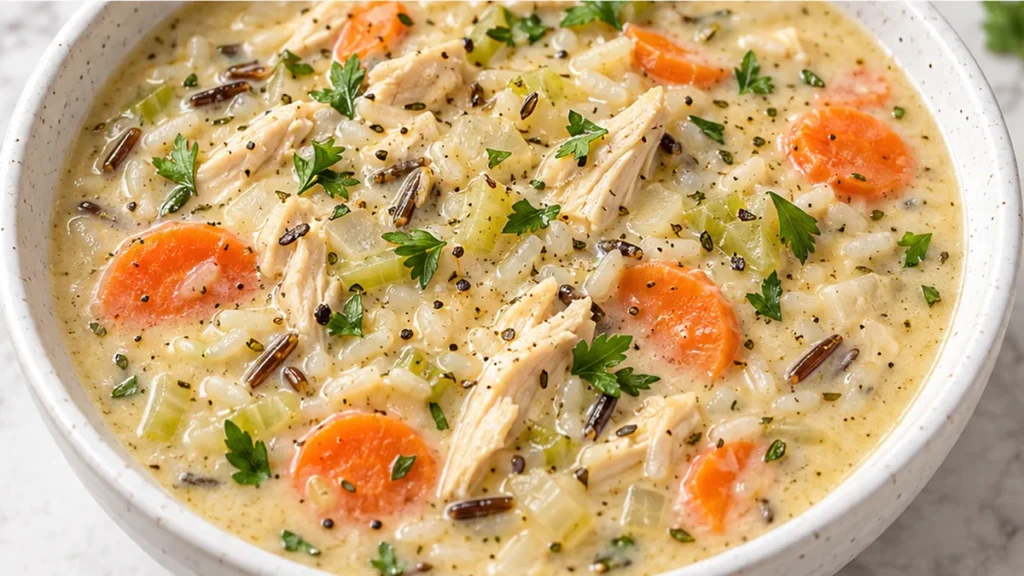
Golden chicken rice soup is a hearty dish that combines tender chicken with rice and spices. This recipe is straightforward and perfect for any home cook.
Key takeaways
- The golden color indicates flavor development through the Maillard reaction.
- Use aromatics early for enhanced flavor and avoid blandness.
- Correct rice-to-liquid ratios prevent mushy rice.
- Ingredient swaps can adjust flavor profiles and accommodate dietary needs.
Golden Chicken & Rice Soup
Ingredients
- 1 tbsp olive oil
- 1 medium yellow onion (small dice, about 1 cup, 150g)
- 2 garlic cloves (minced, 1 Tbsp)
- ½ lb carrots (sliced, 1.5 cups, 227g)
- 2 cups celery (sliced)
- 1 lb chicken breast (boneless, skinless)
- 1 bay leaf
- 1 tsp dried oregano
- 1 tsp dried thyme
- ½ tsp black pepper (freshly cracked)
Instructions
- Heat the olive oil in a large pot over medium heat. Add the diced yellow onion and minced garlic. Sauté until tender, about 5 minutes.
- While the onion and garlic sauté, clean and slice the carrots and celery.
- Add the sliced carrots and celery to the pot with the onions and garlic. Cook for about 5 minutes more, stirring occasionally.
- Add the whole chicken breast, bay leaf, dried oregano, dried thyme, cracked black pepper, 1/2 cup dry rice, and 6 cups of water to the pot. Do not add salt yet.
- Bring the pot to a boil over medium-high heat, then reduce the heat to low and let simmer for one hour, or until the chicken is cooked through and the rice is tender. Remove the bay leaf.
- Carefully remove the chicken breast from the pot and shred it with two forks. Return the shredded chicken to the soup. Stir in salt to taste.
The Importance of Golden Color in Chicken & Rice Soup
The golden hue of chicken and rice soup is not just visually appealing; it indicates the presence of essential flavor compounds. This color often comes from the Maillard reaction, which occurs when proteins and sugars react under heat, creating complex flavors. Achieving a rich golden color typically requires cooking the chicken until browned, which can take around 10-15 minutes over medium-high heat. The ideal temperature for this process is about 190-200°C (375-400°F).
Common Issues and Their Solutions
Many home cooks encounter issues when making golden chicken rice soup. Here are some common failures along with solutions:
- Issue: Soup is too bland.
- Solution: Enhance flavor by adding aromatics like garlic and onion early in the cooking process, allowing them to sauté until fragrant.
- Issue: Rice is mushy.
- Solution: Use the correct rice-to-liquid ratio; typically, one part rice to two parts liquid works well. Avoid overcooking the rice by adding it later in the cooking process.
- Issue: Fatty or greasy soup.
- Solution: Skim off excess fat from the surface after cooking the chicken. Use skinless chicken pieces for a lighter broth.
Ingredient Swaps and Their Effects
Substituting ingredients can lead to different flavor profiles and textures in your golden chicken rice soup. Here are some effective swaps:
- Swap: Brown rice for white rice.
- Expected Result: Brown rice adds a nuttier flavor and requires a longer cooking time (about 40-45 minutes).
- Swap: Vegetable broth for chicken broth.
- Expected Result: This will create a lighter, vegetarian-friendly version, though it may lack the richness of chicken broth.
- Swap: Fresh herbs for dried herbs.
- Expected Result: Fresh herbs like parsley or thyme provide a brighter flavor but should be added towards the end of cooking to preserve their freshness.
Unique Characteristics of This Soup
Golden chicken rice soup stands out for its comforting nature and the versatility of its ingredients. Unlike many other soups, it can serve as a complete meal due to the combination of protein from the chicken, carbohydrates from the rice, and vitamins from the vegetables. The soup’s ability to adapt to various dietary needs, such as gluten-free or low-carb versions, makes it a staple in many households.
How to Properly Store and Reheat Golden Chicken Rice Soup
Storing your golden chicken rice soup correctly is essential to maintain its flavor and texture. Allow the soup to cool completely before transferring it to an airtight container. It can be stored in the refrigerator for up to 3-4 days. For longer storage, consider freezing it in portions. When reheating, do so gently on the stove over low heat, stirring frequently to prevent sticking. If the soup appears too thick after reheating, add a splash of broth or water to restore its consistency.
Scaling Your Golden Chicken Rice Soup for Larger Gatherings
Scaling this recipe for larger gatherings is straightforward but requires attention to detail. When increasing the quantities, maintain the same ratios of ingredients to ensure flavor consistency. For example, if doubling the recipe, use twice the amount of chicken, rice, and broth. However, be cautious with cooking times; larger batches may take longer to cook through. Monitor the soup closely to avoid overcooking the rice, which can become mushy if left too long.
Essential Equipment for Perfectly Made Golden Chicken Rice Soup
Having the right equipment can significantly enhance your cooking experience when making golden chicken rice soup. A heavy-bottomed pot or Dutch oven is ideal for even heat distribution, preventing scorching. A sharp knife is crucial for properly chopping vegetables and chicken, ensuring even cooking. Additionally, a good-quality wooden spoon helps in stirring without scratching your pot. Using a ladle for serving will also make the process smoother and less messy.
Seasonal Variations and Ingredient Quality Impacting Your Soup
The quality of ingredients and seasonal variations can greatly affect the final outcome of your golden chicken rice soup. For instance, using fresh, in-season vegetables can enhance the soup’s flavor and nutritional value. In the colder months, root vegetables like carrots and parsnips can add heartiness, while in the summer, lighter vegetables such as zucchini or peas can brighten the dish. Always opt for high-quality chicken, as it significantly influences the broth’s taste. Additionally, consider adjusting spices and herbs based on seasonal availability for a unique twist.
Understanding the Role of Ingredients in Golden Chicken Rice Soup
The ingredients in golden chicken rice soup each serve a specific purpose that contributes to the overall flavor and texture of the dish. For instance, the choice of chicken impacts the soup’s richness; using a whole chicken or bone-in pieces can enhance the broth’s depth due to the gelatin released during cooking. The rice acts not only as a filler but also thickens the soup as it absorbs liquid. Ideally, long-grain rice should be used to maintain a fluffy texture, while short-grain varieties can lead to a creamier consistency. The aromatic vegetables, such as onions and garlic, are essential for building the foundation of flavor. When sautéed, they release natural sugars that contribute to the soup’s sweetness and complexity. Furthermore, herbs like parsley or thyme add freshness, balancing the richness of the chicken and broth. Understanding the function of each ingredient allows for better customization and can help in troubleshooting if the soup doesn’t meet expectations.
The Impact of Cooking Time and Temperature on Flavor Development
Cooking time and temperature are critical factors in developing the flavors of golden chicken rice soup. A gentle simmer, typically around 85-95°C (185-203°F), allows the chicken to cook thoroughly while preventing the meat from becoming tough. Cooking at this temperature for 30-45 minutes is generally sufficient to extract flavors from the chicken and vegetables. If cooked too quickly at a higher temperature, the chicken may become rubbery, and the vegetables can lose their vibrant flavors. Additionally, allowing the soup to rest for a few minutes before serving can enhance the flavor, as it gives the ingredients time to meld together. The Maillard reaction, which occurs during the browning of the chicken, adds complexity to the broth, making it essential to sear the chicken before adding liquids. This initial step can significantly elevate the soup’s taste profile, making it richer and more satisfying.
Pairing and Serving Suggestions for Golden Chicken Rice Soup
While golden chicken rice soup is a comforting dish on its own, pairing it with complementary sides can elevate the meal. Consider serving it with crusty bread or a light salad to balance the richness of the soup. A simple arugula salad with a lemon vinaigrette can provide a refreshing contrast to the warm, hearty soup. For a more filling meal, you might add a side of roasted vegetables, which can enhance the overall flavor profile. When serving, consider garnishing the soup with fresh herbs or a squeeze of lemon juice to brighten the flavors. These finishing touches not only enhance the visual appeal but also add layers of flavor that make the dish more enjoyable. Additionally, if making a large batch, consider serving it in individual bowls with a side of assorted toppings, such as sliced green onions or chili flakes, allowing guests to customize their experience.
Understanding the Optimal Cooking Time for Golden Chicken Rice Soup
The cooking time for golden chicken rice soup is crucial in achieving the right texture and flavor. Overcooking can lead to mushy rice and a bland broth, while undercooking may leave the chicken tough and the rice chewy. Typically, simmering the soup for 30 to 40 minutes allows the flavors to meld beautifully while ensuring that the chicken is tender and the rice is perfectly cooked. Maintaining a gentle simmer at around 85°C (185°F) helps in extracting flavors without boiling the chicken too aggressively. This temperature not only preserves the chicken’s moisture but also allows the rice to absorb the broth effectively, resulting in a creamy texture.
Batch Scaling: Adjusting Ingredients for Larger Gatherings
When scaling up your golden chicken rice soup for larger gatherings, it’s essential to maintain the balance of flavors and textures. For every additional liter of broth, increase the rice by approximately 125 grams and add an extra chicken breast (around 200 grams). This ratio ensures that the rice does not overpower the soup and retains its creamy consistency. Additionally, consider the size of your cooking equipment; a larger pot will distribute heat more evenly, preventing hotspots that can lead to uneven cooking. Always taste and adjust seasoning accordingly, as larger batches may require a slight increase in salt and spices to achieve the desired flavor profile.
Pro tips
Pro tip: Best served immediately while hot!
Frequently asked questions
How do I achieve a golden color in my chicken rice soup?
To achieve a golden color, brown the chicken pieces in a hot pan before adding them to the soup. This process develops rich flavors through the Maillard reaction, which is essential for a visually appealing dish.
Can I use leftover chicken for this recipe?
Yes, using leftover chicken can save time. Simply add it to the soup during the last 10-15 minutes of cooking to heat it through and infuse the flavors without overcooking the meat.
What type of rice is best for chicken rice soup?
Long-grain white rice is commonly used for its ability to remain fluffy and separate. However, brown rice can be used for a nuttier flavor, though it requires a longer cooking time.
How can I make this soup healthier?
To make the soup healthier, consider using skinless chicken, reducing the amount of added salt, and incorporating more vegetables. You can also use whole-grain rice for added fiber.
More from High-Protein Dinners →