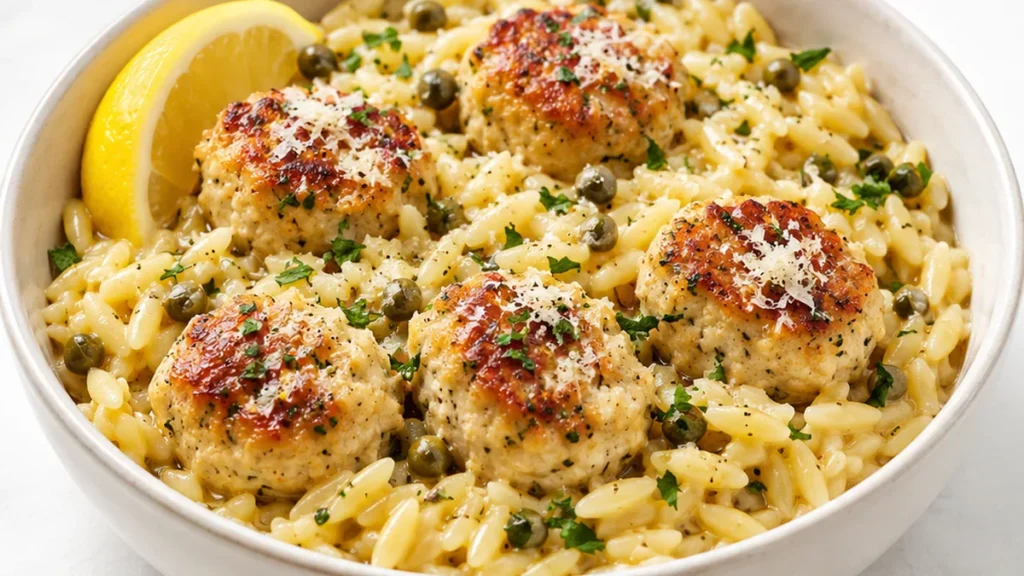
The piccata meatball skillet combines savory meatballs with a tangy lemon sauce. This dish is quick to prepare and ideal for busy weeknights.
Key takeaways
- Use fresh lemon juice for the best flavor.
- Avoid overmixing the meatball mixture to keep them tender.
- Rest meatballs after cooking to redistribute juices.
- Adjust the sauce’s consistency by adding broth or simmering longer.
Piccata Meatball Skillet Magic
Ingredients
- 1 lb ground chicken
- ½ cup panko breadcrumbs
- ¼ cup Parmesan cheese (grated)
- 1 large egg
- 2 garlic cloves (minced)
- 2 tbsp fresh parsley (chopped)
- 1 tsp lemon zest
- ¼ cup onion (minced)
- ½ tsp salt
- ¼ tsp black pepper (freshly cracked)
Instructions
- Gather and prep all ingredients.
- In a bowl, combine ground chicken, panko, Parmesan, egg, garlic, parsley, lemon zest, minced onion, salt, and pepper. Mix gently until just combined.
- Shape mixture into 20-24 small meatballs, about 1 inch each.
- Heat olive oil in a large skillet over medium-high heat. Add meatballs and cook, turning occasionally, until golden brown on all sides, about 5-6 minutes.
- Remove meatballs from the skillet and set aside (they will finish cooking in the sauce).
- Add orzo, broth, lemon juice, and butter to the same skillet. Bring to a simmer and cook until orzo is tender, stirring often. Add meatballs back to the skillet and cook until heated through.
Understanding the Flavor Profile of Piccata
The essence of a piccata dish lies in its vibrant flavor profile, characterized by the balance of acidity from lemon juice and the savory depth from capers. The acidity not only brightens the dish but also helps tenderize the meat, enhancing its texture and flavor. For optimal results, use fresh lemon juice, as it provides a more pronounced tartness compared to bottled varieties. The ideal ratio for a piccata sauce is approximately 1 part lemon juice to 2 parts broth, ensuring a well-rounded taste.
Key Techniques for Perfect Meatballs
Making meatballs that are both tender and flavorful is crucial for a successful piccata meatball skillet. A common mistake is overmixing the meat mixture, which can lead to tough meatballs. Aim for a gentle mixing technique, combining the ingredients just until incorporated. Additionally, consider using a combination of meats, such as ground beef and pork, for a richer flavor. When forming meatballs, keep them uniform in size (about 4 cm in diameter) to ensure even cooking. Cooking them on medium heat for about 5-7 minutes per side helps achieve a golden-brown crust while keeping the inside juicy.
Common Pitfalls and Their Solutions
One frequent issue when making a piccata meatball skillet is the sauce becoming too thick or too thin. If the sauce is too thick, add a splash of chicken broth to loosen it up. Conversely, if it is too thin, allow it to simmer uncovered for a few minutes to reduce and thicken. Another common mistake is not allowing the meatballs to rest after cooking; resting for 5 minutes allows the juices to redistribute, resulting in a more flavorful bite. Lastly, avoid overcooking the meatballs, which can lead to dryness; aim for an internal temperature of 70°C (160°F).
Ingredient Swaps for Different Results
Substituting ingredients can alter the flavor and texture of your dish. For example, using turkey instead of beef will yield a leaner meatball, but may require additional seasoning to maintain flavor. If you’re out of capers, green olives can serve as a substitute, providing a similar briny flavor, though they will impart a different taste. For a gluten-free option, replace breadcrumbs with crushed gluten-free crackers or almond flour, keeping in mind that this may affect the meatball’s texture. Lastly, fresh herbs like parsley can enhance the flavor profile, but dried herbs can be used in a pinch; just remember that dried herbs are more concentrated, so use about one-third of the amount.
Unique Characteristics of Piccata Meatballs
What sets piccata meatballs apart from other meatball dishes is the distinctive sauce that accompanies them. The combination of lemon juice, capers, and white wine creates a bright, tangy sauce that is not commonly found in traditional meatball recipes. This sauce not only complements the meatballs but also adds a layer of complexity that elevates the dish. Additionally, the quick cooking method in a skillet allows for a seamless transition from stovetop to table, making it a convenient option for weeknight dinners.
How to Prepare Piccata Meatballs in Advance
Making piccata meatballs ahead of time can streamline your cooking process. To do this, prepare the meatballs according to the recipe instructions but do not cook them. Instead, place them on a baking sheet lined with parchment paper, ensuring they are not touching. Freeze the meatballs for about 1-2 hours until solid, then transfer them to a freezer-safe bag or container. They can be stored in the freezer for up to 3 months. When ready to cook, simply thaw them in the refrigerator overnight and then proceed with the cooking instructions. This method retains the quality and flavor of the meatballs, ensuring a delicious dish when you are ready to serve.
Understanding Equipment Differences for Cooking
The type of cookware you use can significantly impact the outcome of your piccata meatball skillet. For instance, using a cast iron skillet can enhance the browning of the meatballs due to its excellent heat retention and distribution properties. Conversely, a non-stick skillet may help prevent sticking but might not achieve the same level of browning. Additionally, consider the size of your skillet; overcrowding can lead to steaming rather than browning. If your skillet is too small, work in batches to ensure even cooking. The choice of equipment can also affect the sauce’s consistency; a wider pan allows for more evaporation, concentrating the flavors.
Scaling the Recipe for Larger Gatherings
If you plan to serve a larger group, scaling your piccata meatball skillet recipe is straightforward. For every additional 4-6 servings, simply multiply the ingredient quantities accordingly. However, keep in mind that cooking times may vary with larger batches. It’s best to cook the meatballs in batches to ensure they brown evenly. Also, consider using a larger skillet or multiple skillets to accommodate the increased volume. When scaling the sauce, maintain the same ratios for optimal flavor balance. This approach ensures that even when scaled, the dish retains its signature taste and texture.
Seasonal Variations and Ingredient Quality Impact
The quality of ingredients can significantly influence the outcome of your piccata meatball skillet. Fresh, high-quality ground meat will yield more flavorful meatballs, while seasonal produce can enhance the dish’s overall freshness. For instance, using fresh herbs like parsley or basil in the sauce can elevate the flavor profile. Additionally, consider seasonal vegetables as side options; asparagus in spring or roasted root vegetables in fall can complement the dish beautifully. The acidity of the lemon juice can also vary with seasonality, so taste and adjust to achieve the desired tartness. Understanding these seasonal aspects allows for a more dynamic and enjoyable cooking experience.
Understanding the Importance of Resting Meatballs Before Cooking
Resting meatballs before cooking is crucial for achieving the perfect texture. When meatballs rest, the proteins relax, allowing moisture to redistribute throughout the meat. This prevents the meatballs from becoming tough when cooked. Aim for a resting period of at least 15-30 minutes at room temperature before cooking. This simple step enhances the flavor and ensures a juicier final product. Additionally, if you are preparing the meatballs in advance, consider refrigerating them for up to 24 hours before cooking. This not only helps in developing the flavors but also allows the meatballs to firm up slightly, making them easier to handle during cooking.
The Role of Acid in Balancing the Flavor Profile of Piccata Meatballs
Acid plays a vital role in the flavor balance of piccata dishes, including meatballs. Traditional piccata sauce often incorporates lemon juice, which brightens the overall dish and cuts through the richness of the meatballs. The acidity from lemon juice not only enhances flavor but also helps tenderize the meat. When preparing your piccata meatball skillet, aim for a ratio of about 30-50 ml of lemon juice per serving. This will ensure that the acidity is pronounced without overpowering the dish. Additionally, consider adding capers for an extra layer of acidity and brininess, which is characteristic of classic piccata recipes. Remember, the right balance of acidity can elevate your dish from good to exceptional.
Understanding the Role of Fresh Ingredients in Piccata Meatballs
The quality of ingredients significantly influences the final outcome of piccata meatballs. Fresh herbs, particularly parsley and oregano, provide vibrant flavors that dried herbs cannot replicate. For instance, using freshly squeezed lemon juice enhances the dish’s acidity, balancing the richness of the meatballs. When selecting meat, opt for ground meat with a fat content of around 15-20% for juiciness. Leaner meat might result in dry meatballs, while overly fatty meat can lead to greasiness. Fresh garlic, minced just before use, ensures a robust flavor, as pre-minced garlic can lose its potency over time. Similarly, fresh breadcrumbs made from day-old bread will absorb moisture better than store-bought varieties, resulting in a tender texture. Aim for a ratio of about 1 part breadcrumbs to 4 parts meat for optimal moisture retention.
Scaling the Recipe: Adjusting for Larger Gatherings
When scaling up the piccata meatball recipe for larger gatherings, it’s essential to maintain the balance of flavors and textures. Doubling the recipe is straightforward, but be cautious with seasoning; it’s advisable to increase spices and herbs gradually, tasting as you go. For instance, if the original recipe calls for 30 grams of capers, start with 60 grams but add more only if necessary. Cooking times may also vary; larger batches might require longer cooking times to ensure even doneness. Consider using multiple pans to avoid overcrowding, which can lead to steaming rather than browning. A good rule of thumb is to cook in batches of no more than 12-15 meatballs at a time. Additionally, ensure the sauce is sufficient to coat all the meatballs; you may need to increase the liquid components proportionally.
Pro tips
Pro tip: Best served immediately while hot!
Frequently asked questions
Can I use a different type of meat for the meatballs?
Yes, you can use ground turkey, chicken, or even a mix of meats. Just be mindful that leaner meats may require additional seasoning for flavor.
What can I use instead of capers?
If you don’t have capers, green olives can be a good substitute, although they will impart a different flavor profile.
How do I prevent the meatballs from drying out?
To avoid dry meatballs, ensure you do not overcook them and allow them to rest for about 5 minutes after cooking for the juices to redistribute.
What is the best way to serve piccata meatballs?
Piccata meatballs are best served over a bed of pasta or alongside a fresh salad. The tangy sauce complements both options beautifully.
More from High-Protein Dinners →