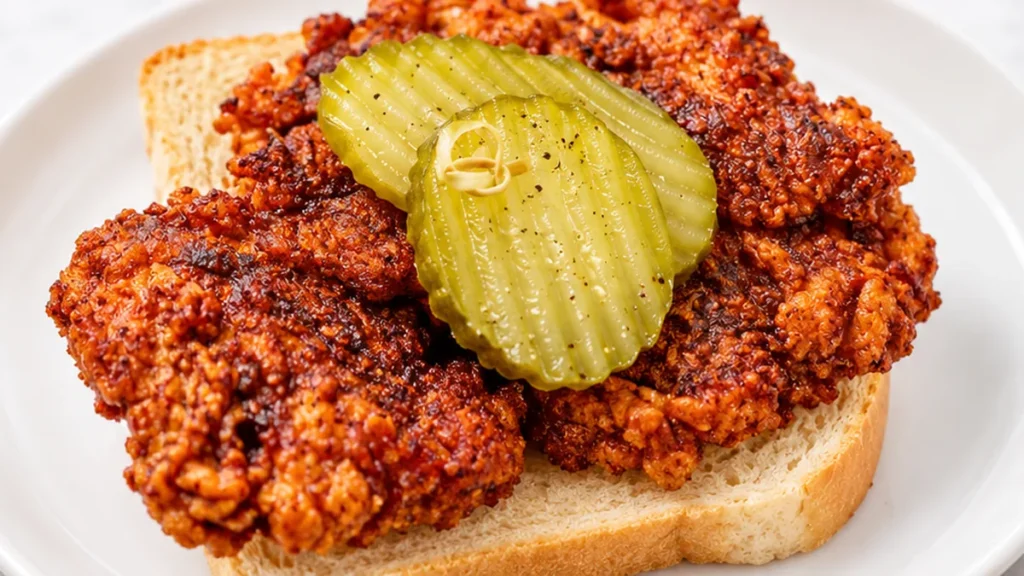
Nashville hot chicken is not for the faint of heart, but it’s incredibly rewarding. This recipe captures the essence of the iconic Nashville hot chicken, delivering a fiery, flavorful punch with every bite. We’ll guide you through creating that signature crispy coating and the spicy glaze that makes it unforgettable. Mastering Nashville hot chicken means understanding the balance of heat, brine, and a perfectly crisp crust. This recipe breaks down the process, ensuring you get that authentic taste and texture right in your own kitchen.
Key takeaways
- Marinate chicken for at least 4 hours to enhance flavor.
- Balance flour and cornstarch for a crispy coating.
- Maintain oil temperature between 175°C to 190°C for even frying.
- Allow chicken to rest after frying for optimal juiciness.
Nashville Hot Chicken Recipe
Ingredients
- 1 cup buttermilk (8 oz)
- ¼ cup pickle juice (2 oz)
- ¼ cup hot sauce (2 oz)
- 4 boneless, skinless chicken thighs (1.5lb)
- 1 cup all-purpose flour (120g)
- ¼ cup cornstarch (30g)
- 1 tsp baking powder
- 2 cups vegetable oil (16 oz)
- 2 tbsp cayenne
- 1 tsp brown sugar
Instructions
- Mix buttermilk, pickle juice, and hot sauce in a bowl. Add chicken thighs and refrigerate for 1 hour.
- Strain the buttermilk brine into a clean bowl. In another bowl, whisk flour, cornstarch, baking powder, and ½ tablespoon of salt.
- Dredge each chicken thigh in the flour mixture, dip back into the buttermilk, then coat again in flour. Place on a clean plate.
- Fill a skillet with vegetable oil, about 1/3 full. Heat oil to 350°F over medium-high heat.
- Use a thermometer to check oil temperature. Carefully place two chicken thighs into the oil.
- Do not move chicken for at least 3 minutes. Fry for 5-7 minutes per side until golden brown.
Notes
Understanding the Marinade’s Role in Flavor Development
The marinade, consisting of buttermilk, pickle juice, and hot sauce, serves multiple purposes in the Nashville hot chicken recipe. Buttermilk’s acidity helps tenderize the chicken, while its fat content adds richness. The pickle juice introduces a tangy note, enhancing the overall flavor profile. Hot sauce provides the essential heat that characterizes this dish. Allowing the chicken to marinate for at least 4 hours, or preferably overnight, allows these flavors to penetrate deeply, resulting in a more flavorful and juicy chicken.
Achieving the Perfect Crust: Flour and Cornstarch Balance
The combination of all-purpose flour and cornstarch is crucial for achieving that signature crispy crust on Nashville hot chicken. The flour provides the structure, while cornstarch contributes to a lighter, crunchier texture. A common mistake is using only flour, which can lead to a dense coating. For optimal results, ensure the coating is seasoned well and allow the chicken to rest for a few minutes after breading to help the coating adhere during frying. Frying at the right temperature, around 180°C (350°F), is also essential to prevent the crust from becoming soggy.
Controlling Oil Temperature for Optimal Frying
Maintaining the correct oil temperature is critical when frying Nashville hot chicken. If the oil is too hot, the crust may burn before the chicken cooks through; if it’s too cool, the chicken will absorb excess oil, resulting in greasiness. A thermometer is an invaluable tool here, ensuring that the oil remains between 175°C to 190°C (350°F to 375°F) during frying. Frying in batches can help manage the temperature effectively, allowing each piece to cook evenly without overcrowding the pan.
Understanding the Spice Blend for Authentic Heat
The spice blend, particularly the cayenne pepper and brown sugar, is what sets Nashville hot chicken apart. The cayenne provides the heat, while the brown sugar balances it with sweetness, creating a complex flavor profile. Adjusting the amount of cayenne can tailor the heat level to your preference, but be cautious; too much can overpower the dish. For those who prefer a milder version, consider reducing the cayenne and adding smoked paprika for a different flavor without excessive heat.
Resting the Chicken: Why It Matters
After frying, allowing the chicken to rest is a crucial step that many home cooks overlook. Resting for about 10 minutes helps the juices redistribute throughout the meat, ensuring a moist and tender bite. Additionally, this resting period allows the crust to set, preventing it from becoming soggy when the chicken is sauced. This step is essential for achieving the ideal texture and flavor in your Nashville hot chicken.
How to Scale Your Nashville Hot Chicken Recipe for Larger Gatherings
When scaling your Nashville hot chicken recipe, it’s essential to maintain the balance of flavors and textures. For larger gatherings, consider increasing the marinade ingredients proportionally. For example, if you double the chicken, use 2 cups of buttermilk, ½ cup of pickle juice, and ½ cup of hot sauce. However, keep in mind that the frying process may require adjustments. Frying in smaller batches helps maintain oil temperature and ensures even cooking, which is crucial for achieving that crispy crust. Additionally, if you scale the recipe, allow for slightly longer marination times to ensure that the flavor penetrates the meat thoroughly.
Equipment Considerations for Frying Nashville Hot Chicken
The equipment you use can significantly impact the final result of your Nashville hot chicken. A heavy-bottomed pot or a deep fryer is ideal for achieving consistent heat. If using a pot, ensure it’s deep enough to allow the chicken to be submerged in oil without overflowing. A thermometer is crucial for monitoring oil temperature, which should remain around 350°F (175°C) during frying. If using a home fryer, check the manufacturer’s guidelines for maximum capacity to avoid overcrowding. Using a wire rack for cooling after frying helps maintain the chicken’s crispiness by preventing steam buildup.
Pairing Nashville Hot Chicken with Sides and Drinks
Nashville hot chicken is best served with complementary sides that balance its spicy kick. Traditional pairings include creamy coleslaw, pickles, or potato salad, which provide a cooling contrast to the heat. For drinks, consider serving sweet tea or a refreshing lemonade to offset the spice. Beer, particularly a light lager or wheat beer, can also complement the flavors well. When planning a meal, consider the heat level of your chicken; milder sides can help mitigate the spice, while more robust flavors can enhance the overall experience.
Understanding the Impact of Ingredient Quality on Nashville Hot Chicken
The quality of your ingredients can make a notable difference in your Nashville hot chicken. Fresh chicken thighs will yield a juicier and more flavorful result compared to frozen varieties. Similarly, using high-quality spices, particularly cayenne pepper, will enhance the authenticity and depth of flavor in your spice blend. Fresh buttermilk is preferable for marinating, as it provides better acidity and flavor than powdered or shelf-stable alternatives. Seasonal ingredients, such as locally sourced pickles or homemade hot sauce, can elevate your dish further, ensuring a unique and memorable experience.
Understanding the Impact of Batch Size on Cooking Time and Texture
When scaling your Nashville hot chicken recipe, it’s essential to understand how batch size affects cooking time and texture. A larger batch may require a longer cooking time due to the increased mass of chicken, which can lower the oil temperature if not managed properly. For example, if you’re frying eight chicken thighs instead of four, consider increasing the frying time by 2-3 minutes, while monitoring the internal temperature. The ideal internal temperature for chicken is 74°C (165°F). Additionally, frying in smaller batches allows for better oil temperature maintenance, leading to a crispier exterior. Conversely, overcrowding the frying pan can result in soggy chicken and uneven cooking.
How Ingredient Quality Affects Flavor and Texture in Nashville Hot Chicken
The quality of your ingredients plays a crucial role in the final flavor and texture of Nashville hot chicken. Fresh, high-quality chicken thighs will yield better moisture retention and tenderness compared to lower-quality options. Similarly, using freshly ground spices rather than pre-ground ones can significantly enhance the flavor profile. Spices lose their potency over time, so consider grinding whole spices just before use for maximum flavor. Additionally, the type of hot sauce used can drastically change the heat level and overall taste. A high-quality hot sauce will provide a more complex flavor compared to a generic brand, affecting the final dish’s authenticity and satisfaction.
Preparing Nashville Hot Chicken Ahead of Time: Best Practices
Preparing Nashville hot chicken ahead of time can save you effort on the day of serving, but it requires careful planning to maintain quality. Marinating the chicken in buttermilk and pickle juice can be done a day in advance, allowing for deeper flavor penetration. After frying, if you’re not serving immediately, consider placing the chicken on a wire rack to cool, which prevents sogginess. To reheat, place the chicken in an oven at 190°C (375°F) for about 10-15 minutes, ensuring it stays crispy. Alternatively, you can freeze the fried chicken for up to three months. When ready to serve, reheat from frozen in the oven, adjusting the time as needed. This method preserves the chicken’s texture and flavor while allowing for convenience.
How to Store and Reheat Nashville Hot Chicken for Maximum Flavor
Proper storage is essential to maintain the flavor and texture of Nashville hot chicken. After frying, allow the chicken to cool completely before storing it in an airtight container. This helps prevent moisture buildup, which can lead to sogginess. For optimal results, refrigerate the chicken for up to three days. When reheating, use an oven preheated to 190°C (375°F) to restore crispiness, placing the chicken on a wire rack over a baking sheet. Heat for about 15-20 minutes, or until the internal temperature reaches 74°C (165°F). This method helps retain the crunch while ensuring the chicken is heated through.
Scaling Your Nashville Hot Chicken Recipe: Tips for Larger Gatherings
When scaling your Nashville hot chicken recipe for larger gatherings, it’s crucial to maintain the balance of flavors and cooking techniques. For every additional pound of chicken, proportionally increase the marinade ingredients, ensuring the chicken remains evenly coated. Additionally, consider frying in batches to maintain oil temperature, as overcrowding can lead to uneven cooking. If using a larger fryer, be mindful of the oil’s heat retention properties, as larger volumes may require longer to reach the desired frying temperature. A good rule of thumb is to aim for about 1.5 kg (3.3 lb) of chicken per batch to ensure optimal cooking without sacrificing quality.
Pro tips
- For extra heat, add more cayenne to the spice mix or hot sauce.
- Ensure your oil is at the correct temperature (350°F) for optimal crispiness.
- Let the chicken rest after frying to allow juices to redistribute.
Enjoy this intensely flavorful and satisfying Nashville hot chicken. Serve with classic sides like pickles and coleslaw for the full experience.
Frequently asked questions
How long should I marinate the chicken?
For best results, marinate the chicken for at least 4 hours, but overnight is ideal. This allows the flavors to penetrate deeply and tenderize the meat.
Can I use chicken breasts instead of thighs?
Yes, you can use chicken breasts, but keep in mind that they may dry out more quickly than thighs. Adjust cooking times accordingly to ensure they remain juicy.
What can I do if my chicken coating is soggy?
Soggy coating can result from frying at too low a temperature or not allowing the chicken to rest after breading. Ensure the oil is hot enough and let the chicken sit for a few minutes before frying.
How can I adjust the heat level in my Nashville hot chicken?
You can adjust the heat by varying the amount of cayenne pepper in the spice blend. For a milder version, reduce the cayenne and consider adding smoked paprika for flavor without excessive heat.
More from High-Protein Dinners →