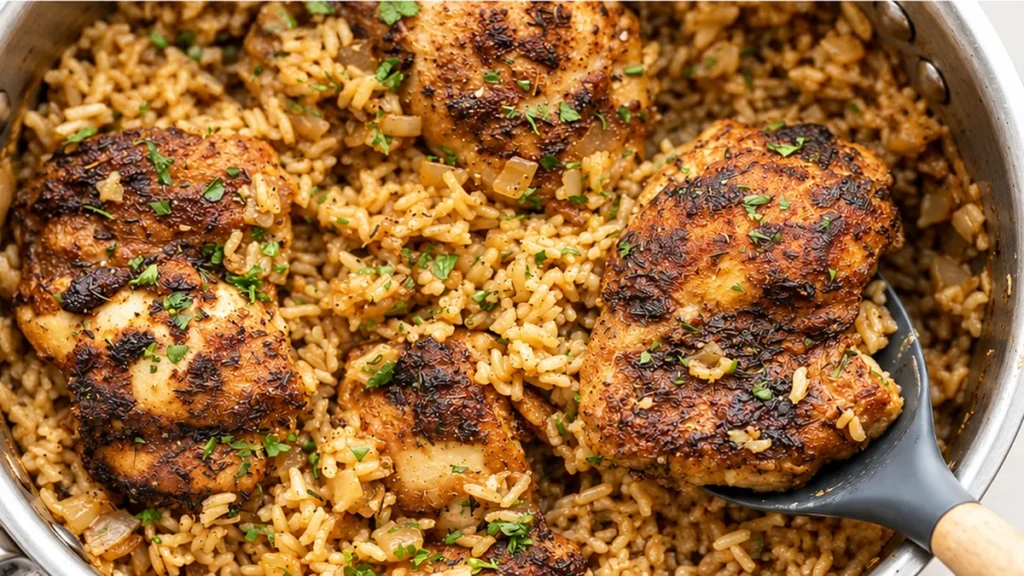
This one-pot chicken rice recipe combines seasoned chicken and rice in a single skillet. It’s a straightforward approach to a satisfying weeknight meal.
Key takeaways
- Use a balanced ratio of rice to liquid for perfect texture.
- Ensure spices are well-seasoned for maximum flavor.
- Monitor cooking time to prevent overcooking the chicken.
- Experiment with ingredient swaps for varied flavor profiles.
One-Pot Chicken & Rice Dinner
Ingredients
- 2 tsp paprika
- 1 tsp dried oregano
- 1 tsp dried thyme
- 1/2 tsp garlic powder
- 1/2 tsp onion powder
- 1/4 tsp salt
- 1/4 tsp pepper
- 1.25 lbs boneless, skinless chicken thighs
- 2 tbsp cooking oil
- 1 yellow onion, diced
Instructions
- Combine the paprika, oregano, thyme, garlic powder, onion powder, salt, and pepper in a small bowl. Coat both sides of the chicken thighs in the seasoning mix.
- Add 1 Tbsp cooking oil to a deep skillet and heat over medium. Once hot, swirl to coat the surface of the skillet, then add the chicken thighs. Cook for a few minutes on each side until well browned.
- Remove the browned chicken to a clean plate. Reduce heat to medium-low, add 1 Tbsp cooking oil, then add the diced onion. Sauté for about 5 minutes until softened.
- Add uncooked rice to the skillet and sauté for 1-2 minutes to toast the rice.
- Add vegetable broth and stir to dissolve any remaining brown bits.
- Return chicken to the skillet on top of the rice. Cover and bring to a boil over medium-high heat.
- Once boiling, reduce heat to low and simmer for 20 minutes without lifting the lid.
- Remove lid, fluff rice around chicken, garnish with parsley if desired, then serve.
Notes
Understanding the Flavor Profile of Chicken Rice
The combination of spices used in this One-Pot Chicken & Rice Dinner is crucial for developing a rich flavor profile. Paprika, for instance, not only adds color but also contributes a subtle sweetness and smokiness, enhancing the overall taste of the dish. The dried oregano and thyme bring herbal notes that complement the chicken, while garlic and onion powders provide depth. Together, these ingredients create a well-rounded flavor that permeates the chicken and the rice, making every bite satisfying.
Cooking Techniques for Perfectly Cooked Rice
Achieving the right texture for the rice is essential in this dish. The cooking method involves sautéing the chicken and onions first, which allows the chicken to brown and develop a crust, enhancing the flavor through the Maillard reaction. Once the chicken is browned, adding the rice and liquid helps the grains absorb the flavorful broth. It’s important to maintain the right simmering temperature; too high can lead to mushy rice, while too low may result in undercooked grains. Ideally, the rice should cook for about 18-20 minutes, absorbing all the liquid and flavors without becoming overcooked.
Common Mistakes and Their Solutions
One common mistake when making this dish is using too much liquid, which can lead to soggy rice. The right ratio of rice to liquid is typically 1:2. If you find that your rice is consistently mushy, consider reducing the amount of broth or water slightly. Another issue is under-seasoning; since the rice absorbs flavors from the broth, it’s crucial to ensure the liquid is well-seasoned. If you find the dish lacks flavor, try adding more salt or spices to the cooking liquid. Lastly, avoid stirring the rice too much during cooking, as this can release starch and make the rice gummy.
Ingredient Swaps and Their Implications
While the recipe calls for chicken thighs, you can substitute with boneless, skinless chicken breasts. However, breasts are leaner and can dry out more quickly, so it’s essential to monitor cooking time closely. For a different flavor profile, consider using smoked paprika instead of regular paprika, which will impart a distinct smokiness to the dish. If you prefer a vegetarian option, replace chicken with firm tofu and use vegetable broth instead of chicken broth. This swap alters the texture and flavor significantly but can still yield a delicious one-pot meal.
Unique Aspects of Chicken Rice Compared to Other Dishes
This One-Pot Chicken & Rice Dinner stands out due to its simplicity and the depth of flavor achieved through a single cooking vessel. Unlike many rice dishes that require separate preparation of proteins and grains, this dish allows the chicken to infuse its juices into the rice, creating a cohesive flavor. The use of dried herbs and spices also differentiates it from more traditional rice dishes that may rely heavily on fresh ingredients. Additionally, the one-pot method minimizes cleanup, making it an ideal weeknight meal.
Understanding the Impact of Ingredient Quality on Flavor
The quality of ingredients significantly influences the overall flavor of the One-Pot Chicken & Rice Dinner. For instance, using fresh, high-quality chicken thighs can enhance the dish’s taste and texture. The chicken should be moist and tender, providing a rich base for the rice to absorb flavors. Similarly, the freshness of the spices, particularly the paprika, oregano, and thyme, can make a noticeable difference. Spices lose potency over time, so using freshly opened or recently purchased spices can elevate the dish. Additionally, the quality of the onion, which adds sweetness and depth, should not be overlooked. A fresh, firm onion will caramelize better, adding a layer of flavor that enhances the entire meal.
Batch Scaling: Adjusting for Larger Gatherings
When scaling the One-Pot Chicken & Rice Dinner for larger gatherings, it’s essential to maintain the balance of ingredients to ensure consistent flavor and texture. A good rule of thumb is to increase the quantity of chicken and rice in a 1:1 ratio; for example, if you double the chicken to 2.5 lbs, also double the rice. However, be cautious with the spices; typically, you can increase them by 1.5 times to avoid overpowering the dish. Additionally, ensure that your cooking pot is large enough to accommodate the increased volume, as overcrowding can lead to uneven cooking. Cooking times may also vary slightly, so monitor the dish closely to ensure the chicken cooks through and the rice absorbs the appropriate amount of liquid.
Make-Ahead Strategies for a Stress-Free Meal
Preparing the One-Pot Chicken & Rice Dinner ahead of time can streamline your cooking process, especially for busy weeknights or entertaining. One effective strategy is to marinate the chicken thighs in the spice mixture the night before. This allows the flavors to penetrate the meat, enhancing its taste. Additionally, you can pre-chop the onion and store it in an airtight container in the refrigerator to save time. When ready to cook, simply sauté the onion, add the marinated chicken, and follow the rest of the recipe. If you have leftovers, they can be stored in the refrigerator for up to three days. Reheat gently on the stove, adding a splash of water or broth to prevent the rice from drying out.
Equipment Considerations for Optimal Cooking
The type of equipment used can greatly affect the outcome of the One-Pot Chicken & Rice Dinner. A heavy-bottomed pot or Dutch oven is ideal for even heat distribution, preventing hot spots that can lead to burning. If using a non-stick pot, be mindful of the temperature to avoid damaging the coating. For those using an electric pressure cooker, the cooking time will be significantly reduced, but be sure to adjust the liquid accordingly to prevent burning. Additionally, consider the size of your pot; a pot that is too small can cause the rice to cook unevenly. Always ensure that there is enough space for the rice to expand as it cooks, which is crucial for achieving the perfect texture.
Understanding the Role of Liquid Ratios in One-Pot Chicken & Rice
One of the key factors that can make or break your one-pot chicken and rice dish is the liquid-to-rice ratio. Typically, for every cup of rice, you will need about 1.5 to 2 cups of liquid, depending on the type of rice used. For example, long-grain white rice generally requires closer to 1.5 cups of liquid, while brown rice often needs up to 2.5 cups. This is crucial because insufficient liquid can lead to undercooked rice, while too much can create a soupy texture. It’s also important to consider the moisture content of the chicken and any vegetables added, which can contribute to the overall liquid in the pot. Therefore, adjusting the liquid based on the ingredients used can ensure perfect cooking results.
Batch Scaling: Adapting Your One-Pot Dish for Larger Gatherings
When scaling your one-pot chicken and rice for larger gatherings, it’s essential to maintain the balance of flavors and cooking times. For example, if you’re doubling the recipe, simply doubling the ingredients may not suffice. You should also consider the size of your cooking vessel; a larger pot allows for even cooking and prevents overcrowding. Additionally, keep in mind that cooking times may vary. Generally, larger batches may require slightly longer cooking times, but it’s crucial to check the doneness of the chicken and rice periodically. If you’re using a larger pot, you might need to increase the liquid proportionally to ensure the rice cooks evenly. This practice ensures that your dish remains flavorful and properly cooked, even when increased in size.
How to Effectively Scale Your One-Pot Chicken and Rice Recipe
Scaling your one-pot chicken and rice recipe can be a straightforward process, but it requires careful adjustments to maintain flavor and texture. When increasing the quantity, consider the ratio of chicken to rice and liquid. A common ratio is 1 part rice to 2 parts liquid. For instance, if you use 1 cup of rice, you should add about 2 cups of chicken broth. Additionally, ensure that your pot is large enough to accommodate the increased volume without overcrowding, which can lead to uneven cooking. If you are doubling the recipe, increase the cooking time slightly, typically by 5-10 minutes, and always check the doneness of both the chicken and rice before serving. This ensures that the dish remains moist and flavorful, without any ingredients being overcooked or undercooked.
Understanding the Impact of Ingredient Quality on Your One-Pot Chicken and Rice
The quality of your ingredients can significantly influence the final outcome of your one-pot chicken and rice dish. Fresh, high-quality chicken thighs will yield a juicier and more flavorful result compared to lower-quality options. Additionally, using organic spices and herbs can enhance the overall flavor profile, making the dish more aromatic and appealing. The type of rice used also matters; long-grain rice tends to remain fluffy, while short-grain rice can become sticky. Furthermore, the freshness of your spices affects their potency—stale spices can lead to a bland dish. Always opt for freshly ground spices when possible, as they provide a more robust flavor. Investing in quality ingredients can elevate your dish from ordinary to extraordinary, making it a standout meal.
Pro tips
- Use chicken thighs for maximum flavor and moisture; they are more forgiving than breasts.
- Don’t skip browning the chicken and toasting the rice; these steps build crucial flavor layers.
- Ensure the lid is sealed tightly during simmering to trap steam and cook the rice evenly.
- Let the dish rest undisturbed after cooking for the rice to absorb remaining moisture and become fluffy.
Enjoy this flavorful and incredibly easy one-pot chicken and rice. It’s a testament to how simple ingredients and methods can create a truly satisfying meal.
Frequently asked questions
Can I use brown rice instead of white rice in this recipe?
Yes, you can use brown rice, but it requires a longer cooking time and more liquid. Typically, brown rice needs about 40-45 minutes to cook, so adjust the cooking time accordingly and increase the liquid by about 1/2 cup.
What can I do if my rice turns out mushy?
If your rice is mushy, it may be due to too much liquid or overcooking. To fix this, you can try spreading the rice on a baking sheet to cool and dry out. In the future, ensure the correct rice-to-liquid ratio and monitor the cooking time closely.
Is it necessary to brown the chicken before adding rice?
Browning the chicken is not strictly necessary, but it enhances the flavor through the Maillard reaction, creating a richer taste in the final dish. If you’re short on time, you can skip this step, but the flavor may be less intense.
Can I make this dish ahead of time?
Yes, you can prepare this dish ahead of time. Cook it as directed, then cool it quickly and store it in the refrigerator for up to three days. Reheat thoroughly before serving, adding a splash of water if necessary to prevent drying out.
More from High-Protein Dinners →