Lactose free protein shakes solve a problem most recipe roundups get wrong: they treat “lactose-free” and “dairy-free” as the same thing when they are not. Lactose is a milk sugar. Dairy is the whole ingredient category. You can drink a shake that is technically dairy, made from whey isolate, and still take in less than one gram of lactose per serving. That single distinction changes which powders you can buy, how much you spend, and whether your stomach forgives you an hour later. Below you get the source rundown, the tolerance numbers, real recipes with protein and calorie counts, and the label tricks that hide milk in a “0 g sugar” tub.
Quick answer: Lactose free protein shakes are drinks with essentially zero milk sugar, built either from plant proteins (pea, rice, soy, hemp) or from whey isolate, which is dairy but carries only about 0.3 to 1 gram of lactose per 30 gram serving. Most people diagnosed with lactose intolerance tolerate around 12 grams of lactose in one sitting, so an isolate scoop sits far under that ceiling. Pair your protein with a lactose-free liquid base like almond, oat, soy, or lactose-free cow’s milk, add fruit and a fat for texture, and you have a comfortable shake.
Lactose-Free vs Dairy-Free: The Difference That Changes Your Cart
Lactose-free means the finished shake carries essentially no lactose, the milk sugar. Dairy-free means it contains no milk-derived ingredient at all. These are not interchangeable, and the gap between them decides what you can buy. Lactose is a disaccharide of glucose and galactose found only in mammalian milk, broken down by the enzyme lactase in the intestinal brush border. When lactase is low, undigested lactose ferments in the colon and produces the familiar gas, bloating, cramps, and diarrhea. A milk allergy is a separate condition entirely, an immune reaction to milk protein rather than to the sugar, and it demands full dairy-protein avoidance. Sorting these apart first is what stops you from overpaying for vegan powder you never needed.
- Lactose intolerant: you can likely use whey isolate (dairy, near-zero lactose) plus any lactose-free liquid.
- Milk allergic: you must avoid all whey and casein and go fully plant-based.
- Vegan by choice: plant proteins only, which are also naturally lactose-free.
The U.S. Food and Drug Administration classifies milk as a major allergen, so any product containing whey, casein, or milk solids must declare it on the label. That declaration is your fastest sorting tool at the shelf.
Who Actually Needs a Lactose Free Protein Shake
Reduced lactase activity is not a rare quirk; it is the global default. Roughly 65 percent of the world’s adult population has some reduction in lactase activity after infancy, according to figures compiled by the Eunice Kennedy Shriver National Institute of Child Health and Human Development and corroborated in the medical literature. The rate swings hard by ancestry. Estimates run near 90 to 100 percent among East Asian adults, 80 to 100 percent among Native Americans, 60 to 80 percent among African American and Ashkenazi Jewish populations, and around 25 percent across Europe, dropping to roughly 20 percent in people of northern-European descent. In the United States alone, an estimated 30 to 50 million adults are lactose intolerant.
Prevalence numbers vary because “lactose malabsorption” measured in a lab and “symptomatic intolerance” felt at the kitchen table are two different things. The honest range is wide, from about 25 percent to over 70 percent depending on the group and the measurement. What matters for your shake is simpler: if regular whey concentrate leaves you cramping, you are almost certainly in this population, and a smarter powder fixes it.
Protein Source Rundown: Lactose Grams for Every Powder
Not all protein powders carry the same lactose load, and the spread is enormous. Whey concentrate sits at the high end with roughly 3 to 8 grams of lactose per serving, about 5 to 8 percent by weight. Whey isolate is filtered far more aggressively and lands at roughly 0.3 to 1 gram per 30 gram serving, about 0.5 to 1 percent by weight. Whey hydrolysate is lower still. Every plant option, pea, brown rice, soy, and hemp, contains zero lactose because lactose exists only in mammalian milk. Collagen from bovine sources is also effectively lactose-free. That range is the whole game: pick by the number, not by the marketing on the front of the tub.
- Whey concentrate: ~3 to 8 g lactose; ~70 to 80 percent protein by weight.
- Whey isolate: ~0.3 to 1 g lactose; at least 90 percent protein by weight.
- Whey hydrolysate: lowest lactose of the whey family.
- Pea, brown rice, soy, hemp: zero lactose, dairy-free, vegan.
The protein-density difference matters too. Because isolate is at least 90 percent protein against concentrate’s 70 to 80 percent, you get more grams and less filler per scoop, which is part of why it costs more per pound. If you are also weighing animal versus plant nutrition more broadly, the breakdowns on meat protein sources put whey’s amino profile in useful context next to whole-food options.
Can You Still Use Whey? The 12-Gram Threshold Nobody Explains
Yes, most lactose-intolerant people can still use whey, provided it is isolate or hydrolysate rather than concentrate. The reason is a documented tolerance ceiling. A systematic review commissioned by the National Institutes of Health in 2010, backed by a 2017 meta-analysis published in Critical Reviews in Food Science and Nutrition, found that most people diagnosed with lactose intolerance tolerate about 12 grams of lactose in a single sitting without symptoms, and roughly 18 to 24 grams per day when spread across meals. A whey isolate scoop delivering 0.3 to 1 gram of lactose therefore sits about 12 to 40 times under that single-dose limit.
Put plainly: the milk sugar in a well-filtered isolate is a rounding error against your daily tolerance. The people who genuinely cannot touch whey are those with a milk protein allergy, because filtering removes lactose but not the casein and whey proteins that trigger an immune response. If that is you, the plant column is your only column. For everyone else, isolate is the cheapest, highest-protein route to a comfortable shake, and it dissolves cleaner than most plant powders do.
Lactose-Free Liquid Bases and the Buildable Shake Formula
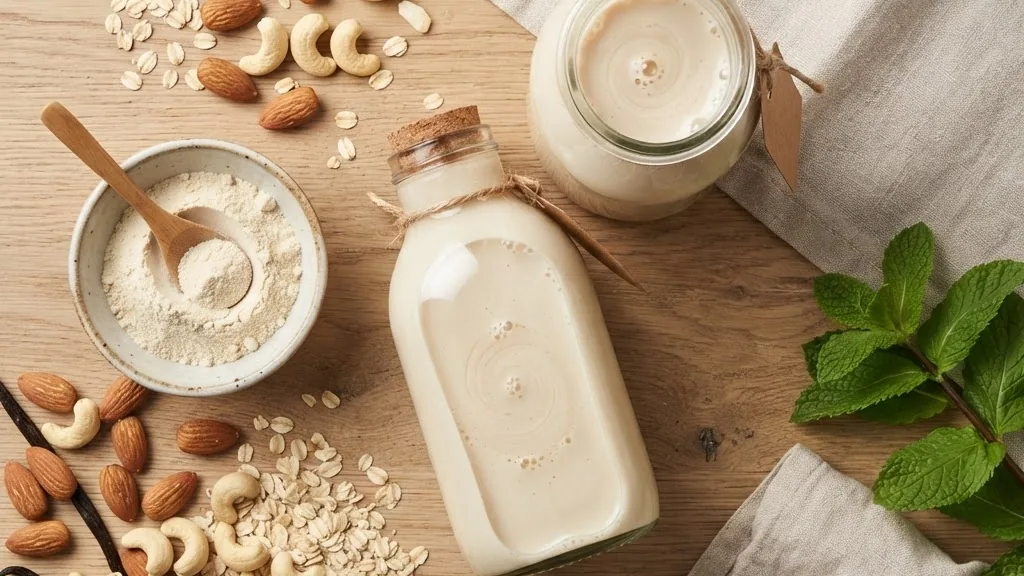
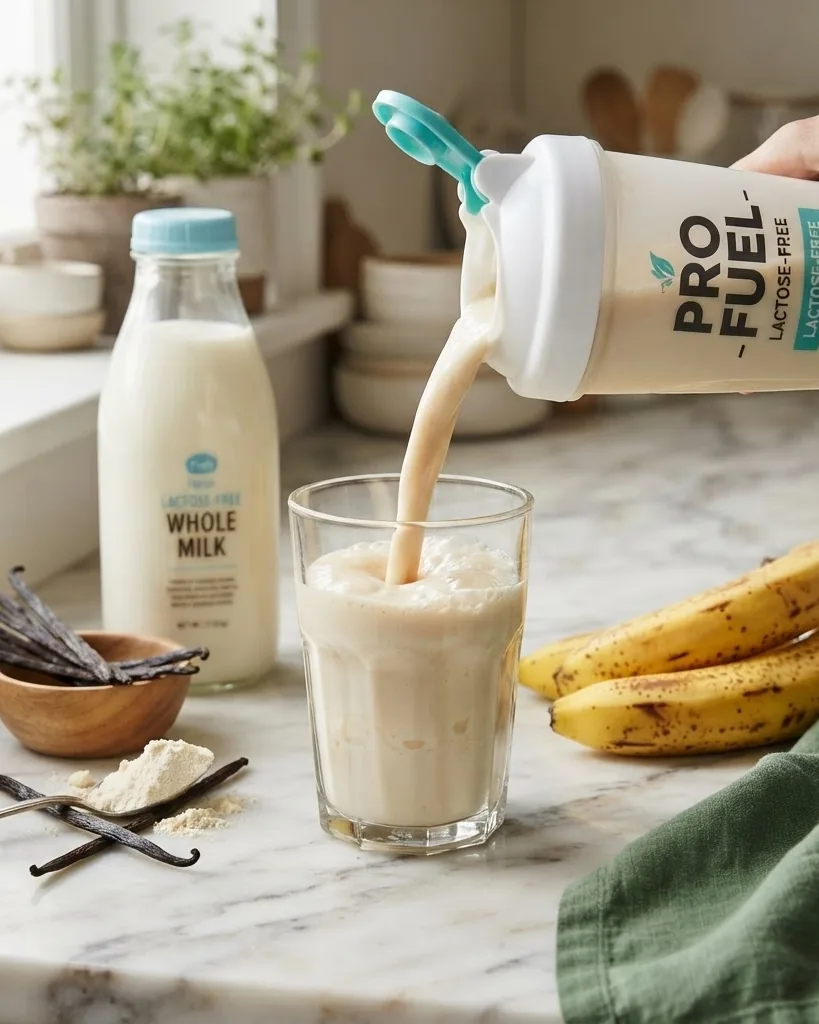
The base liquid decides half your texture and most of your comfort. Every one of these carries zero lactose: unsweetened almond milk, oat milk, soy milk, coconut milk, rice milk, plain water, and lactose-free cow’s milk, which is real dairy treated with lactase so the sugar is already broken down. Once your base is safe, the rest is a repeatable ratio you can memorize instead of hunting for a new recipe every week. Build in this order and you rarely miss.
- Liquid: 1 to 1.5 cups of any lactose-free base above.
- Protein: 1 scoop (roughly 30 g) of isolate or a plant blend.
- Fruit or fat: 1 frozen banana, a handful of berries, or a tablespoon of nut butter for body.
- Booster (optional): chia, hemp hearts, oats, or a handful of spinach.
The fat-or-fruit slot is what separates a watery letdown from something that coats the glass. A frozen banana thickens without dairy; nut butter adds richness and staying power. If you like the tang of a fruit-forward blend, the same balancing logic that keeps a savory sauce from going flat in this buffalo chicken pasta applies here: acid and fat need each other.
Real Recipes With Protein and Calorie Counts
Recipe lists that skip nutrition leave you guessing whether a shake is a snack or a meal. Here is a documented reference build and three variations you can scale from it. The reference: soy milk plus a plant protein plus strawberries plus chia plus hemp hearts comes to roughly 383 kcal, 37.4 grams of protein, and 11.2 grams of fiber per serving. That single shake covers a meaningful slice of the protein Recommended Dietary Allowance, which the National Academies sets at 0.8 grams per kilogram of body weight per day, about 56 grams daily for a 70 kilogram adult. One shake delivering 37.4 grams is roughly two-thirds of that day’s floor.
- The reference berry-hemp: soy milk, plant protein, strawberries, chia, hemp hearts. ~383 kcal, 37.4 g protein.
- Isolate chocolate: lactose-free cow’s milk, whey isolate scoop, frozen banana, tablespoon cocoa. Lower lactose than any concentrate version.
- Green oat: oat milk, pea protein, spinach, half a banana, oats for body.
- Coconut-almond snack: coconut milk, almond butter, isolate, ice; lighter, no fruit sugar.
For post-workout use, front the protein and go lighter on fat so it empties from the stomach faster. Craving something heartier alongside these? A bowl of hearty Brunswick stew rounds out a high-protein day without any dairy at all.
Reading the Label: Why “0 g Sugar” Does Not Mean Lactose-Free
A “0 g sugar” claim on a protein tub is the single most common trap for lactose-intolerant buyers. Nutrition-label rounding rules let a product print 0 grams of sugar while trace lactose still lingers, and lactose can hide under names that never say the word: whey, casein, milk solids, and non-fat milk powder are all dairy. The Food and Drug Administration’s labeling rules require the major allergen milk to be declared, so the ingredient list, not the front-panel sugar figure, is where you get the truth. Read the list every time, especially on flavored powders where milk-based creamers sneak in for mouthfeel. A powder can be low in total sugar and still be built on lactose-heavy concentrate.
Two quick label habits catch almost everything. First, scan the ingredient list for the four dairy code-words above before you trust any front-panel claim. Second, if you want whey, confirm the word “isolate” or “hydrolysate” appears, since plain “whey protein” often means concentrate. The Food and Drug Administration also governs when a product may carry a formal “lactose-free” statement, so that phrasing is more reliable than a bare sugar number.
Calcium, Vitamin D, and the Real Risk of Cutting Dairy
The hidden cost of dropping dairy is not protein; you replace that easily. It is calcium and vitamin D, the two nutrients dairy quietly supplied. The National Academies, through its Dietary Reference Intakes, sets the intake targets for both, and when you pull milk out of your day you have to backfill them deliberately or you drift below those targets over months. This is the gap most recipe roundups ignore entirely, and it is the one with real long-term consequences for bone health.
- Fortified plant milks: most almond, soy, and oat milks are fortified with calcium and vitamin D to levels near cow’s milk; check the label to confirm.
- Lactose-free cow’s milk: retains the native calcium and vitamin D of regular milk, since only the sugar is altered.
- Whole-food adds: spinach and chia in your shake contribute calcium on top of the base.
For nutrient values you can trust when doing this math, USDA FoodData Central publishes the authoritative protein and calcium figures for individual ingredients. The Academy of Nutrition and Dietetics, whose guidance is registered-dietitian reviewed, is a sound plain-language source if you want a dietitian to sanity-check your swaps.
Troubleshooting: Clumping, Chalk, and Grit
Plant proteins are grittier and chalkier than whey by nature, and cold liquid makes clumping worse. Most texture failures trace to one of three fixable causes: powder added to still liquid, too little fat, or no blend time. Fixing them takes seconds and no extra ingredients. Add liquid to the blender first, then powder, then frozen items last so the blades pull everything down. A tablespoon of nut butter or half a frozen banana coats the grit and rounds out the mouthfeel that pea and rice proteins lack. If a shake sets up too thick after sitting, thin it with a splash of your base rather than water, which dilutes flavor.
- Clumping: blend, do not shake, and pour liquid in before powder.
- Chalkiness: add fat (nut butter, hemp hearts) and a touch of frozen fruit.
- Too thick: loosen with more base liquid, not plain water.
Ready-to-Drink vs Homemade: Cost and Control
Store-bought ready-to-drink shakes win on speed and lose on almost everything else that matters to a lactose-intolerant drinker. You pay a premium for convenience, you cannot verify the whey type without decoding the label, and many flavored bottles use concentrate or milk creamers that push lactose higher than a homemade isolate build ever would. Homemade gives you full control: you choose isolate over concentrate, you pick a fortified base, and you know exactly what went in. The tradeoff is a blender and two minutes of cleanup. For anyone drinking one daily, the per-serving cost gap adds up fast in favor of building your own.
If total control is your reason for going homemade across the board, that same instinct shows up in kitchen projects like crispy air fryer fried chicken, where doing it yourself beats the packaged version on both cost and quality.
Lactase Enzyme: The Other Path
Switching powders is not the only fix. Lactase enzyme supplements, sold over the counter, replace the enzyme your gut runs short on and let some people handle regular dairy, including whey concentrate, without symptoms. The National Institute of Diabetes and Digestive and Kidney Diseases and the Mayo Clinic both describe lactose intolerance as a lactase deficiency, which is exactly what these supplements target. For occasional dairy or a shake made with concentrate you already own, an enzyme tablet can bridge the gap. It is less reliable than simply choosing isolate or a plant protein, but it keeps your options open when you are traveling or eating out.
Frequently Asked Questions
Is whey protein lactose free?
Not entirely, but it depends on the type. Whey concentrate carries roughly 3 to 8 grams of lactose per serving, while whey isolate holds only about 0.3 to 1 gram per 30 gram serving. Since most lactose-intolerant people tolerate around 12 grams in one sitting, isolate is comfortable for most, though concentrate often is not.
Is an oat milk protein shake dairy free?
Yes, if the protein powder is also dairy-free. Oat milk itself contains no milk-derived ingredient and zero lactose, so it qualifies as both lactose-free and dairy-free. Pair it with a plant protein like pea or rice and the whole shake stays dairy-free. Add whey isolate and it becomes lactose-free but no longer dairy-free.
What is the difference between lactose intolerance and a milk allergy?
Lactose intolerance is trouble digesting the milk sugar lactose because of low lactase enzyme. A milk allergy is an immune reaction to milk protein, casein or whey, and is a distinct condition. The Eunice Kennedy Shriver National Institute of Child Health and Human Development treats them separately. Allergy requires full dairy-protein avoidance; intolerance often allows whey isolate.
How much protein does one shake actually give me?
A documented homemade build with soy milk, plant protein, strawberries, chia, and hemp hearts delivers roughly 37.4 grams of protein and 383 kcal per serving. Against the National Academies protein target of 0.8 grams per kilogram daily, about 56 grams for a 70 kilogram adult, that one shake covers close to two-thirds of the day’s floor.
Does “0 g sugar” mean a powder is lactose free?
No. Label rounding can show 0 grams of sugar while trace lactose remains, and dairy hides under names like whey, casein, milk solids, and non-fat milk powder. The Food and Drug Administration requires milk to be declared as an allergen, so check the ingredient list rather than trusting the front-panel sugar figure to confirm a powder is truly lactose-free.
What can replace the calcium and vitamin D from dairy?
Fortified plant milks are the easiest swap; most almond, soy, and oat milks are fortified to calcium and vitamin D levels near cow’s milk. Lactose-free cow’s milk keeps its native calcium and vitamin D since only the sugar is changed. The National Academies Dietary Reference Intakes list the targets you are aiming to hit.
The Bottom Line
The winning move is not going vegan by default. It is matching your powder to your actual condition and reading the label to confirm it. If you are lactose intolerant, whey isolate at 0.3 to 1 gram of lactose sits far under the 12 gram threshold and gives you the cheapest, densest protein per scoop. If you have a milk allergy or prefer plants, pea, rice, soy, and hemp are all zero-lactose and dairy-free. Build on a fortified base, add a fat and a fruit for texture, backfill calcium and vitamin D, and you have a shake that works with your gut instead of against it. For a wider look at how ingredient sourcing shapes results, the deep dives on coffee science and on running a lean kitchen operation covered across the food truck world both reward the same label-first discipline. Curious readers cutting other allergens will also find the honest breakdown at Is Almond Milk Gluten Free and the ingredient logic behind chewy almond flour cookies useful companions to this guide.
This topic touches digestion and diet; if you suspect a milk allergy rather than intolerance, the two are managed very differently, and a doctor or registered dietitian can confirm which one you are dealing with before you change what you drink.