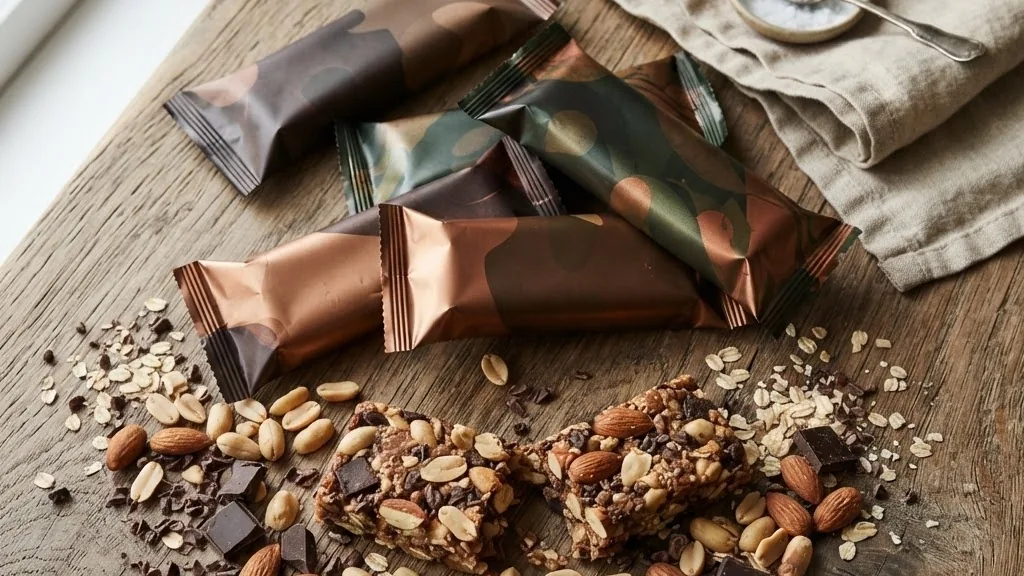
NuGo protein bars split into distinct sub-lines that most roundups flatten into one score, and that flattening is exactly why shoppers pick the wrong bar. Slim, Dark, and Stronger are not interchangeable. One targets blood-sugar-conscious eaters, one is built on real cocoa-butter chocolate, and one leans toward post-workout recovery. Treat them as one product and the numbers stop meaning anything. This guide separates the lines, benchmarks them against federal and clinical intake figures, and then does what the brand page and Amazon listing never will: it shows how the bars behave in a kitchen.
Quick answer: NuGo protein bars are a family of bars, not a single product. The Slim line is the lower-sugar, moderate-protein pick for blood-sugar-conscious eaters. The Dark line is coated in real dark chocolate made with cocoa butter rather than a palm-oil compound coating. The Stronger line skews higher-protein and post-workout. Judge any bar against the adult protein Recommended Dietary Allowance of 0.8 grams per kilogram and the World Health Organization ceiling of under 10 percent of daily energy from free sugars before you decide which line fits your goal.
How the Slim, Dark, and Stronger Lines Actually Differ
The Slim, Dark, and Stronger lines answer three different questions, and reading them as one product is the most common mistake shoppers make. Public NuGo product information describes the Slim line as a lower-sugar, moderate-protein option, commonly cited in the mid-teens grams of protein with only a few grams of sugar per bar, aimed at blood-sugar-conscious buyers. The Dark line is built around a real cocoa-butter chocolate coating rather than a palm-oil-based compound. The Stronger line is the higher-protein, post-workout-oriented bar. Because manufacturers reformulate SKUs, exact per-flavor gram figures should be read off the current package rather than memorized.
Why does the split matter at the shelf? Because your goal picks the line.
- Blood-sugar caution or weight management: the lower-sugar Slim framing is the natural starting point.
- Dessert-style snack or a bar you plan to melt: the cocoa-butter Dark line behaves like real chocolate.
- Recovery after training: the higher-protein Stronger line is engineered for that window.
A dietitian would not hand the same bar to a marathoner and to someone managing glucose. Neither should a label.
Protein Per Bar Against the RDA and Athlete Targets
Protein claims mean little without a benchmark, so anchor every bar to two numbers. The general adult Recommended Dietary Allowance for protein is 0.8 grams per kilogram of body weight per day, which works out to roughly 56 grams per day for a 70 kilogram adult (0.8 times 70 equals 56 grams). The National Institutes of Health Office of Dietary Supplements publishes that figure. Endurance and strength athletes commonly need more, in the range of 1.2 to 2.0 grams per kilogram per day, per Academy of Nutrition and Dietetics guidance. A mid-teens-gram bar therefore covers a meaningful slice of a sedentary adult’s target but a smaller share of an athlete’s.
Run the math for your own body. A 70 kilogram lifter aiming at the top of the athletic band needs 2.0 times 70, or 140 grams of protein a day.
That distinction reframes how you should shop. A bar is a convenient bridge between meals or a post-session boost, not a protein strategy on its own. If you cook with concentrated protein sources at home, the same logic carries over; our guide to dairy free protein powder in real cooking walks through how different protein types behave once heat and moisture enter the picture, which is useful context for anyone stacking bars and shakes across a day.
One more caution from the label itself. The U.S. Food and Drug Administration notes on its Nutrition Facts guidance that a percent Daily Value for protein is only required when a protein claim is made or the product targets children under four, which means many bars show grams without a percent. You do the interpretation.

Reading Sugar Grams Against WHO and AHA Ceilings
Sugar is where NuGo protein bars separate hardest, and two authorities give you the goalposts. The World Health Organization recommends that free sugars provide less than 10 percent of total daily energy intake, with a further reduction to below 5 percent for additional benefit. The American Heart Association is more concrete: no more than about 100 calories of added sugar per day for women, roughly 25 grams or 6 teaspoons, and no more than about 150 calories for men, roughly 36 grams or 9 teaspoons. At 4 kilocalories per gram, 100 divided by 4 gives about 25 grams and 150 divided by 4 gives 37.5, which the AHA rounds to 36 grams.
Hold a bar against those numbers before you buy multiples.
- The lower-sugar Slim framing, cited with only a few grams of sugar per bar, leaves nearly all of a day’s AHA allowance intact.
- A dessert-style bar can eat a large fraction of the 25-gram women’s ceiling in one sitting.
- Two higher-sugar bars in a day can approach the AHA limit before any other food is counted.
The point is not that one bar is good and another bad. It is that the same brand can put you well under the WHO 5 percent target or push you toward the AHA ceiling depending on which line you grabbed. Portion and frequency matter as much as the panel.
Why Cocoa Butter Coating Melts Differently Than Palm Oil
The Dark line’s real cocoa-butter chocolate is the single most underused fact in every NuGo write-up, and it is a food-science distinction with kitchen consequences. Cocoa butter is the natural fat of the cacao bean, and it has a sharp melting curve that sits near body temperature, which is why real chocolate snaps when cool and turns glossy and fluid when warmed. A compound coating built on palm kernel oil melts across a broader, waxier range and tends to feel slicker on the palate rather than melting cleanly. NuGo’s Dark bars use cocoa-butter chocolate, never palm oil, which changes how they behave when you warm, chill, or bake them.
What that means when you actually use a bar:
- Warmed gently: a cocoa-butter coating goes fluid and drizzles, so it works as a dessert topping.
- Chilled: it firms up with a clean snap, which holds shape in a no-bake crust.
- Baked: it softens fast and can scorch, so residual heat is your friend rather than direct high heat.
A palm-oil compound coating resists this behavior. It stays put longer under heat but never gives you the same clean melt or mouthfeel. If your plan is to melt the coating into something, the cocoa-butter line is the one that cooperates. This is the differentiator a food-focused kitchen can exploit that a supplement blog will not, and it pairs naturally with technique-driven cooking like a properly built crispy chicken parmesan dinner, where fat behavior and heat control decide the result.

What Certified Vegan, Gluten-Free, and Kosher Really Govern
Certification logos on NuGo protein bars are not decoration, and each one governs something specific that an ingredient list alone cannot promise. A Certified Vegan mark administered by the Vegan Awareness Foundation is a registered standard requiring that a product contain no animal products or byproducts and that it not be tested on animals, which is a stronger claim than a label that merely reads vegan-friendly. Under FDA regulation, a food may only be labeled gluten-free in the United States. A kosher mark from the Orthodox Union governs manufacturing practice, not just ingredients.
Here is what each certification does and does not tell you.
- Certified Vegan (Vegan.org): no animal products or byproducts, no animal testing, verified by a third party rather than self-declared.
- Gluten-free (FDA rule): under 20 parts per million of gluten; the Celiac Disease Foundation notes a gluten-free label is generally safe but you should still read the ingredients.
- Non-GMO Project Verified: the ingredients meet the Non-GMO Project standard for avoidance of genetically modified inputs; it is not a statement about nutrition or safety.
- OU Kosher: the Orthodox Union has reviewed ingredients and the manufacturing process against kosher requirements.
The Celiac Disease Foundation explains on its label reading and the FDA resource that a gluten-free claim signals compliance with that limit, though barley and rye are not among the top allergens required to be listed, so the ingredients line still deserves a read. A dedicated gluten-free facility reduces cross-contact risk beyond what an ingredient list alone can guarantee.

Three Kitchen Uses That Beat Eating It From the Wrapper
A protein bar can be an ingredient, not just a snack, and the cocoa-butter Dark line is the one that rewards cooking with it. The clean melt-and-set behavior of real chocolate opens three uses that no brand page or retail listing covers. None of them require special equipment, and each one leans on the fat behavior described earlier: warm to drizzle, chill to snap, fold to bind. Because the sugar and protein already live in the bar, these ideas also let you stretch one bar across a bigger portion of food, which changes the per-serving sugar math in your favor.
Start with these:
- No-bake crust: crush a chilled dark-chocolate bar, press it into a tart or cheesecake base, and let the cocoa-butter fat firm the crust in the fridge.
- Parfait or oatmeal topper: crumble a bar over Greek yogurt or a warm oatmeal bowl for crunch and a protein bump.
- Energy balls: fold chopped bar pieces into a homemade oat-and-nut-butter mix, then roll and chill.
For a drizzle, warm the coating gently until it flows, then spoon it over fruit or a dessert while it is still fluid. It will set with a snap as it cools, which a palm-oil coating never quite achieves. If you like turning pantry staples into something that eats like a full meal, the same crumble-and-fold logic that works here shows up in comfort cooking too, from a hearty ultimate chicken noodle soup to weeknight bakes.
NuGo Compared to RXBAR, Quest, KIND, and Larabar
Context is what the brand’s own page will never give you, so it helps to place NuGo protein bars beside the bars people cross-shop them against. Each competitor stakes out a different lane, and the honest comparison is about ingredient philosophy and macro pattern rather than a single winner. RXBAR leans on a short, whole-food ingredient list built around egg whites and dates. Quest markets high protein with low sugar using fiber and sweeteners. KIND centers nuts and often runs lower in protein. Larabar keeps ingredients minimal and fruit-and-nut based, which usually means little to no added protein isolate.
Where NuGo carves its space:
- Chocolate quality: the Dark line’s cocoa-butter coating is a genuine point of difference against compound-coated competitors.
- Sub-line targeting: the Slim, Dark, and Stronger split lets you match sugar and protein to a goal rather than accepting one formula.
- Plant-protein certified-vegan options: a lane where several mainstream bars do not compete.
No bar dominates every axis. If minimal ingredients are your priority, a fruit-and-nut bar wins on that alone. If you want a real-chocolate eating experience with a certified-vegan option and a sugar tier you can pick, NuGo’s structure is the argument. Benchmark whichever you choose against the 0.8 grams per kilogram protein RDA and the AHA sugar ceilings above, and the right pick usually names itself.

Storing Chocolate-Coated Bars Through Heat and a Lunchbox
Cocoa-butter chocolate is temperature-sensitive, which makes storage a real question rather than an afterthought for NuGo protein bars. Because the Dark line’s coating melts near body temperature, a bar left in a hot car or a sun-warmed bag will soften and can bloom, developing a pale streaky surface as fat migrates. That bloom is cosmetic and safe to eat, but it signals the coating went through a heat cycle. Keep bars in a cool, dry place, and treat a warm lunchbox the way you would treat any real chocolate.
Practical handling:
- Store at cool room temperature, away from direct sun and heat sources.
- For a summer lunchbox, pack the bar next to a cold pack so the coating stays firm.
- If a bar softens, chill it briefly to re-firm the cocoa-butter coating before eating.
The same heat sensitivity that makes these bars melt beautifully in the kitchen is the reason they need respect in transit.
Reading a NuGo Nutrition Facts Panel in Under a Minute
The fastest way to judge any bar is to read its panel in a fixed order, and the FDA lays out that order clearly. Start at serving size, because every number that follows refers to that portion. Then read protein grams and hold them against the 0.8 grams per kilogram RDA. Then check total versus added sugars and measure the added figure against the AHA ceilings of about 25 grams for women and 36 grams for men. Fiber is your last quick check, since higher fiber often tracks with the lower-sugar lines.
The FDA’s own how to understand and use the Nutrition Facts label guidance is the reference here, and it flags two traps worth knowing. Total Sugars carries no percent Daily Value because no daily total has been set, so the added-sugars line is the one to watch. And protein shows a percent Daily Value only when a claim is made, so a bare gram figure is normal. Read the certification logos last: they qualify the ingredients and process, not the macros.
Frequently Asked Questions
Are NuGo Dark bars actually made with real chocolate?
Yes. NuGo describes its Dark line as coated in real dark chocolate made with cocoa butter, never a palm-oil compound coating. That matters because cocoa butter melts near body temperature and sets with a clean snap, so the coating behaves like true chocolate when you warm it, chill it, or fold it into a no-bake crust rather than staying waxy.
How does NuGo Slim compare to daily sugar limits?
The Slim line is framed as lower-sugar, cited with only a few grams of sugar per bar. Measured against the American Heart Association ceilings of roughly 25 grams of added sugar for women and 36 grams for men, one Slim bar leaves most of that daily allowance intact, which is why it is positioned for blood-sugar-conscious eaters. Always confirm the current package figure.
Do NuGo protein bars cover my daily protein needs?
Partly. The adult Recommended Dietary Allowance is 0.8 grams per kilogram, about 56 grams for a 70 kilogram adult per the NIH Office of Dietary Supplements. A mid-teens-gram bar covers a useful slice of that, but athletes needing 1.2 to 2.0 grams per kilogram will find one bar is a top-up, not a strategy. Build meals around whole protein sources.
Is a gluten-free label enough for someone with celiac disease?
A gluten-free label means the product meets the FDA’s regulatory standard for gluten-free labeling. The Celiac Disease Foundation notes that is generally safe but advises still reading the ingredients, since barley and rye are not required top allergens. A dedicated gluten-free facility reduces cross-contact risk beyond what an ingredient list alone can guarantee.
Can I bake with a NuGo bar?
You can, but treat the cocoa-butter coating gently. Because it melts near body temperature and can scorch, lean on residual heat rather than direct high heat. The bars shine in no-bake uses: crushed into a tart or cheesecake crust, crumbled over yogurt or oatmeal, or folded into energy balls where chilling sets the chocolate firmly.
What does the Certified Vegan logo actually guarantee?
The Certified Vegan mark from the Vegan Awareness Foundation is a registered standard requiring that a product contain no animal products or byproducts and that it not be tested on animals. That is a verified third-party claim, stronger than a self-declared vegan-friendly label. You can read the exact standard on the organization’s certification page before trusting any logo.