
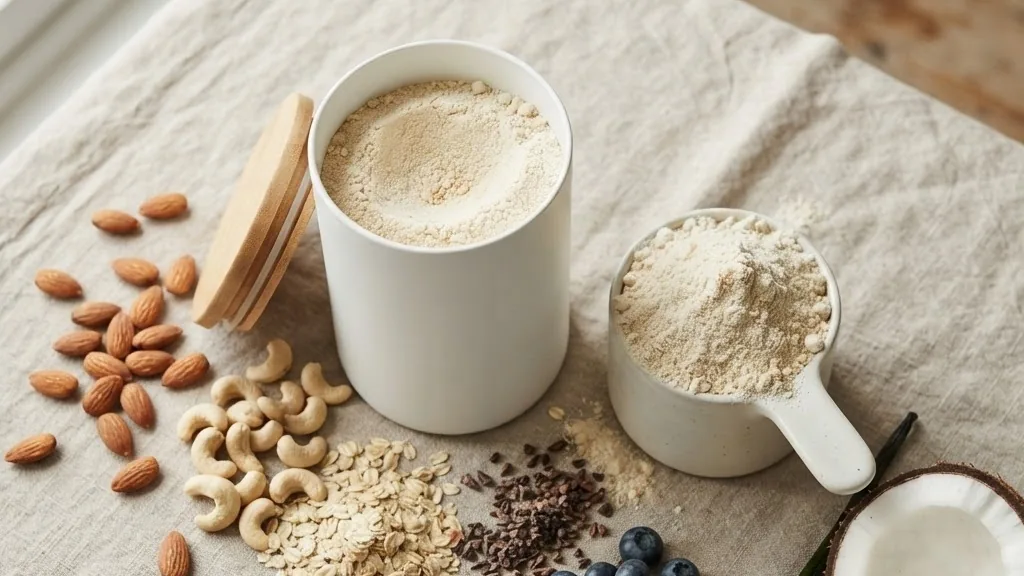
Dairy free protein powder falls apart differently in a hot pan than it does in a cold shaker, and almost nobody selling it tells you that. Pea protein turns rubbery when you overbake it. Rice protein drinks moisture out of a muffin batter like a sponge. Soy protein isolate, which the pescience article on PDCAAS lists at a score of 1.0, holds structure in ways the cheaper blends cannot. If you switched away from whey because it wrecks your gut, the next problem is a kitchen one: the swap that works in a smoothie can ruin a pancake. This guide handles the cooking, the labels, and the numbers so your food actually works.
The stakes are not niche. Clinical reference StatPearls, hosted on the National Center for Biotechnology Information (NCBI) Bookshelf, puts the share of the global population with some degree of lactose intolerance at roughly 65 to 70 percent, though not everyone is symptomatic. That is a lot of people who need to know that dairy free protein powder behaves like flour, not like magic dust, once heat gets involved.
Quick answer: Dairy free protein powder means no milk-derived ingredient, which rules out whey, casein, caseinate, and milk solids. Your workable sources are pea, soy, rice, hemp, pumpkin seed, egg white, and beef isolate. In cooking, soy and pea hold structure best in baking, rice adds grit and dryness, and egg white behaves closest to a functional binder. Swap it into recipes at roughly a quarter of the flour by volume, add extra liquid, and never overbake. Read the panel for hidden milk terms before you trust any label.
Dairy-Free, Lactose-Free, and Vegan Are Three Different Words
Dairy free protein powder is not the same product as lactose-free or vegan, and buying the wrong one is the most common mistake people make on day one. Dairy-free means zero milk-derived ingredient of any kind. Lactose-free can still contain milk protein with the sugar removed, which is useless if your issue is a milk-protein allergy rather than lactose. Vegan excludes all animal products, so it rules out two perfectly dairy-free options: egg white and beef isolate. A person avoiding milk for a protein allergy can eat egg-white powder; a vegan cannot.
Sort your reason first, because it changes the shopping list:
- Lactose intolerance: you lack the enzyme to digest milk sugar. Lactose-free or dairy-free both work.
- Milk-protein allergy: your immune system reacts to casein or whey. You need fully dairy-free, and lactose-free will not save you.
- Elimination diet: you are testing whether dairy drives a symptom. Dairy-free is the clean cut.
- Ethical or environmental choice: vegan sources only, so egg white and beef isolate are off the table.
Get this distinction right and every later decision, from the powder you buy to the recipe you trust, gets easier.
What Pea, Soy, Rice, Hemp, and Egg White Do When You Heat Them
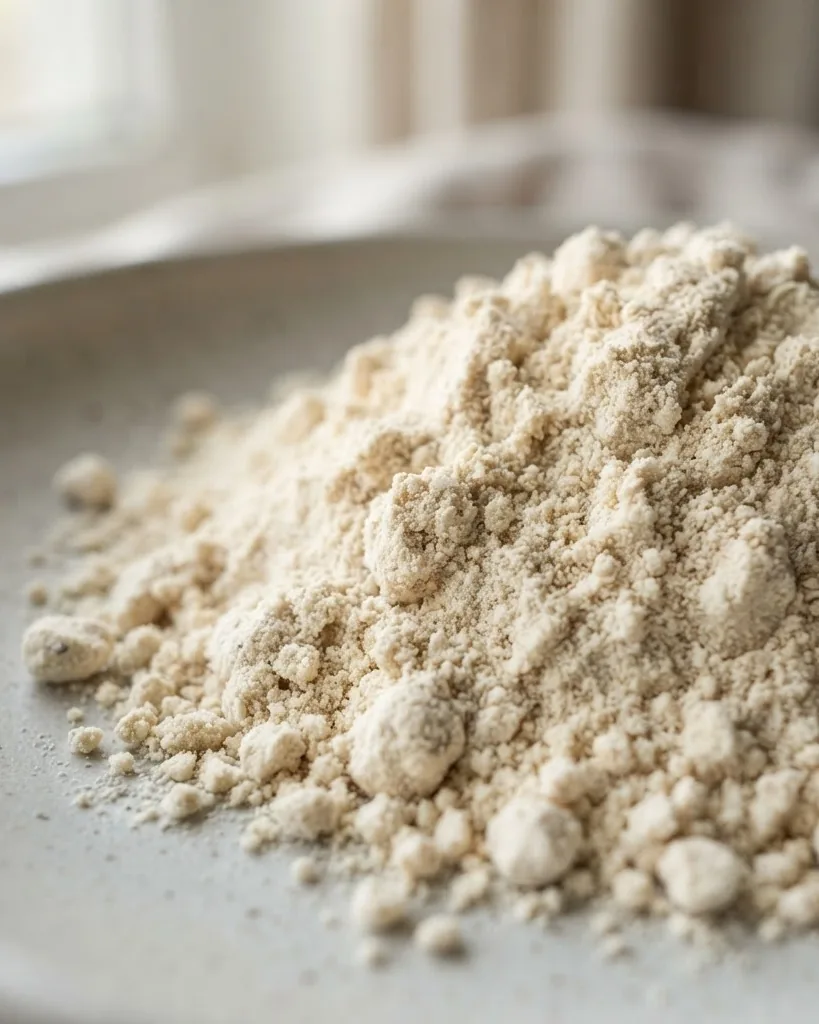
Cooking behavior is where dairy free protein powder separates the usable from the disappointing, and it is the one thing supplement listicles skip entirely. Heat denatures protein, which changes texture: some sources set into a pleasant crumb, others turn gummy or gritty. Soy protein isolate holds structure well and browns cleanly, which is why it survives baking better than most plants. Pea protein binds acceptably but can go rubbery if overbaked and carries a green, earthy note. Rice protein is the thirstiest of the group and the grittiest, pulling moisture out of batter and leaving a sandy bite unless you compensate with extra liquid.
Here is how the common sources actually behave in a hot kitchen:
- Pea protein: good binder, earthy taste, turns rubbery when overcooked. Mask the flavor with cocoa, banana, or cinnamon.
- Soy protein isolate: best structural performer of the plant group, browns well, neutral-ish flavor.
- Rice protein: gritty and moisture-hungry; blend it with pea and add liquid to fix both problems at once.
- Hemp protein: nutty and coarse, better in dense bakes like oat bars than in light batters.
- Egg white protein: the closest thing to a functional binder; it sets and adds lift, but it is not vegan.
The single most useful rule: replace no more than about a quarter of the flour in a recipe with powder, then add extra liquid to offset how much the protein absorbs. Go heavier than that and you get a hockey puck. If you want a worked example of these ratios in action, the breakdown in protein brownies that stay fudgy shows how far you can push cocoa-masked pea protein before the crumb dries out.
Why Blends Like Pea Plus Rice Exist
Single plant proteins are usually incomplete, meaning they run short on one or more essential amino acids. Pea is high in lysine but low in methionine and cysteine; rice is the mirror image. Combine them and the blend fills both gaps, which is why so many dairy-free products list pea and rice together. Beyond nutrition, the blend also cooks better: rice adds the grit pea lacks the structure to hide, and pea adds the binding rice cannot manage alone.
Reading the Label: The Hidden-Dairy Words That Trip People Up
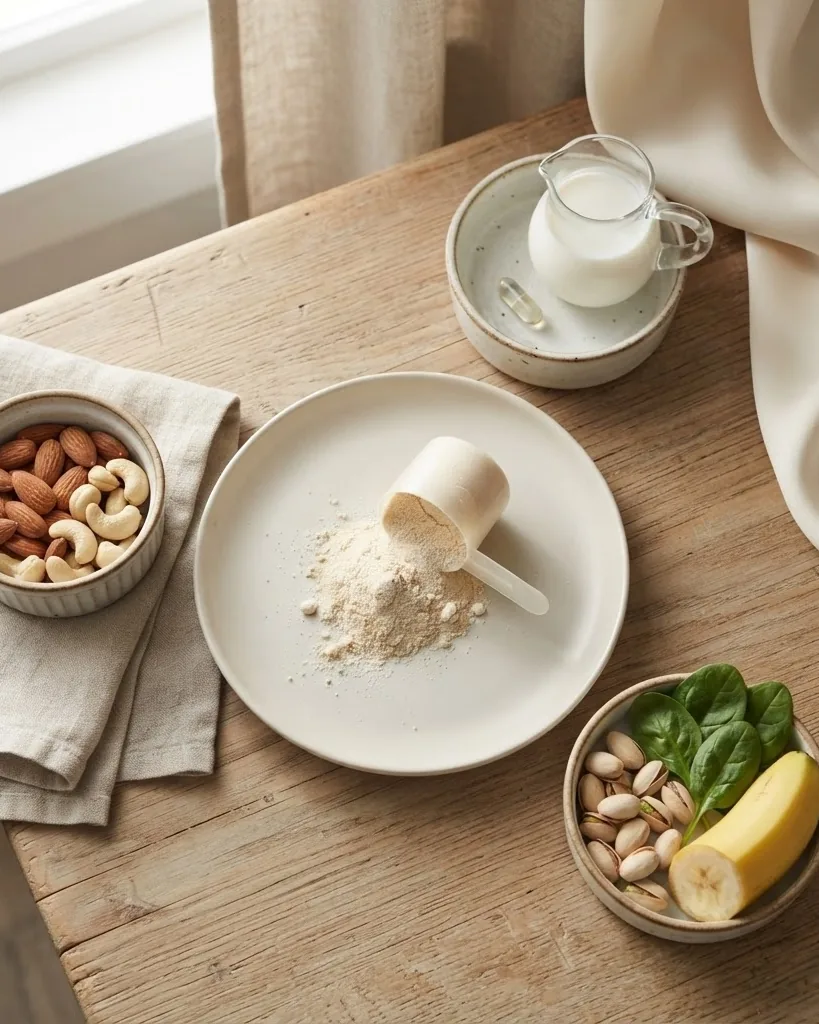
Label reading is the skill that keeps dairy free protein powder actually dairy-free, because milk hides under names that do not say milk. The U.S. Food and Drug Administration (FDA) requires milk to be declared as a major allergen on packaged foods, and its allergen guidance explains the rule directly. When milk is present, the panel carries a plain “Contains: milk” statement, which is the fastest thing to scan for. But the ingredient line can still surprise you, because whey, casein, caseinate, lactose, and milk solids are all milk-derived even though none of those words is “milk.”
Train your eye to flag these terms in the ingredient list:
- Whey and whey protein concentrate or isolate, all milk-derived.
- Casein and its salts: sodium caseinate, calcium caseinate.
- Milk solids, nonfat dry milk, and milk protein.
- Lactose, which signals milk sugar even in a “protein” product.
- Vague phrasing like “natural flavors,” which can carry a dairy base worth an email to the manufacturer.
The FDA’s allergen page lays out the major allergens named under the Food Allergen Labeling and Consumer Protection Act. Milk is on that list. You can read the agency’s own summary of the rule on the FDA food allergies guidance page, which is the authoritative source behind the “Contains” statement.
PDCAAS, DIAAS, and How Much Protein a Serving Should Give You
Protein quality tells you whether a scoop of dairy free protein powder is doing the work you think it is, and two metrics settle the argument. PDCAAS, the protein digestibility corrected amino acid score, tops out at 1.0. Soy protein isolate hits that ceiling, matching whey, casein, and egg, while pea protein concentrate scores about 0.89, and most other plant proteins land in the 0.4 to 0.9 range, per the pescience breakdown of the scoring system. DIAAS is a newer method that can score above 1.0 and is considered more precise, though PDCAAS still dominates package labels. Higher score, more of the protein your body can actually use.
Now the sizing. The adult Recommended Dietary Allowance (RDA) for protein is 0.8 grams per kilogram of body weight per day, according to the Dietary Reference Intakes tables on the NCBI Bookshelf. Separately, the FDA Daily Value (DV) for protein on the Nutrition Facts label is 50 grams per day, a figure fixed in binding regulation.
Those two numbers answer different questions. The RDA is a personal target: multiply 0.8 grams by your weight in kilograms. The 50-gram DV is a fixed label reference for the general population, not a goal tuned to you. A 70-kilogram adult needs about 56 grams a day by the RDA (0.8 grams times 70 kilograms), which sits just above the 50-gram DV. So a single 20-gram scoop covers a real slice of the day, not the whole thing.
Why Protein Often Shows No Percent Daily Value
The FDA’s guide to reading the Nutrition Facts label explains that trans fat, total sugars, and protein do not normally show a percent DV. Protein only lists a percent DV in specific situations, such as when the package makes a protein claim or when the food is for children under 4. That is why your powder can shout “20 g protein” yet show no percentage next to it. The FDA’s own walkthrough on how to understand the Nutrition Facts label covers this quirk in plain terms.
The Regulation Behind the 50-Gram Number
The 50-gram protein figure is not marketing; it is written into federal rule, and knowing that changes how you read a panel. The binding regulation is 21 CFR 101.9, the section of the Electronic Code of Federal Regulations that governs nutrition labeling of food. It sets 50 grams as the Daily Reference Value for protein for adults and children 4 and older, with separate figures of 11 grams for infants and 13 grams for children under 4. Those age brackets are why a product marketed to toddlers shows a different reference than one marketed to adults.
For a home cook, the practical payoff is trust. When a dairy-free powder claims a protein percentage, it is measuring against that fixed 50-gram value, not against your personal need. A “40 percent DV” claim means 20 grams per serving (40 percent of 50 grams). The rule text lives on the eCFR page for 21 CFR 101.9, and it is the same reference every compliant label in the U.S. is built on.
Three Dairy-Free Recipes That Actually Hold Together
Recipes are where a kitchen earns the right to talk about dairy free protein powder, so here are three formats built around how these powders behave. The rule running through all of them is moisture: plant proteins drink liquid, so every recipe adds more than a flour-only version would. Start with pea-rice blends for baking, keep the powder under a quarter of the dry weight, and pull bakes from the oven early, because rubbery pea protein is a symptom of overcooking, not of the powder itself.
Protein pancakes. Whisk one scoop of pea-rice blend into your dry mix, then add an extra splash of plant milk until the batter ribbons off the whisk. Cook on medium-low and flip once the bubbles set. Low heat is the whole trick: high heat browns the outside before the inside cooks and leaves a gummy center.
No-bake energy balls. The safest entry point, because nothing gets denatured by heat. Combine one scoop of powder with oats, nut butter, and a sticky sweetener, roll, and chill. Grittier powders like hemp or rice hide well here because the nut butter coats the particles.
Protein oat bake. Fold a scoop into an oat-and-banana base with extra plant milk, then bake until just set. Dense formats forgive coarse powders, so this is the natural home for hemp. If you want the savory side of high-protein cooking instead, the routes in high protein pizza crust options and their macros show how protein powder slots into a dough without turning it to concrete.
Two fixes to keep on hand. If a bake comes out dry, add liquid next time rather than cutting the powder. If a shake or batter curdles, it is usually acid plus heat, so pull the temperature down and stir the powder in last. For the shaker-only side of this, our guide to building a lactose free protein shake without bloat handles blending order and grit in detail.
Digestive Tolerance and What to Check Before You Buy
Tolerance is the reason most people reach for dairy free protein powder in the first place, and it is worth being honest about the trade. StatPearls lists the classic lactose-intolerance symptoms as bloating, abdominal pain, flatulence, nausea, and diarrhea after lactose-containing food. Dropping whey removes the lactose trigger entirely, which is why so many people report a calmer gut on plant sources. But plant proteins bring their own baggage: pea and other legumes carry fibers and compounds that can cause gas in sensitive people, and some tolerate fermented blends better than raw isolates.
When you stand in front of a shelf, check the panel in this order:
- Protein per serving, against your RDA math (0.8 grams per kilogram).
- Added sugar, which sneaks in to mask earthy plant flavors.
- Gums and thickeners, which some sensitive stomachs dislike.
- Sweeteners, since sugar alcohols can cause their own bloating.
- The “Contains” line, for any milk-derived surprise.
If you are chasing protein across whole meals rather than scoops, see this guide to quick, protein-focused meals.
For the medical side of tolerance, the clinical overview from the National Center for Biotechnology Information sits at the PubMed record for the lactose intolerance review, which is the peer-referenced version of the StatPearls chapter cited throughout this guide.
Lab Notes: What the Numbers Actually Say
The figures behind this guide come straight from the governing bodies and clinical references, not from brand marketing. Here they are in one place, each tied to what it means for a dairy-free shopper.
Frequently Asked Questions
Is dairy free protein powder the same as vegan protein powder?
No. Dairy-free only means no milk-derived ingredient, so it still allows egg white and beef isolate, both of which are animal products. Vegan powder excludes every animal source. If you avoid milk for a protein allergy, egg-white powder works for you. If you avoid all animal products, stick to pea, soy, rice, hemp, or pumpkin seed instead.
Which dairy-free powder bakes best?
Soy protein isolate holds structure best among the plant options and browns cleanly, which is why it survives baking. Pea protein binds well but turns rubbery if overbaked, and rice protein adds grit and drinks moisture. Egg-white powder behaves closest to a functional binder if you are not vegan. Keep any powder under a quarter of the flour and add extra liquid.
How do I spot hidden dairy on a label?
Scan for the FDA-required “Contains: milk” statement first, then read the ingredient line for milk-derived words that do not say milk: whey, casein, caseinate, lactose, and milk solids. Vague terms like “natural flavors” can also carry a dairy base. When in doubt, email the manufacturer rather than assuming a protein powder is automatically dairy-free.
How much protein do I actually need per day?
The adult RDA is 0.8 grams per kilogram of body weight per day, per the NCBI Dietary Reference Intakes tables. A 70-kilogram adult needs about 56 grams. The FDA label Daily Value is a separate fixed figure of 50 grams per day for the general population. Use the RDA for a personal target and treat the 50-gram DV as a reference point, not a goal.
Why does my powder show grams of protein but no percentage?
The FDA guide to the Nutrition Facts label explains that protein normally does not display a percent Daily Value. It only appears in specific cases, such as when the package makes a protein claim or the food is for children under 4. So a powder can list its protein content without showing a percentage. To find the share, divide by the 50-gram Daily Value yourself.
Does switching from whey to plant protein really reduce bloating?
Often, yes, because it removes lactose, which StatPearls links to bloating, gas, and abdominal pain in people with lactose intolerance. But plant proteins are not automatically gentle: pea and other legume-based powders carry fibers that can cause gas in sensitive people. Some tolerate fermented blends better than raw isolates. The only reliable test is trying one source at a time and tracking symptoms.
The Bottom Line
Dairy free protein powder is a cooking ingredient before it is a supplement, and treating it that way is what separates a dry, rubbery bake from something you want to eat again. Match the source to the job: soy or pea for structure, egg white for binding if you are not vegan, and blends when you want a complete amino profile. Read the panel for the milk-derived words that do not say milk, size your servings against the 0.8-grams-per-kilogram RDA rather than the fixed 50-gram label value, and add liquid whenever a recipe fights back. Do that, and the swap that once ruined your pancakes becomes the one that quietly fixes your gut.
[req:1037624][req:1345131]