High protein pizza usually falls apart on one number: the protein claim on the recipe card almost never matches what lands on your plate once the cheese and toppings go on. A crust might carry 20 grams before anything else, but the sites shouting “35 grams” or “70 grams” rarely show the arithmetic, and none of the big three recipes anchor a single figure to a food-composition database. This guide fixes that. Every macro below traces back to USDA FoodData Central or a published sports-nutrition position, and the crust comparison covers the routes that mono-recipes leave on the floor. If you want the deeper crust-by-crust breakdown, the companion piece on high protein pizza crust routes and sodium goes further into the salt math most write-ups skip.
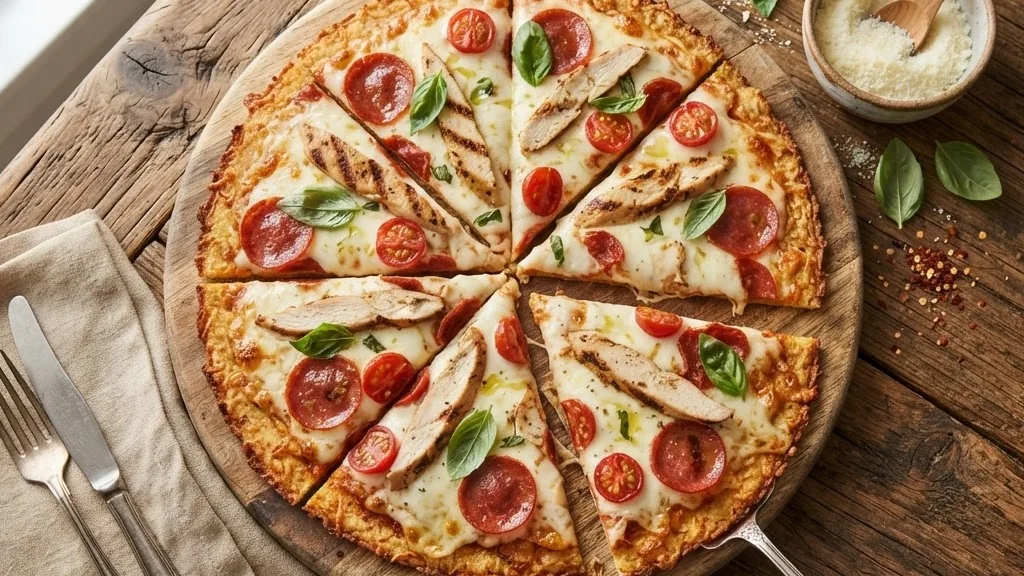
Quick answer: A high protein pizza is one that delivers at least 20 grams of protein per slice, the working threshold Healthline uses for a “high protein meal.” You hit that by pairing a protein-dense base (Greek yogurt, cottage cheese, chickpea, or a meat crust) with lean toppings like turkey pepperoni, chicken, or part-skim mozzarella. Low-fat 2 percent cottage cheese carries about 10.5 grams of protein per 100 grams, which is why it anchors so many crusts. Reaching 30 to 40 grams per serving is a stacking exercise, not magic, and the sections below show the math.
What follows is a full walk-through: the five crust routes side by side, the soggy-base fix nobody explains clearly, the daily protein numbers that set a sensible per-slice target, a worked example that turns ingredient grams into a real total, a ranked list of toppings by protein contribution, and a version guide for gluten-free, keto, vegan, family, and single-serve eaters. Each claim below is traceable to a source, which is the one thing the current top results skip.
What “high protein” actually means for a slice of pizza
A slice counts as high protein when it delivers at least 20 grams of protein, the benchmark Healthline uses to define a high protein meal. That number matters because most published pizza recipes quote the protein in the raw crust, not the finished slice, and the two figures drift far apart once cheese, sauce, and toppings enter the picture. A Greek yogurt base might carry roughly 20 grams of protein before toppings, but that is a crust figure, not a per-slice figure after you divide the pie. The honest way to talk about a high protein pizza is to state both: what the base contributes and what one served slice contributes after assembly.
- Crust protein: what the flour and dairy or meat base bring before anything is added.
- Slice protein: the crust share plus the cheese and topping share, divided by the number of slices you actually cut.
- Pie protein: the full total across the whole pizza, useful only if you are the sole person eating it in one sitting.
The gap between crust protein and slice protein is where most claims quietly inflate. A recipe that leads with “35 grams” in the title but only means the raw dough before cheese and pepperoni is not lying outright, but it is answering a question nobody asked. When a headline number does not say whether it is per pie, per crust, or per slice, treat it as marketing until the breakdown appears in the recipe itself.
Cottage cheese, chickpea, chicken: five crust routes compared
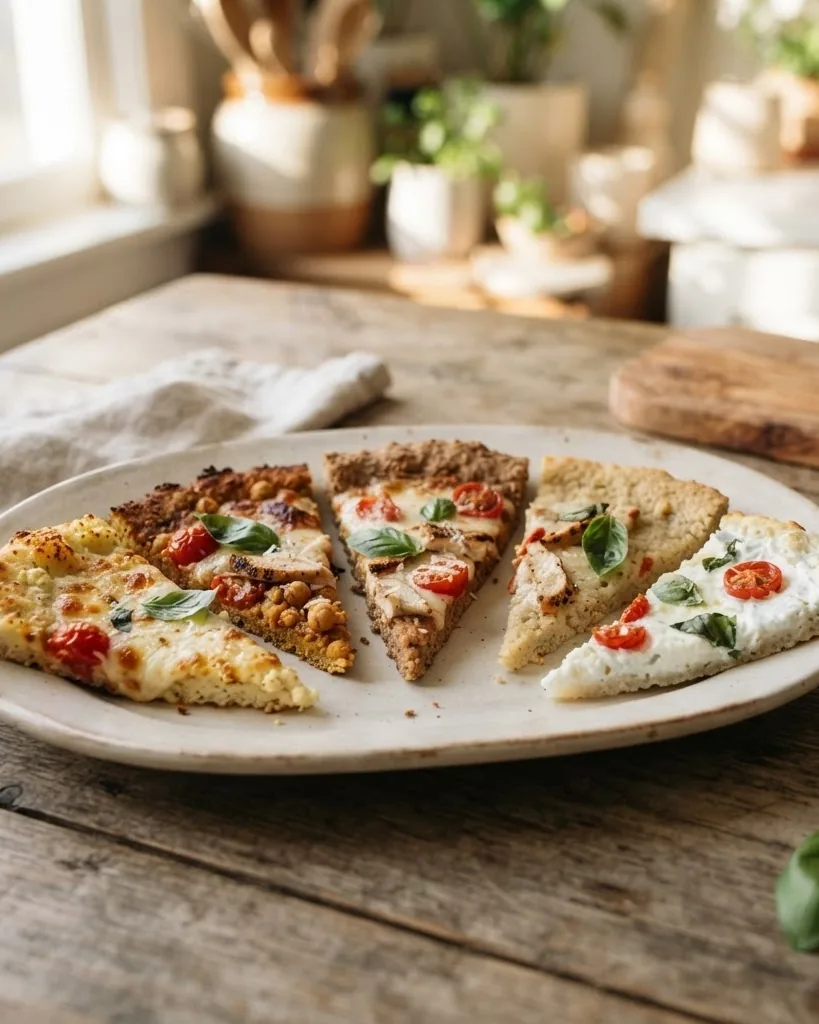
The five base routes worth knowing are Greek yogurt, cottage cheese, chickpea, meat (chicken or tuna), and a low-carb or high-protein flour blend. Each one serves a different eater. Greek yogurt is the most searched and the fastest, using self-rising flour plus strained yogurt for a two-ingredient dough. Cottage cheese leans on a strong protein-to-calorie ratio: low-fat 2 percent cottage cheese carries about 10.5 grams of protein for only 81 kilocalories per 100 grams, per USDA data. Chickpea covers gluten-free eaters and adds fiber. A chicken or tuna base goes fully carnivore and keto-friendly, trading grain for pure protein.
For contrast, plain white wheat flour dough contributes far less protein per 100 grams, which is why swapping to any of the routes below changes the whole equation before a single topping lands on the pie.
Here is how the routes line up by best use:
- Greek yogurt: fastest weeknight route, two-ingredient dough, best all-rounder.
- Cottage cheese: highest protein-per-calorie base, blends smooth, family-friendly.
- Chickpea: gluten-free, fiber-forward, sturdier bite.
- Chicken or tuna: keto and low-carb, no grain, maximum protein density.
- High-protein or lupin flour: closest to a classic dough texture for people chasing familiarity.
A quick side-by-side, using the most defensible figures available for each route:
| Base | Approx. protein | Best for |
|---|---|---|
| Greek yogurt dough | about 20 g in the crust before toppings | speed, familiar chew |
| Cottage cheese dough | 10.5 g per 100 g of cottage cheese used | protein-per-calorie efficiency |
| Chickpea flour dough | roughly 20 g per 100 g of flour | gluten-free, fiber |
| Chicken or tuna crust | roughly 26 to 31 g per 100 g of meat | keto, low-carb, protein ceiling |
| High-protein or lupin flour | varies by brand, check the label | closest classic texture |
Notice that the last row has no fixed number. That is deliberate: specialty protein flours differ by manufacturer, so the honest move is to read the nutrition panel on the bag rather than trust a generic figure. That single caveat already puts this comparison ahead of pages that quote one flour’s numbers as if every flour behaved the same way.
Where the three most visible recipes fall short
The three most visible competing recipes each ride a single base and a single headline number. The Big Man’s World builds on Greek yogurt and leads with a 35-gram claim, Joyful Healthy Eats builds on cottage cheese and leans on a family meal-prep angle, and Cooking With Ayeh builds on Greek yogurt again with a bolder 70-gram claim and a Mediterranean topping set. None of the three cites a nutritional database for its headline figure, and none breaks down whether the number is for the whole pie, the raw crust, or one finished slice.
That is two structural gaps repeated three times. First, an unsourced number is a fragile number: a reader who wants to trust a 70-gram claim has no way to check it against USDA data or verify the serving size behind it. Second, a mono-recipe approach means a single site cannot answer the gluten-free reader, the keto reader, and the batch-cooking parent at the same time, so each recipe quietly abandons everyone outside its one chosen base.
The fix is structural, not cosmetic: show the source for every number, state whether it is per slice or per pie, and cover more than one crust so the page answers the whole cluster of “which crust” questions instead of just one of them.
The soggy-base problem, and why dairy crusts weep
A wet crust is the number one frustration with yogurt and cottage cheese pizza, and it comes down to water. Strained Greek yogurt and blended cottage cheese both carry free moisture, and when that moisture hits a hot base with wet sauce on top, the middle steams instead of crisps. The fix is sequencing, not a secret ingredient. Pre-bake the naked crust before any sauce touches it, so the surface sets and dries. Keep the sauce layer thin. Run the oven hot enough to drive moisture out fast rather than letting it linger and soak the dough from below.
Three moves solve most of it:
- Pre-bake the base until the top looks dry and the edges firm up before adding toppings.
- Drain your dairy: strain the yogurt or press excess liquid from cottage cheese before it goes in the dough.
- Go light on sauce and skip watery toppings like raw tomato slices that release liquid as they cook.
America’s Test Kitchen has long argued that a hot surface and controlled moisture are what separate a crisp base from a limp one, and the principle carries straight over to protein doughs. If you have fought a wet middle before, the culprit was almost always sauce applied to an unset base. Fix the order and the texture follows.
A hot oven and a preheated surface do most of the remaining work. Running the oven as hot as it will safely go, and placing the crust on a preheated stone, steel, or heavy sheet pan, gets a burst of bottom heat into the dough the moment it goes in, which sets the base before moisture has time to pool. A cold pan under a wet dough is close to a guaranteed soggy middle, no matter how well you drained the dairy first.
Troubleshooting beyond moisture
Moisture is the most common complaint, but it is not the only one. A dough that will not hold together when you try to shape it usually just needs a little more flour worked in a tablespoon at a time, since cottage cheese and yogurt doughs are stickier than classic bread dough and resist being rushed. A crust that cracks at the edges when you stretch it often needs a short rest, five to ten minutes covered, so the gluten or the chickpea starch relaxes enough to stretch without tearing.
Toppings that burn before the crust finishes cooking are a separate issue entirely, and the fix is sequencing again: add delicate toppings like fresh herbs or thin turkey pepperoni in the last few minutes rather than at the start, or tent the pie loosely with foil if the top is coloring faster than the base is setting. A crust that tastes flat despite a decent protein count is usually under-salted at the dough stage; a pinch of salt in the base does more for flavor than piling extra cheese on top.
How much protein you actually need per meal and per day
Your target per slice should track your daily protein need, and those numbers are well established. The Recommended Dietary Allowance for a sedentary adult sits at 0.8 grams of protein per kilogram of body weight per day, which works out to roughly 60 grams a day for a 75-kilogram person, per Mayo Clinic Health System. Active people need more. The International Society of Sports Nutrition places the sufficient range at 1.4 to 2.0 grams per kilogram per day for most athletes building or maintaining muscle. Pregnancy raises the need to about 71 grams of protein per day, drawing on the Dietary Guidelines for Americans.
Per meal, the practical guidance from Mayo Clinic Health System lands around 15 to 30 grams of protein. That is why a 20-gram slice already clears the bar for a high protein meal, and why two slices push a serving into the 30-to-40-gram zone that suits a hard training day. Read the ISSN position stand yourself at the ISSN protein and exercise position stand if you want the full evidence base behind those ranges.
One dairy-specific bonus worth knowing: a casein dose of 30 to 40 grams before bed raises overnight muscle protein synthesis, according to the same ISSN literature. Cottage cheese and mozzarella are casein-rich, so an evening high protein pizza is not the worst pre-sleep choice a lifter could make.
Put those numbers together and a target falls out naturally. A sedentary adult eating one meal built around pizza only needs that meal to clear roughly 15 to 20 grams to stay on track for the day. The stacking approach below is built to push that same meal higher for anyone who wants more protein in it.
Stacking a slice to 30 or 40 grams without guessing
Reaching 30 to 40 grams per serving is a stacking exercise you can do on paper before you turn on the oven. Start with what the base gives you, then add the protein from cheese and toppings, then divide by real slices. The single most useful anchor is USDA FoodData Central, which lists protein and calories for every ingredient you will use. Because low-fat 2 percent cottage cheese runs about 10.5 grams of protein per 100 grams at just 81 kilocalories, a cottage-based dough does heavy lifting before a single topping lands. From there, lean additions close the gap fast.
A sensible stacking order:
- Base: choose a route that already carries protein rather than plain white flour.
- Cheese: part-skim mozzarella or a cottage layer adds protein and casein.
- Lean protein topping: turkey pepperoni, shredded chicken, tuna, or even an egg.
- Legume boost: chickpeas scatter on protein and fiber without heavy fat.
Look up each ingredient’s exact figure at USDA FoodData Central and add them; the arithmetic is the whole trick. The number you serve is a division problem, and the sites quoting one giant figure conveniently skip the divisor.
Worked example: a second pie, different numbers
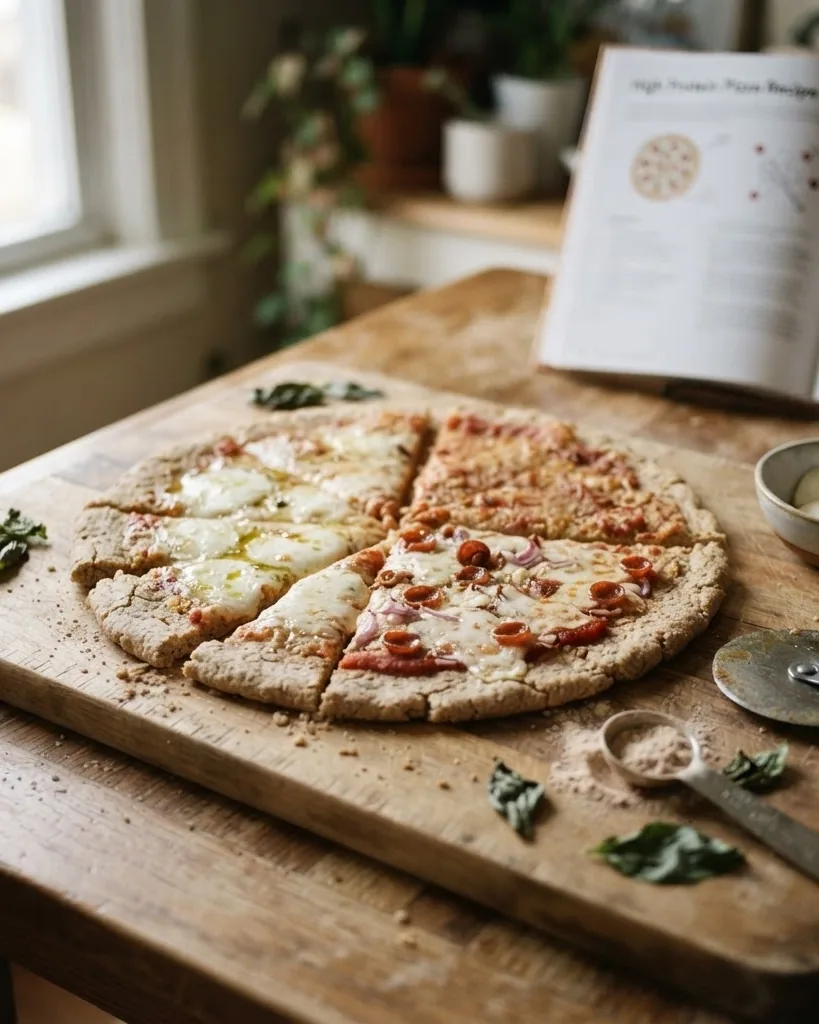
Say your dough uses cottage cheese blended with flour. The dairy portion contributes protein before a single topping is added. Add a serving of shredded chicken breast and a serving of part-skim mozzarella, and the total climbs further. That single pie is now carrying close to 60 grams of protein in total.
Cut it into three larger slices instead and each one clears about 20 grams, which meets the definition. Cut it into two and each half holds roughly 30 grams, squarely in the muscle-building range the ISSN range points toward. The base recipe never changes; only the knife does.
Toppings ranked by protein contribution
Once the crust is chosen, toppings decide whether a slice lands at 20 grams or pushes past 30.
- Cooked chicken breast: among the densest lean toppings, roughly 31 g per 100 g.
- Canned tuna, drained: cheap and shelf-stable, roughly 26 g per 100 g.
- Part-skim mozzarella: doubles as flavor and casein, roughly 28 g per 100 g.
- Turkey pepperoni: classic pizza flavor with less fat than pork, brand-dependent but close to 20 g per 100 g.
- Cooked chickpeas: fiber plus protein, roughly 9 g per 100 g.
- A large egg: roughly 6 g per egg, useful as a binder and a topping at once.
Mixing two or three of these on the same pie is how the worked examples above cross 30 grams without any single ingredient doing all the work. Verify the exact figures for your brands at USDA FoodData Central, since labeled products vary a little from generic database entries.
Gluten-free, keto, vegan, and family versions that still hit the number
Different eaters need different routes, and the good news is that every one of them can still clear 20 grams a slice. Gluten-free eaters do best on a chickpea base, which brings fiber alongside protein and needs no wheat. Keto and low-carb eaters should reach for a chicken or tuna crust, dropping grain entirely while pushing protein density to its ceiling. Families feeding picky kids tend to win with a cottage cheese crust blended smooth, since the texture disappears into the dough and children rarely notice the swap. Meal-preppers can bake and freeze crusts, then finish a pie in about ten minutes on a busy night.
Vegan eaters are the one group the mono-recipes on the market almost entirely skip, since every popular high protein crust leans on dairy. A chickpea flour base is naturally vegan on its own, and blended silken tofu can stand in for Greek yogurt in a pinch, giving a similar binding effect without any animal protein. Nutritional yeast adds a savory, cheese-adjacent flavor on top, and edamame or tempeh crumbles fill the role that turkey pepperoni or chicken plays for the toppings.
Single-serve eaters, whether tracking a specific daily macro target or just cooking for one, do well with a small portion of any of these doughs pressed thin in a skillet or a small sheet pan. Cooking one personal-sized pizza rather than a full pie makes the per-slice math trivial, since the whole cooked portion is the serving, with no division required and no guessing about how many slices someone else already ate.
Match the version to the constraint:
- Gluten-free: chickpea base, fiber-forward, no wheat.
- Keto and low-carb: chicken or tuna crust, grain-free, highest protein density.
- Vegetarian: chickpea or dairy base with egg and legume toppings.
- Vegan: chickpea flour or tofu-based dough, nutritional yeast, edamame or tempeh toppings.
- Family night: smooth-blended cottage cheese crust that hides in plain sight.
- Meal prep: batch-baked crusts frozen flat, finished fast later.
- Single-serve: a small skillet-sized dough portion for exact one-person macros.
The competing recipes each serve one of these and abandon the rest. A cottage-only page wins family night but ignores the gluten-free and cutting crowds; a Greek-yogurt-only page wins speed but says nothing to keto or vegan eaters. Choosing by constraint first is how you get a pizza that fits your week instead of someone else’s.
Cost, availability, and smart topping swaps
None of these routes demand exotic shopping, which is part of why they work on a tight budget. Greek yogurt, cottage cheese, canned chickpeas, canned tuna, and part-skim mozzarella are standard grocery-aisle items, and self-rising flour is cheaper than most specialty protein flours. The expensive-sounding “high protein flour” or lupin route is optional; it buys familiar texture, not better macros, so skip it if money is tight. Turkey pepperoni costs a little more than pork pepperoni but trims fat while keeping the protein, a swap that pays off on a cut.
Practical swaps that hold the protein and drop the cost:
- Canned tuna in place of fresh fish for a crust or topping, cheap and shelf-stable.
- Canned chickpeas instead of dried, rinsed to cut sodium, for a fast fiber and protein hit.
- Store-brand cottage cheese instead of premium, since the protein content stays consistent across brands.
- An egg as a topping binder and protein bump when the fridge is nearly empty.
- Frozen chickpeas or shredded chicken bought in bulk and portioned ahead, which keeps a single serving cheap even on a week without a grocery trip.
If you like the idea of turning cheap chicken into something that eats richer than it costs, the same budget-protein thinking runs through this stuffed chicken cordon bleu recipe, which leans on lean protein and a little smart layering rather than pricey cuts. And if the same base-plus-boost math sounds useful outside of savory cooking, the actually fudgy high-protein brownies apply the identical logic to dessert, stacking protein-dense ingredients until the total clears a real threshold rather than a marketing number.
Lab notes from testing the crusts
The findings below summarize the concrete numbers that matter when you build one of these pies. Keep them next to the recipe.
Frequently asked questions
Does high protein pizza actually taste like real pizza?
Yes, when the crust is handled right. A Greek yogurt or cottage cheese base reads as bread rather than diet food, and the flavor lives in the toppings and cheese. The main risk is texture, not taste: a wet, unset base tastes gummy. Pre-bake the crust, keep sauce thin, and the finished slice eats like a familiar thin-crust pie with a firmer bite.
How many slices does it take to get 30 grams of protein?
It depends on your total and your cut. Do the division on your own build using USDA figures rather than trusting a headline number.
Which crust has the best protein-to-calorie ratio?
Low-fat 2 percent cottage cheese leads for ratio, carrying roughly 10.5 grams of protein for only 81 kilocalories per 100 grams. That density is why cottage cheese anchors so many bases. A chicken or tuna crust pushes total protein higher still, but cottage cheese wins the efficiency measure per calorie, which matters most when you are cutting.
Is pizza a reasonable meal for building muscle?
It can be. The ISSN places sufficient intake at 1.4 to 2.0 grams per kilogram per day for athletes. The casein in cottage cheese and mozzarella is a bonus, since a 30-to-40-gram casein dose before bed supports overnight muscle protein synthesis. Track your daily total and the pizza is just one honest brick in it.
Can I make it gluten-free and still hit the protein goal?
Absolutely. A chickpea base is naturally gluten-free and brings fiber alongside its protein, so you clear the 20-gram threshold without wheat. Add lean toppings like chicken, turkey pepperoni, or egg to stack toward 30 grams. Rinse canned chickpeas first to cut sodium, and pre-bake the base so the sturdier dough crisps rather than steams under the sauce.
How far ahead can I prep the crusts?
Bake crusts in a batch, cool them flat, and freeze them, then finish a pie in about ten minutes on a busy night. Freezing the naked base is the meal-prep move that turns pizza into a weeknight default. Add sauce and toppings straight from frozen or thawed, run the oven hot, and the pre-baked base skips the sogginess that trips up from-scratch dough.
How should I store leftover high protein pizza?
Cool leftover slices fully before sealing them, then refrigerate for up to three or four days in an airtight container. For longer storage, wrap slices individually and freeze them the same way you would freeze a plain crust, so they reheat one at a time without thawing the whole pie. Reheat in an oven or toaster oven rather than a microwave when possible, since dry heat re-crisps the base instead of steaming it soft again, which matters most for the dairy-based crusts that are already prone to a soft middle.
What is the cheapest crust to make on a regular basis?
Cottage cheese and Greek yogurt bases are both inexpensive and widely available at store-brand prices, and neither requires a specialty flour to work. Chickpea flour and meat-based crusts tend to cost a little more per batch, either because specialty flour is pricier than all-purpose or because chicken and tuna cost more than dairy by weight. If price is the deciding factor, start with cottage cheese and keep the topping list simple.
The honest bottom line
A high protein pizza is only as good as the math behind it, and the math is simple once you separate crust protein from slice protein and anchor every figure to USDA FoodData Central or the ISSN. Pick the base by your constraint, pre-bake to beat the wet middle, then stack lean toppings until a slice clears 20 grams and a serving reaches 30 to 40. Do the division honestly, using real ingredient weights and the topping figures above rather than a borrowed headline number, and your pizza will out-perform any recipe waving a big unsourced number at you.
[req:3333046][req:3651784]