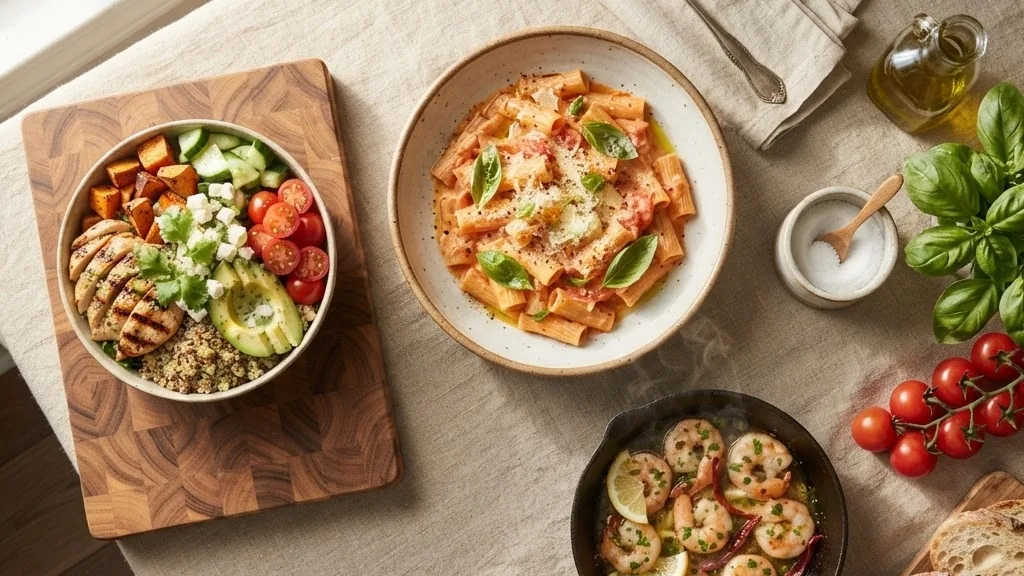
Easy meals under 30 minutes are less about fancy recipes and more about a repeatable method: get water boiling before you touch a knife, prep everything before the pan heats, and run two or three cook steps at once. Most weeknight cooks lose the race in the first five minutes, standing at a cutting board while an empty stockpot sits cold. This guide fixes that. You will get a timing method that actually holds, recipes sorted by protein and diet, cost-per-serving math, and a food-safety layer built on published USDA figures so nothing lands on the table undercooked. Every temperature below comes from the Food Safety and Inspection Service, the federal body that sets them.
Quick answer: The fastest way to hit easy meals under 30 minutes is a three-move system. First, boil water or preheat the pan the instant you walk in. Second, do full mise en place, meaning every vegetable chopped and every measurement poured before heat touches food. Third, overlap steps so a sauce reduces while a protein sears. Lean on rotisserie chicken, pre-cut vegetables, canned beans, and quick-cook grains. Confirm doneness with a thermometer, not color: poultry needs 165 degrees F, ground meat 160 degrees F.
Before diving into the method, it helps to define the term itself, since “30 minutes” gets used loosely across the internet. In this guide, 30 minutes means total time from walking into the kitchen to plating, including chopping, not just the minutes a pan is on heat. Some recipe writers only count active cooking time and leave out the prep entirely. That distinction matters when you are actually trying to feed people on a deadline, so every recipe referenced here is timed the honest way: door to plate.
The 30-Minute Method Most Recipe Lists Skip
The 30-minute method is a sequence, not a suggestion. Water goes on the burner before your coat is off, because a covered pot of pasta water takes roughly the same span whether you watch it or not. While it climbs to a boil, you run mise en place: every onion diced, every spice measured, every sauce whisked in a bowl. French kitchens formalized this decades ago for one reason. Prep during active cooking is where minutes vanish. Once heat is involved, you overlap. A protein sears in a skillet while grains steam and a sheet pan of vegetables roasts. Nothing waits its turn. This parallel structure is what separates a meal that comes together quickly from one that quietly runs long.
- Water first. Salt it, cover it, walk away. A boiling head start avoids dead time on any pasta or grain dish.
- Mise en place fully. No mid-cook chopping. Every ingredient staged in bowls before the pan is hot.
- Overlap, do not stack. Sear, roast, and simmer at once across two or three heat sources.
- One pan when possible. A single skillet or sheet pan cuts cleanup and consolidates timing.
Split every recipe into active time and total time. A dish with a short active window and a long hands-off simmer fits a busy night far better than one demanding constant stirring throughout, even though both can read as the same total time. That distinction is what separates a plan that survives a Tuesday from one that collapses.
A worked example makes the method concrete. Say the plan is chicken stir-fry with rice. The moment you walk in, rice goes into water on the stove and the lid goes on. While that heats, you slice chicken into thin strips, cut vegetables, and mix the sauce in a small bowl, all before the skillet touches heat. The skillet then goes on high with oil. Chicken sears first, vegetables join next, and the sauce goes in last to glaze everything. Rice finishes not long after. The whole sequence moves along with almost no idle waiting at any point.
Common timing mistakes that blow the 30-minute budget
Most failed attempts share the same three errors. The first is starting the knife work before the water or oven is heating, which stacks two slow processes back to back instead of running them together. The second is chopping as you go rather than finishing all prep first, which forces constant stopping mid-cook to grab the next ingredient. The third is choosing a cut of meat that fights the clock, such as a thick roast or bone-in thigh that takes a long time just to cook through. Swapping to thin-sliced cuts, ground meat, or shrimp removes that bottleneck immediately.
Fast Recipes Grouped by Protein
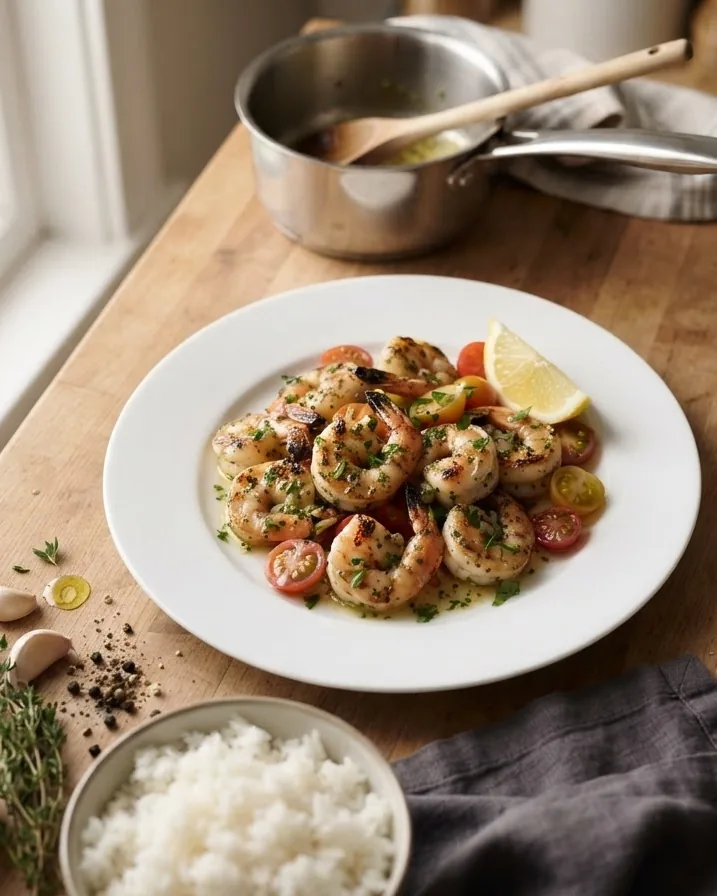
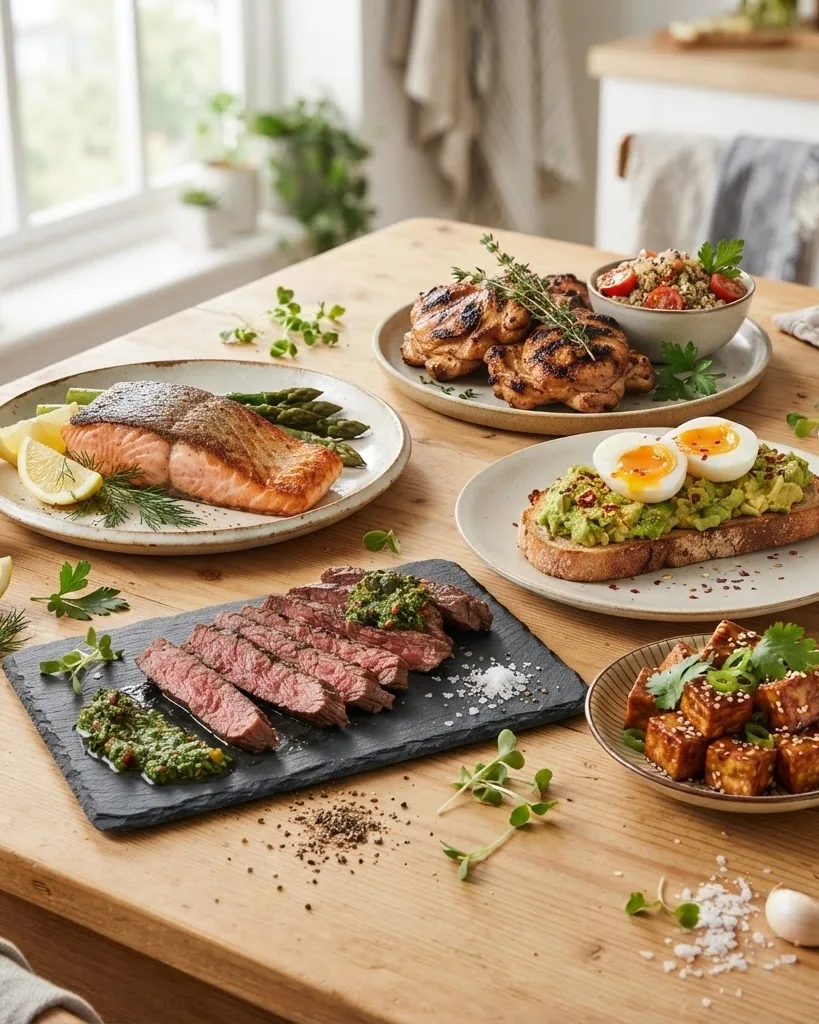
Sorting fast recipes by protein is the quickest route from a hungry moment to a plan, because most people already know what is in the fridge. Chicken is the weeknight workhorse, and rotisserie chicken removes the entire cook step, shredding straight into pasta, tacos, or a grain bowl. Ground beef browns quickly for skillet chili or quick Bolognese. Shrimp is the true sprinter, going from raw to opaque quickly over high heat. Eggs turn a fried-rice or frittata into dinner fast. Tofu and canned beans cover the meatless nights without a defrost wait. The trick is matching the protein’s natural cook speed to the clock rather than forcing a slow cut into a fast window.
- Chicken: rotisserie shred for pasta and bowls, or thin-sliced breast for stir-fry.
- Ground beef: browns quickly for chili, tacos, or skillet pasta.
- Shrimp and fish: shrimp cooks fast; fish fillets take a bit longer.
- Eggs, tofu, beans: the meatless fast lane, no thawing required.
For a chicken dinner that reheats well and stretches to leftovers, a one-dish bake like this cheesy chicken and rice casserole covers protein and starch in a single pan. When the craving runs spicier, the buffalo chicken pasta uses shredded cooked chicken so the timeline stays tight. If you want to understand how different proteins behave under heat before you commit, the meat-focused breakdowns at meat and protein guides are a useful primer on sear temperatures and rest times.
Frozen protein deserves a note here, because it is the most common reason a plan derails. A frozen chicken breast will not hit temperature in 30 minutes without a head start, so either thaw it in the fridge the night before, or reach for a fast-thaw method: sealed in a bag, submerged in cold water, changed every 30 minutes. Shrimp is the exception, since small frozen shrimp thaw quickly under running cold water and can go straight into a hot pan afterward. Ground beef and ground turkey thaw fastest of any raw protein, often ready to cook well before the rest of the meal is prepped.
Recipes by Method: Skillet, Sheet Pan, and No-Cook
Choosing a method by appliance often beats choosing by ingredient, because the method dictates the timeline. A skillet stir-fry is the fastest hot option, everything cooking in one pan over high heat with a single item to wash. A sheet-pan dinner trades a little active time for near-zero attention: toss protein and vegetables in oil, slide the tray into a hot oven, and walk away while it roasts. No-cook assembly meals are the fastest fallback when there is no energy left to cook, built from rotisserie chicken, canned beans, pre-washed greens, and a jar of dressing, with a total time measured in the minutes it takes to open packaging. Match the method to your energy that night, not just your grocery list.
- Skillet or stir-fry: fastest hot meal, one pan, high heat.
- Sheet pan: low attention, roast until done.
- Air fryer: crisps small batches fast with less oil than deep frying.
- No-cook: assembly bowls and wraps, near-zero active heat time.
The air fryer earns its counter space on nights you want crunch without a fryer’s mess. A batch like these crispy air fryer fried chicken pieces lands in a fraction of the oil, and the same appliance handles a fast fish course, which pairs neatly with a bright fruit finish such as this easy fruit compote for dessert without extra effort.
Sheet-pan dinners have one rule worth repeating: cut everything the same size, and group vegetables by cook time on the tray rather than mixing them randomly. Dense vegetables like carrots and potatoes go down first or get cut smaller, while quick-cooking items like zucchini or cherry tomatoes join the tray halfway through. A single tray split this way needs almost no attention beyond one flip at the midpoint, which is exactly why it fits a night when you also need to help with homework or answer email.
An Instant Pot or other electric pressure cooker deserves a mention even though it does not appear in the top-ranking pages reviewed for this topic. Pressure cooking shrinks the cook time of dried beans, tough cuts, and grains dramatically, but the tradeoff is a pressure buildup and release time that eats into the 30-minute window. For beans and grains already soaked or quick-cooking, it competes well. For a whole raw chicken breast dinner, a skillet or sheet pan usually beats it once buildup time is counted honestly.
Dietary Variants: Vegetarian, High-Protein, Low-Carb
Dietary variants keep a fast-dinner plan usable for a whole household, and each fits inside 30 minutes with the right template. Vegetarian moves fastest when it leans on canned chickpeas, lentils, or tofu, all of which skip the thaw-and-cook penalty of raw meat. A creamy red lentil dish simmers to soft quickly. High-protein nights center on eggs, Greek yogurt, shrimp, or lean ground turkey, and the protein-foods group is one of the five the Dietary Guidelines for Americans, 2020-2025 tells adults to fill a quarter of the plate with. Low-carb swaps the grain for cauliflower rice or a bed of greens, cutting the boil step entirely. None of these demands a separate shopping trip if the pantry is stocked.
- Vegetarian and vegan: canned beans, lentils, and tofu cook fast.
- High-protein: eggs, shrimp, Greek yogurt, and lean ground turkey.
- Low-carb or keto: cauliflower rice and greens replace grains, saving the boil.
- Gluten-free and dairy-free: rice noodles, tamari, and coconut milk as swaps.
A vegetarian night gets easier with a ready template like this creamy red lentil dhal, which turns pantry staples into a full bowl, or a lighter plate like this spring veggie gnocchi that cooks in the time water takes to boil. For high-protein recovery drinks without stomach upset, the guide to lactose free protein shakes and how to build them covers powder choice and mixing.
Firm or extra-firm tofu is the piece most vegetarian cooks get wrong on a tight clock. Skip pressing it for an hour and instead pat it dry with a towel, cut it into cubes, and sear it in a hot dry pan before adding oil and sauce. That shortcut alone skips the wait a traditional press would demand and still delivers a firm, browned exterior. Canned chickpeas and lentils need no cooking at all beyond warming through, since they are already fully cooked in the can, which is why they anchor so many of the fastest vegetarian recipes.
Food Safety and Safe Internal Temperatures
Food safety is the layer most fast-dinner roundups drop, and it is the one that keeps a rushed meal from making anyone sick. Color is not doneness. The only reliable check is an instant-read thermometer in the thickest part of the food. The Food Safety and Inspection Service sets these minimums: poultry, whether whole, in parts, or ground, must reach 165 degrees F (74 degrees C). Ground beef, pork, veal, and lamb need 160 degrees F (71 degrees C). Whole cuts of beef, pork, veal, and lamb are safe at 145 degrees F (63 degrees C) with a 3-minute rest. Fish with fins hits 145 degrees F (63 degrees C) or cooks until opaque and flaking. Egg dishes need 160 degrees F (71 degrees C). Hit those numbers and speed never costs safety.
- Poultry (all forms): 165 degrees F (74 degrees C).
- Ground meats (beef, pork, veal, lamb): 160 degrees F (71 degrees C).
- Whole cuts (beef, pork, veal, lamb): 145 degrees F (63 degrees C), rest 3 minutes.
- Fish: 145 degrees F (63 degrees C) or opaque and flaking; egg dishes 160 degrees F (71 degrees C).
Since 2011, whole-muscle pork has been safe at 145 degrees F (63 degrees C) with a slight pink color, per USDA, which means a pork chop can be juicy and safe at once. The thermometer habit is rare and worth building: FSIS data shows only about 6 percent of home cooks use a thermometer for hamburgers and roughly 10 percent for chicken breasts. You can see the full chart on the FSIS safe minimum internal temperature chart, and FoodSafety.gov publishes the same figures for consumers. When a question comes up mid-cook, the USDA Meat and Poultry Hotline answers at 1-888-674-6854.
Why the thermometer matters more than the timer
A timer assumes a fixed thickness and starting temperature, and neither holds in a real kitchen. A cold chicken breast straight from the fridge lags a room-temperature one by minutes. The FSIS reports that even a burger that looks fully cooked can be undercooked inside, which is why the agency ties safety to temperature rather than appearance. A ten-dollar instant-read thermometer settles it in two seconds.
Where to place the thermometer for an accurate reading
Placement changes the reading more than most people expect. For a chicken breast, insert the probe horizontally into the thickest part, avoiding bone, which reads cooler than meat and can give a falsely low number. For a whole roast, check the center. For a thin cut like a burger patty or fish fillet, insert from the side rather than straight down, since a top-down insertion in a thin piece often measures the pan surface rather than the food’s center. Let the probe sit for a few seconds before reading; an instant reaction is faster than a dial thermometer but still needs a moment to stabilize.
The Danger Zone and Handling Leftovers
Handling leftovers safely is where fast cooking either pays off or backfires the next day. The Food Safety and Inspection Service defines the temperature Danger Zone as 40 degrees F to 140 degrees F (4 degrees C to 60 degrees C). Inside that band, bacteria can double in as little as 20 minutes, which is why cooling matters as much as cooking. The 2-hour rule follows directly: discard any perishable food left at room temperature for more than two hours, or more than one hour if the room is above 90 degrees F (32 degrees C). Reheating does not undo the damage, because it will not neutralize toxins bacteria have already produced. Keep your refrigerator at or below 40 degrees F (4 degrees C) and your freezer at 0 degrees F (-18 degrees C).
- Danger Zone: 40 degrees F to 140 degrees F; bacteria double in as little as 20 minutes.
- 2-hour rule: toss perishables out over 2 hours, or over 1 hour above 90 degrees F.
- Cool fast: shallow containers, refrigerated within two hours of cooking.
- Reheat to 165 degrees F or until hot and steaming throughout.
Cooling in shallow containers speeds the drop out of the Danger Zone, and reheating leftovers to 165 degrees F brings them back to safe. Full guidance on that temperature band lives on the FSIS Danger Zone reference page. The FDA’s refrigerator guidance backs the same 40 degrees F ceiling.
A practical detail that trips people up: a large pot of soup or chili does not cool quickly even in the refrigerator, because the center of a deep container stays warm for hours while the fridge chills only the outside. Splitting a big batch into two or three shallow containers before refrigerating solves this, since more surface area means faster, more even cooling all the way through. The same logic applies to a large tray of casserole; portion it before storing rather than covering the whole pan and sliding it in as one block.
Pantry, Budget, and Cost-Per-Serving
A stocked pantry is the real engine behind cheap, fast dinners, because the meals that beat the clock also tend to beat the grocery bill. Canned beans, quick-cook grains, frozen vegetables, and eggs form a base that turns into a dozen dinners without a special trip. Frozen vegetables cost less than fresh, never spoil in the crisper, and skip the wash-and-chop step entirely, which trims both money and minutes. Rotisserie chicken is the highest-value shortcut on the list: one bird replaces the cook time of raw chicken and stretches across two or three meals. Building a plan around five-ingredient recipes keeps both the timeline and the receipt short.
- Anchor staples: canned beans, rice, pasta, eggs, frozen vegetables, canned tomatoes.
- Value shortcut: one rotisserie chicken across two or three meals.
- Five ingredients or fewer: fewer items, faster cook, lower cost per serving.
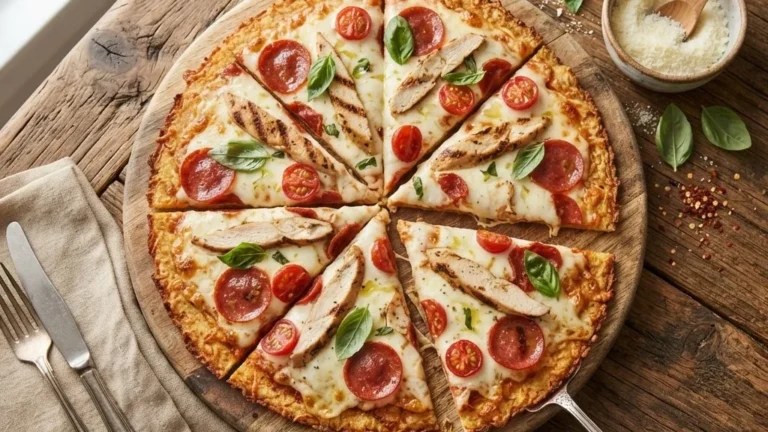
For a crowd-friendly, low-cost centerpiece, a tray of crispy baked chicken wings feeds several people from one economical cut, and a BBQ chicken pizza turns leftover shredded chicken into a second dinner. For nutrition numbers per ingredient, USDA FoodData Central publishes calorie and protein data you can trust over a package’s rounded estimate.
Stretching one rotisserie chicken across three meals is the single best cost move on this list. Night one uses the breast meat sliced over a grain bowl. Night two shreds the thigh meat into tacos or a quesadilla. The carcass and any scraps go into a pot with water, an onion, and a carrot for a simple stock, which becomes the base of a soup on night three. That sequence turns roughly ten dollars of chicken into three separate dinners, none of which requires much active cooking once the stock has simmered on its own.
Equipment That Actually Saves Time
Equipment choices matter less than technique, but a short list of tools removes real friction. An instant-read thermometer is the single highest-value item, since it replaces guesswork with a two-second reading. A large, heavy skillet, at least 12 inches across, lets a stir-fry or sear happen in one batch instead of two crowded ones, which matters because crowding a pan drops its temperature and steams food instead of browning it. A rimmed sheet pan handles roasting without spillover. A sharp chef’s knife speeds every chopping step in the mise en place phase, since a dull blade forces slower, more careful cuts to avoid slipping.
- Instant-read thermometer: the fastest, most reliable doneness check available.
- 12-inch or larger skillet: avoids crowding, which causes steaming instead of browning.
- Rimmed sheet pan: handles roasting vegetables and protein together.
- Sharp chef’s knife: speeds every prep step and is safer than a dull one.
Frequently Asked Questions
What can I make in 30 minutes with chicken?
Use rotisserie chicken to skip the cook step entirely: shred it into pasta, tacos, or a grain bowl in under ten minutes. If cooking raw, slice breasts thin so they finish fast in a skillet, then confirm 165 degrees F with a thermometer. A stir-fry, a quick chicken and rice bake, or a buffalo chicken pasta all land inside the window.
What are the healthiest 30-minute meals?
Lean on the protein-foods and vegetable groups the Dietary Guidelines for Americans, 2020-2025 emphasize. A shrimp and vegetable stir-fry, a lentil bowl, or a salmon sheet-pan dinner all pack protein and produce without much fat. Skip cream-heavy sauces, use frozen vegetables to boost volume, and check per-serving calories and protein on USDA FoodData Central.
What is the cheapest fast dinner?
Dried or canned beans and eggs are the cheapest complete proteins, and both cook in minutes. A bean-and-rice skillet, an egg fried rice, or a lentil dhal feeds several people for a low cost per serving. Frozen vegetables and pantry staples keep the total down, and a single rotisserie chicken stretched across meals lowers the per-plate cost further.
Are no-cook meals actually safe?
Yes, when you respect the temperature rules. Keep cold ingredients at or below 40 degrees F until they hit the plate, since the Danger Zone starts there. Do not let assembled bowls or wraps sit out longer than two hours, or one hour above 90 degrees F. Use already-cooked proteins like rotisserie chicken or canned beans, and wash pre-cut produce if the package advises it.
Do I really need a food thermometer?
For meat, poultry, and egg dishes, yes. FSIS data shows only about 6 percent of home cooks use one for hamburgers and roughly 10 percent for chicken breasts, yet color alone misleads: a burger can look done and still be undercooked inside. An instant-read model costs little, reads in seconds, and is the only reliable way to confirm poultry reached 165 degrees F.
Can I meal-prep 30-minute recipes for the whole week?
Most of the recipes here scale up without adding much active time, since a skillet or sheet pan holds double the ingredients almost as easily as a single portion. Cook a larger batch on one night, portion it into shallow containers while still warm, and refrigerate within two hours as the Danger Zone guidance requires. Reheat individual portions to 165 degrees F before eating, and plan to use refrigerated leftovers within three to four days for best quality and safety.
Pulling It Together
Speed on a weeknight is a system, not a talent. Boil the water first, prep everything before the pan is hot, overlap your cook steps, and lean on pantry shortcuts like rotisserie chicken, canned beans, and frozen vegetables. Then let the thermometer, not the clock or the color, tell you when dinner is done: 165 degrees F for poultry, 160 degrees F for ground meat, 145 degrees F for whole cuts and fish. Cool leftovers fast, keep them out of the 40 to 140 degrees F Danger Zone, and reheat to 165 degrees F. Do that, and easy meals under 30 minutes stop being a gamble and start being routine.