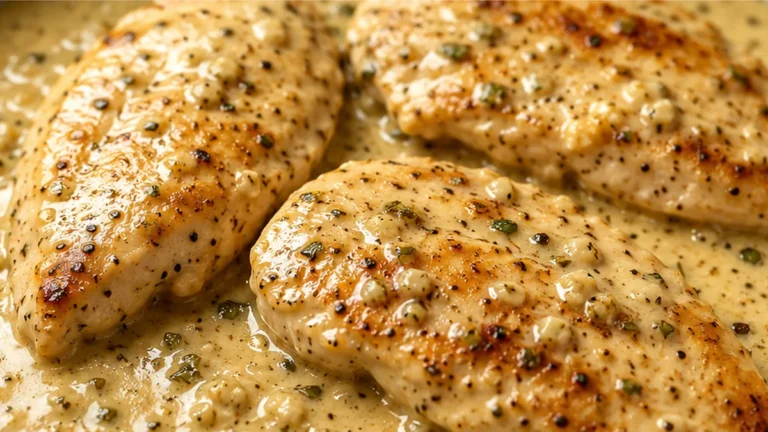
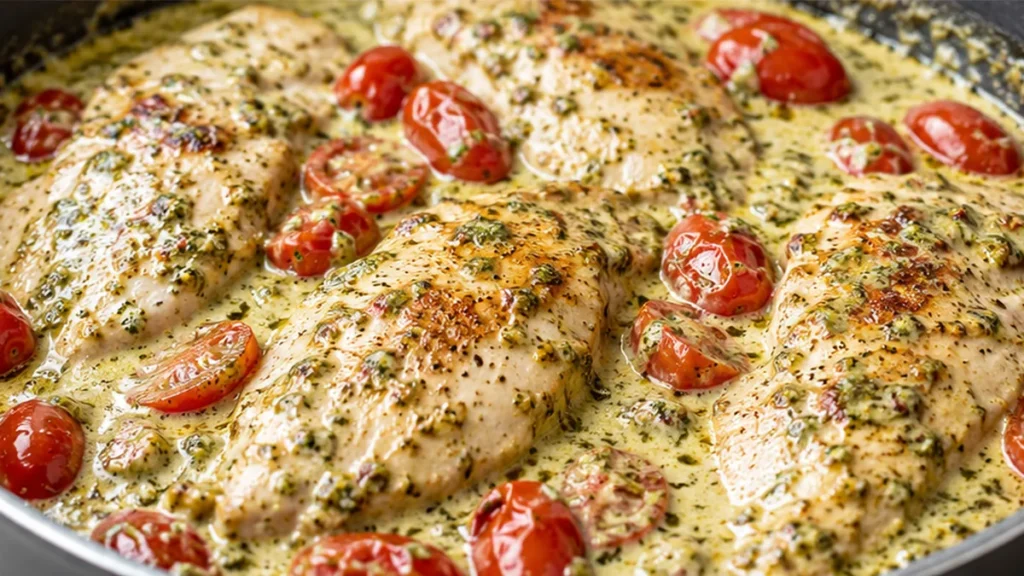
Pesto chicken brings together the rich flavors of pesto, creamy sauce, and tender chicken in a harmonious dish. This recipe simplifies the process, ensuring a restaurant-quality meal is achievable even on a busy weeknight. You’ll find that this focus on simple, quality ingredients results in a meal that is both comforting and impressive.
Key takeaways
- Use boneless, skinless chicken breasts for even cooking.
- Incorporate heavy cream slowly to prevent separation.
- Sauté garlic before adding tomatoes for enhanced flavor.
- Monitor cooking temperature to avoid overcooked chicken.
Creamy Pesto Chicken
Ingredients
- 2 boneless, skinless chicken breasts (about 1.3 lb/600g total)
- 1/8 tsp salt
- 1/8 tsp pepper
- 2 tbsp olive oil, divided
- 2 cloves garlic, minced
- 1 pint grape tomatoes, sliced in half
- 1/2 cup heavy cream
- 1/4 cup pesto
Instructions
- Fillet the chicken breasts into thinner pieces and season with salt and pepper.
- Heat a skillet over medium heat, add 1 Tbsp olive oil, and cook chicken for 7-10 minutes.
- Reduce heat to medium-low, add remaining olive oil, garlic, and tomatoes; sauté for 5 minutes.
- Stir in heavy cream and pesto, simmer until combined, then adjust seasoning.
- Return chicken to skillet, coat with sauce, and heat through for a few minutes.
Video
Notes
Choosing the Right Chicken for Pesto Chicken
Using boneless, skinless chicken breasts is essential for this recipe. The ideal weight of about 1.3 lb (600g) allows for even cooking and optimal flavor absorption from the creamy pesto sauce. Chicken breasts should be uniform in thickness; consider pounding them to about 1 inch thick to ensure they cook evenly. This will help avoid dry edges while the center remains undercooked.
Understanding the Role of Heavy Cream
Heavy cream is crucial for achieving the desired creaminess in your pesto chicken. Its fat content, typically around 36%, allows for a rich texture that coats the chicken without being overly heavy. When combined with pesto, the cream creates an emulsion that binds the flavors together. To prevent separation, keep the heat low when adding cream to the pan, and stir continuously until fully incorporated.
Why Garlic and Tomatoes Enhance Flavor
Garlic and grape tomatoes are not just for garnish; they play a significant role in flavor development. The Maillard reaction occurs when garlic is sautéed, producing complex flavors that enhance the dish. Grape tomatoes, when cooked, release their natural sugars, adding sweetness and acidity to balance the richness of the cream and pesto. Sauté garlic for about 30 seconds before adding tomatoes to maximize flavor extraction.
Common Mistakes and How to Avoid Them
- Overcooking the Chicken: This leads to dry, tough meat. Use a meat thermometer to ensure the internal temperature reaches 165°F (75°C) and remove it from heat immediately.
- Separating the Sauce: Adding cream too quickly or at high heat can cause it to separate. Always lower the heat and add cream gradually, stirring continuously.
- Insufficient Seasoning: Under-seasoning can result in bland flavors. Ensure to season the chicken with salt and pepper before cooking and taste the sauce before serving.
Ingredient Swaps for Pesto Chicken
- Substituting Heavy Cream: Use half-and-half for a lighter version, but expect a thinner sauce.
- Using Different Proteins: Swap chicken for shrimp or tofu; however, cooking times will vary significantly, requiring careful monitoring.
- Changing the Pesto: Basil pesto can be replaced with sun-dried tomato pesto for a different flavor profile, but this will alter the dish’s overall taste.
- Grape Tomatoes vs. Cherry Tomatoes: Cherry tomatoes can be used; they are slightly sweeter, but both provide similar flavor contributions.
How to Prepare Pesto Chicken Ahead of Time
Making pesto chicken in advance can save you time on busy weeknights. To prepare this dish ahead of time, season the chicken breasts with salt and pepper, then sear them in olive oil until golden brown, about 5-7 minutes per side. Allow the chicken to cool, then store it in an airtight container in the refrigerator for up to 2 days. When ready to serve, reheat the chicken in a skillet over medium heat, then add the garlic and tomatoes, followed by the heavy cream and pesto to finish cooking. This method retains the chicken’s moisture and flavor, ensuring a delicious meal without the last-minute rush.
Scaling Up the Recipe for Larger Gatherings
This creamy pesto chicken recipe can easily be scaled up or down depending on the number of servings needed. For each additional chicken breast, increase the amounts of olive oil, garlic, heavy cream, and pesto proportionally. A good rule of thumb is to use about 1 tablespoon of olive oil and 1 clove of garlic per chicken breast. Keep in mind that cooking times may vary; larger batches may require a longer simmering time to ensure the chicken is cooked through and the sauce is well-combined. Use a meat thermometer to check for doneness, aiming for an internal temperature of 165°F (74°C).
Choosing the Right Equipment for Perfect Results
The choice of equipment can significantly impact the outcome of your pesto chicken. A heavy-bottomed skillet or sauté pan is ideal for even heat distribution, which helps achieve a nice sear on the chicken. Non-stick pans can also be beneficial to prevent sticking, especially when using a cream-based sauce. If using a stainless-steel pan, be sure to preheat it properly and add oil before the chicken to prevent sticking. Additionally, a lid can be used during the simmering phase to trap steam, helping to cook the chicken evenly while keeping it moist.
Seasonal Ingredients and Their Impact on Flavor
Using seasonal ingredients can elevate your pesto chicken dish significantly. In summer, opt for fresh, ripe tomatoes for a sweeter, juicier flavor. During fall, consider adding roasted butternut squash for a warm, nutty taste that complements the creaminess of the sauce. Additionally, when making pesto, using fresh basil during its peak season will enhance the overall flavor profile of the dish. Conversely, if using dried or less fresh herbs, you may need to adjust the quantity, as their flavor intensity will differ, potentially requiring more to achieve the desired taste.
How to Properly Store Leftover Pesto Chicken
Storing leftover creamy pesto chicken is essential for maintaining its flavor and texture. Allow the dish to cool to room temperature before transferring it to an airtight container. It can be refrigerated for up to 3 days. For longer storage, consider freezing the dish. Place it in a freezer-safe container, ensuring it is well-sealed to prevent freezer burn. It can be frozen for up to 2 months. When reheating, do so gently over low heat to avoid separating the cream and pesto, which can lead to an unappetizing texture.
Adjusting Portions Without Sacrificing Flavor
Scaling the recipe for creamy pesto chicken can be straightforward, but attention to ingredient ratios is crucial. For every additional chicken breast (approximately 0.65 lb or 300g), increase the heavy cream by 2 tablespoons and the pesto by 1 tablespoon to maintain the creamy texture and flavor balance. Additionally, ensure that the garlic and tomatoes are proportionately increased to avoid overpowering the dish. This method preserves the original flavor profile while accommodating larger gatherings.
Understanding the Impact of Ingredient Quality on Flavor
The quality of the ingredients used in creamy pesto chicken significantly affects the final dish. Fresh basil for the pesto, ripe grape tomatoes, and high-quality olive oil contribute to a vibrant flavor. In contrast, dried or low-quality ingredients may result in a bland dish. Seasonal ingredients, such as locally sourced tomatoes, can enhance the taste, making the dish more aromatic and flavorful. Always opt for the freshest ingredients available to elevate your pesto chicken experience.
How to Prepare Pesto Chicken for Meal Prep
Making pesto chicken ahead of time is a great way to streamline your weeknight dinners. To prepare, season the chicken breasts with salt and pepper, then sear them in olive oil until golden brown, about 4-5 minutes per side over medium heat. Once cooked, let them cool before slicing. Combine the sliced chicken with the heavy cream and pesto mixture, ensuring even coating. Store in an airtight container in the refrigerator for up to 3 days. When ready to serve, simply reheat in a skillet over low heat until warmed through. The flavors will meld beautifully, enhancing the dish.
Understanding the Role of Tomatoes in Pesto Chicken
Grape tomatoes add a burst of acidity and sweetness to the creamy pesto chicken, balancing the richness of the heavy cream. When using tomatoes, the key is to cook them just enough to soften, about 3-4 minutes, without losing their shape. This brief cooking time allows the tomatoes to release their juices, which then combine with the cream and pesto, creating a flavorful sauce. If using larger tomatoes, consider chopping them into smaller pieces to ensure even cooking and distribution throughout the dish. For an even more intense flavor, roasting the tomatoes beforehand can deepen their sweetness.
How to Achieve the Perfect Creamy Texture in Pesto Chicken
The key to achieving a luxurious creamy texture in your pesto chicken lies in the proper incorporation of heavy cream and pesto. Begin by heating the olive oil in a skillet over medium heat, then add the minced garlic, cooking until fragrant, about 1 minute. Next, pour in the heavy cream, allowing it to simmer gently for 2-3 minutes. This step is crucial because it allows the cream to reduce slightly, thickening the sauce. Incorporating the pesto after the cream has thickened helps to maintain the vibrant color and fresh flavor of the basil. Stir the pesto in until fully combined; the ideal ratio is about 1/4 cup of pesto to 1/2 cup of heavy cream. This ratio provides a rich flavor without overpowering the dish. If you find your sauce too thick, you can thin it with a splash of chicken broth or pasta water. Conversely, if it’s too thin, let it simmer for an additional minute to reduce further.
Understanding the Impact of Ingredient Quality on Flavor in Pesto Chicken
The quality of your ingredients significantly impacts the final flavor of pesto chicken. For the chicken, opt for organic, free-range breasts, which tend to have a richer flavor and better texture. When it comes to pesto, using homemade or high-quality store-bought pesto can elevate the dish; look for one made with fresh basil, high-quality olive oil, and real Parmesan cheese. Fresh grape tomatoes should be vibrant and firm, as they contribute sweetness and acidity that balance the creaminess of the sauce. Additionally, using fresh garlic instead of pre-minced can enhance the dish’s overall flavor profile. Remember, the synergy between high-quality ingredients creates a more complex and satisfying dish. If you choose to use lower-quality ingredients, be prepared for a less vibrant flavor, which may require additional seasoning or spices to compensate.
Pro tips
- Use a good quality pesto for the best flavor.
- Don’t overcrowd the pan when searing the chicken; cook in batches if necessary.
- Reserve some of the starchy liquid from cooking the chicken if the sauce needs thinning.
- Taste and adjust seasoning before serving; pesto can be salty.
Enjoy this delicious and easy Creamy Pesto Chicken tonight! It’s a guaranteed hit for the whole family.
Frequently asked questions
Can I use a different type of chicken?
Yes, you can use chicken thighs or even bone-in chicken, but cooking times will vary. Bone-in pieces will take longer to cook through, so adjust accordingly.
What can I substitute for heavy cream?
You can use half-and-half or whole milk, but keep in mind that the sauce will be less creamy and rich. For a dairy-free option, consider coconut cream.
How do I prevent the sauce from separating?
To prevent separation, add the cream at a low temperature and stir continuously. Avoid boiling after adding the cream, as high heat can cause it to break.
Can I make this dish ahead of time?
While it’s best served fresh, you can prepare the chicken and sauce separately and combine them just before serving. Reheat gently to avoid overcooking the chicken.
More from High-Protein Dinners →