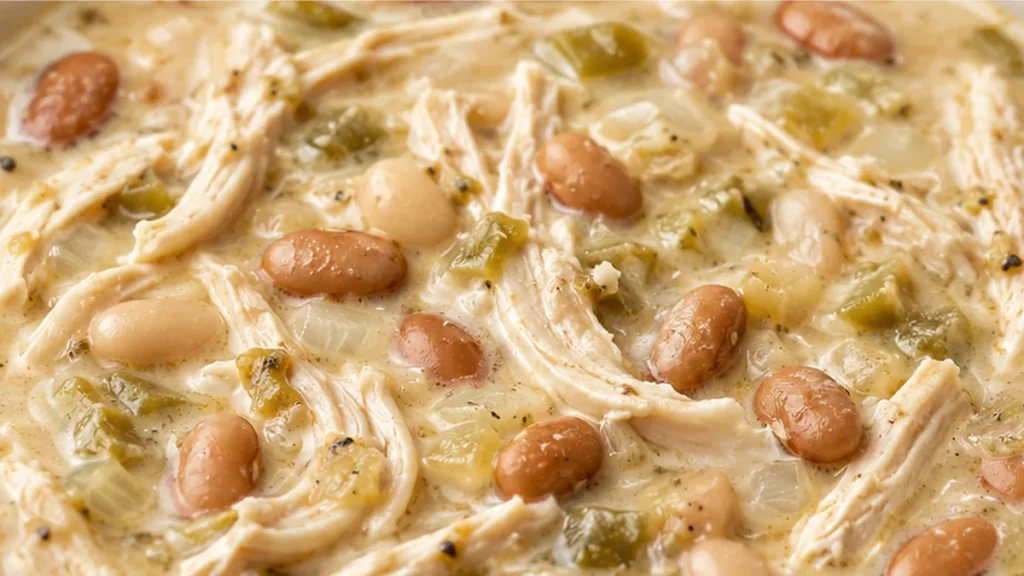
White chicken chili offers a creamy texture and balanced flavors that make it a satisfying meal. This recipe simplifies the process, bringing a restaurant-worthy dish to your table in under an hour. Perfect for busy weeknights or cozy weekends, it’s a crowd-pleaser that never disappoints. We’re using tender chicken thighs, a blend of cannellini and pinto beans, and a touch of spice from jalapeño and green chiles, all brought together by rich cream cheese and sour cream for that signature velvety finish.
Key takeaways
- Use boneless, skinless chicken thighs for richer flavor and tenderness.
- Choose cannellini and pinto beans for optimal texture and taste.
- Toast spices before adding other ingredients to enhance their flavors.
- Properly sautéing onion and garlic is crucial for a flavorful base.
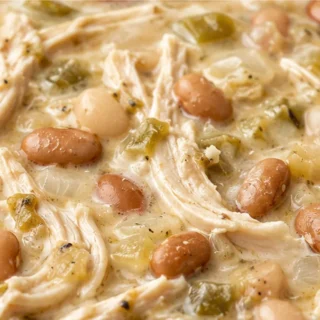
Creamy White Chicken Chili
Ingredients
- 1 yellow onion, diced
- 4 cloves garlic, minced
- 1 jalapeño, diced
- 1 ½ lbs. boneless, skinless chicken thighs
- 2 cans cannellini beans, drained
- 1 can pinto beans, drained
- 1 can diced green chiles
- 1 tbsp ground cumin
- 1 tsp dried oregano
Instructions
- Dice the onion and mince the garlic. Deseed and dice the jalapeño. Sauté in olive oil until onions soften.
- Add chicken thighs, cannellini beans, pinto beans, green chiles, cumin, oregano, and chicken broth. Stir to combine.
- Cover and bring to a boil over medium-high heat.
- Reduce heat to medium-low and simmer for 30 minutes, stirring occasionally.
- Remove chicken, shred, and return to the pot with corn. Stir to combine.
- Stir in cream cheese until melted, then add sour cream. Smash some beans to thicken.
- Serve hot with your favorite toppings.
Video
Notes
The Role of Chicken Thighs in Flavor Development
Using boneless, skinless chicken thighs instead of breasts significantly impacts the flavor and texture of white chicken chili. Thighs contain more fat, which contributes to a richer broth and a tender mouthfeel. Aim for a cooking temperature of around 180°F (82°C) to ensure the thighs are fully cooked while remaining juicy. This temperature allows the connective tissues to break down without drying out the meat.
Understanding Bean Choices and Their Impact
The choice of beans in white chicken chili is crucial for both texture and flavor. Cannellini beans offer a creamy consistency, while pinto beans add a slight earthiness. When using canned beans, draining them helps reduce sodium content and prevents the chili from becoming overly salty. If you prefer a thicker chili, consider pureeing a portion of the cannellini beans and mixing them back into the pot.
Balancing Spices for Optimal Flavor
Ground cumin and dried oregano are essential for creating a well-rounded flavor profile. For best results, toast the spices in the pot for 1-2 minutes before adding other ingredients. This technique enhances their natural oils and intensifies their flavors. Adjust the spice levels according to your heat tolerance; for example, adding more jalapeño will increase heat, while reducing it will create a milder dish.
Why Proper Sautéing Matters for Texture
Properly sautéing the onion and garlic is vital for developing the base flavor of the chili. Cook the diced onion for about 5-7 minutes until it becomes translucent and slightly caramelized, followed by the garlic for an additional minute. This step creates a depth of flavor that serves as the foundation of the dish. If the garlic burns, it can impart a bitter taste, ruining the overall flavor.
Achieving Creaminess Without Dairy
This white chicken chili achieves its creamy texture without heavy dairy products. The combination of the starches from the beans and the natural fats from the chicken contributes to a velvety consistency. If a creamier texture is desired, you can blend a small amount of the chili and return it to the pot. This technique mimics the mouthfeel of a traditional cream-based chili while keeping it lighter.
Understanding the Impact of Ingredient Freshness on Flavor
The quality of your ingredients significantly affects the final taste of creamy white chicken chili. Fresh vegetables, particularly the onion and jalapeño, contribute vibrant flavors, while canned beans and chiles should be checked for their expiration dates. Fresh herbs, if used, should be aromatic and vibrant. For the best results, consider sourcing your ingredients from local markets, especially during peak seasons. Fresh ingredients can enhance the chili’s overall flavor profile, providing a more robust and satisfying dish.
Scaling the Recipe for Large Gatherings
When scaling your creamy white chicken chili recipe, maintain the ratios of chicken, beans, and spices to ensure consistent flavor. For example, if you double the recipe, use 3 lbs. of chicken thighs and increase the beans proportionally. Cooking time may also need adjustment; larger batches may require additional simmering time to ensure thorough heating and flavor melding. A slow cooker can be beneficial for larger quantities, allowing for even cooking without the need for constant monitoring.
Equipment Choices and Their Effects on Cooking Time
The choice of cooking equipment can significantly influence the cooking time and final texture of your creamy white chicken chili. A heavy-bottomed pot or Dutch oven retains heat well, allowing for even cooking and browning of the chicken. Conversely, a thinner pot may lead to uneven cooking. Using a slow cooker can yield a different texture, allowing the flavors to develop more deeply over several hours. Adjust your cooking times accordingly based on the equipment used, as this will impact the overall outcome of the dish.
Optimal Serving Suggestions and Pairings
Serving creamy white chicken chili can be enhanced with various toppings and sides. Consider garnishing with fresh cilantro, avocado slices, or a dollop of sour cream to add creaminess and freshness. Pair the chili with crusty bread or cornbread to soak up the flavors. For a refreshing contrast, serve with a light salad or pickled vegetables. These pairings not only complement the chili but also elevate the dining experience, making it more enjoyable for guests.
Understanding the Impact of Cooking Time on Flavor Development
The cooking time for white chicken chili is crucial for developing depth of flavor. Cooking the chili for at least 30 minutes allows the spices to meld and the beans to soften, enhancing the overall taste. If cooked too quickly, the flavors may remain sharp and unintegrated. For optimal results, a simmer of 45 minutes to an hour is recommended, maintaining a temperature around 190°F (88°C). This gentle cooking helps the chicken become tender while allowing the spices to bloom fully.
How to Store and Reheat for Best Flavor Preservation
Storing white chicken chili properly can significantly affect its flavor and texture. Allow the chili to cool completely before transferring it to an airtight container. It can be refrigerated for up to 4 days or frozen for up to 3 months. When reheating, do so gently on the stove over low heat, adding a splash of broth or water if necessary to restore creaminess. Avoid microwaving, as this can make the chicken tough and dry out the beans.
Adjusting for Ingredient Quality and Seasonal Variations
The quality of ingredients can greatly influence the final outcome of your white chicken chili. Fresh, high-quality chicken thighs will yield a more succulent and flavorful dish, whereas older or lower-quality meat may lead to a less appealing texture. Additionally, seasonal variations in produce, such as the freshness of jalapeños or the richness of beans, can alter the flavor profile. Opt for locally sourced ingredients when possible, and adjust the spice levels based on the heat of your jalapeños, which can vary significantly.
How to Make White Chicken Chili Ahead of Time Without Sacrificing Flavor
Preparing white chicken chili in advance can enhance its flavors, as the ingredients have time to meld. To make it ahead, follow these steps: cook the chili as per the recipe, then cool it quickly to room temperature. Store it in an airtight container in the refrigerator for up to three days. To reheat, warm it gently on the stove over medium heat, stirring occasionally, until heated through. If you notice the chili has thickened, add a splash of chicken broth to achieve your desired consistency. This method ensures that the flavors remain vibrant while maintaining the creamy texture.
Scaling the Recipe: What Changes When You Double the Batch?
When scaling white chicken chili for a larger gathering, it’s essential to consider both ingredient ratios and cooking time. Doubling the recipe generally maintains the same proportions of ingredients, but you may need to adjust cooking time. For example, if you double the chili, use a larger pot to ensure even heat distribution. Cooking time might increase by about 10-15 minutes, so monitor the internal temperature of the chicken, aiming for 165°F (74°C). Additionally, consider the size of your beans; larger batches may require more liquid to maintain the creamy consistency. Taste and adjust seasoning as needed, as larger quantities can dilute flavors.
Understanding the Role of Cooking Time in Flavor Development
Cooking time significantly influences the flavor profile of white chicken chili. For optimal results, simmer the chili for at least 30 minutes after adding all ingredients. This allows the spices, beans, and chicken to meld together, enhancing the overall taste. If cooking for shorter periods, around 15-20 minutes, the flavors may remain distinct rather than blending harmoniously. Additionally, the longer cooking time allows the chicken thighs to become tender and absorb the flavors of the broth. For best results, maintain a simmering temperature of around 200°F (93°C) to ensure even cooking without boiling, which can toughen the chicken.
Choosing the Right Equipment for Consistent Results
The choice of cooking equipment can greatly affect the outcome of white chicken chili. A heavy-bottomed pot or Dutch oven is ideal for even heat distribution, preventing hot spots that could cause burning. If using a slow cooker, set it to low for 6-8 hours for tender chicken and well-developed flavors. Conversely, using an Instant Pot can significantly reduce cooking time to about 15 minutes under pressure, but be cautious with the release method to avoid splattering. Regardless of the equipment, ensure that the pot is large enough to accommodate all ingredients without overflowing, typically a 6-quart pot is suitable for this recipe.
Pro tips
- Use chicken thighs for maximum flavor and tenderness.
- Don’t skip smashing some beans against the pot’s side for natural thickening.
- Taste and adjust seasoning before serving; add more salt, pepper, or heat as needed.
- Serve with toppings like shredded cheese, cilantro, or a dollop of sour cream.
Enjoy this comforting and flavorful white chicken chili. It’s a hearty meal that’s simple to make and incredibly satisfying.
Frequently asked questions
Can I use chicken breasts instead of thighs?
Yes, you can use chicken breasts, but they may result in a drier texture. Thighs are preferred for their higher fat content, which keeps the dish moist and flavorful.
How can I make the chili spicier?
To increase the heat, add more diced jalapeños or include a pinch of cayenne pepper. Adjust according to your spice tolerance for the best balance.
Is it possible to make this chili ahead of time?
Absolutely, white chicken chili can be made ahead and stored in the refrigerator for up to 3 days. Reheat gently on the stove, adding a little water if it thickens too much.
Can I freeze the leftover chili?
Yes, this chili freezes well. Store it in airtight containers for up to 3 months. Thaw in the refrigerator before reheating on the stove or in the microwave.
More from High-Protein Dinners →