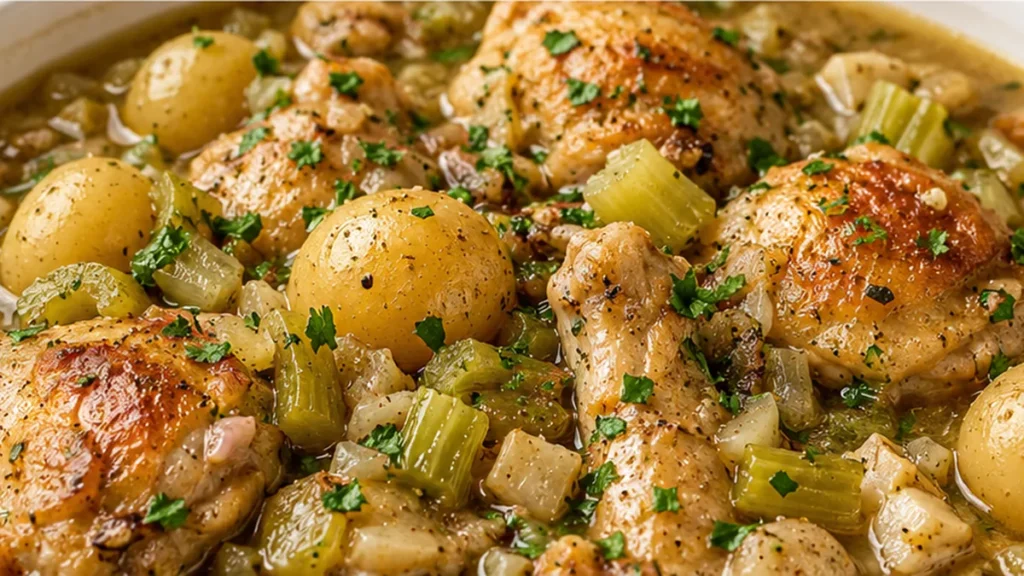
This chicken stew recipe is the ultimate comfort food, perfect for chilly evenings or whenever you need a warm hug in a bowl. It features tender chunks of chicken, soft, yielding potatoes, and a medley of classic vegetables simmered in a rich, savory broth that’s thickened to perfection. Unlike many stews that require hours of simmering, this version is surprisingly quick to prepare, making it ideal for a weeknight meal that tastes like it simmered all day. We’ve focused on building deep flavor from the start by browning the chicken and vegetables, then creating a luscious gravy. It’s a straightforward process that yields incredible results, proving that delicious comfort food doesn’t need to be complicated. This chicken stew is designed for home cooks who want maximum flavor with minimal fuss.
Key takeaways
- Use chicken thighs for moisture and flavor
- Brown the chicken for a rich, savory base
- Sauté aromatics to build depth in flavor
- Incorporate flour to thicken the stew effectively
Comfort Chicken Stew
Ingredients
- 1 yellow onion, diced
- 3 ribs celery, diced
- 4 cloves garlic, minced
- ½ lb carrots, sliced
- 1 ¾ lbs. chicken thighs, cut into 1-inch pieces
- 4 tbsp all-purpose flour, divided
- 2 tbsp butter
- 1 tbsp olive oil
- 1 ½ lbs. baby potatoes, cut in half
- 1 tsp dried parsley
Instructions
- Prepare all your ingredients: dice the onion and celery, mince the garlic, slice the carrots, and cut the baby potatoes in half.
- In a bowl, sprinkle 2 Tbsp of all-purpose flour over the chicken pieces and toss until evenly coated.
- Heat 2 Tbsp butter and 1 Tbsp olive oil in a large pot over medium heat until shimmering.
- Add the flour-coated chicken to the pot and let it brown on all sides without stirring too much.
- Add the diced onion, celery, minced garlic, and sliced carrots to the pot. Sauté until the vegetables begin to soften.
- Stir in the remaining 2 Tbsp of all-purpose flour and sauté for about two minutes.
- Gradually whisk in 6-8 cups of chicken broth until smooth. Bring to a simmer.
- Return the browned chicken to the pot along with the cubed potatoes. Stir well and cook until tender.
Notes
Choosing the Right Chicken for Stew
The choice of chicken is crucial for achieving a rich and flavorful chicken stew. Chicken thighs are preferred over breasts due to their higher fat content, which adds moisture and tenderness. For this recipe, using 1¾ lbs. of chicken thighs, cut into 1-inch pieces, ensures even cooking and maximum flavor absorption.
The Importance of Browning Ingredients
To develop deep, complex flavors, browning the chicken is essential. This process, known as the Maillard reaction, occurs when proteins and sugars are exposed to heat, creating a savory crust. Heat the olive oil and butter in a large pot over medium-high heat before adding the chicken. Sear for about 5-7 minutes until golden brown, then remove and set aside. This step not only enhances flavor but also contributes to the stew’s overall color.
Building Flavor with Aromatics
Aromatics are the backbone of any stew. Start by sautéing 1 diced yellow onion, 3 diced celery ribs, and 4 minced garlic cloves in the remaining fat in the pot after browning the chicken. Cook until softened, about 5 minutes. This process releases essential oils and flavors that will permeate the entire stew. Additionally, adding ½ lb. of sliced carrots at this stage introduces natural sweetness.
Thickening the Stew Properly
To achieve a perfectly thickened stew, the use of flour is key. After browning the chicken and sautéing the vegetables, sprinkle 4 tablespoons of all-purpose flour over the mixture. Stir well to combine and cook for 2-3 minutes to remove the raw flour taste. This creates a roux that will help thicken the stew as it simmers. Gradually add liquid, ensuring it integrates smoothly without lumps.
Final Cooking and Flavor Enhancements
After adding the chicken back to the pot along with 1½ lbs. of halved baby potatoes and enough liquid to cover, bring the stew to a boil. Reduce heat to low and simmer for 30-40 minutes, or until the chicken is tender and the potatoes are cooked through. Finish with 1 teaspoon of dried parsley for a touch of freshness. This step enhances the aroma and presentation of the dish, making it comforting and inviting.
How to Store Chicken Stew for Future Enjoyment
Chicken stew can be stored effectively to maintain its flavor and texture. Allow the stew to cool completely at room temperature before transferring it to airtight containers. Refrigerate for up to 3-4 days. For longer storage, freeze the stew in portions, ideally within 2 hours of cooking. It can be kept in the freezer for up to 3 months. When reheating, ensure the internal temperature reaches 165°F (74°C) to ensure food safety. Note that potatoes may become slightly softer when reheated, but the overall flavor will remain intact.
Scaling Your Chicken Stew Recipe Without Compromising Flavor
When scaling your chicken stew recipe, keep the ingredient ratios consistent to maintain the dish’s flavor profile. For instance, if doubling the recipe, use 3.5 lbs of chicken thighs and adjust the seasonings proportionally. Cooking time may vary slightly; larger batches might require an additional 10-15 minutes of simmering to ensure the chicken is thoroughly cooked. It’s crucial to monitor the stew’s consistency; add more broth or water if it becomes too thick. This ensures that the stew remains rich and flavorful.
Choosing the Right Equipment for Perfect Stew
The choice of cooking equipment can significantly impact the outcome of your chicken stew. A heavy-bottomed pot or Dutch oven is ideal, as it provides even heat distribution, preventing hot spots that can cause uneven cooking. If using a slow cooker, adjust the cooking time to 6-8 hours on low for tender chicken. For pressure cooking, reduce the cooking time to about 15-20 minutes. Regardless of the equipment, ensure there’s enough liquid to cover the ingredients, as this is essential for proper braising.
How Seasonal Ingredients Affect Your Chicken Stew
Using seasonal ingredients can elevate the quality of your chicken stew. In winter, root vegetables like carrots and potatoes are at their peak, providing richness and heartiness. In contrast, using summer vegetables like zucchini or bell peppers can lighten the dish. Fresh herbs can also enhance the flavor; consider adding fresh parsley or thyme instead of dried, adjusting the quantity to avoid overpowering the stew. Quality of ingredients affects flavor; fresher ingredients yield a more vibrant and delicious stew.
Understanding the Impact of Ingredient Quality on Chicken Stew
The quality of your ingredients significantly influences the final flavor and texture of your chicken stew. Fresh, high-quality chicken thighs, for instance, provide a richer taste and more tender texture compared to lower-quality options. When selecting vegetables, aim for vibrant, firm produce. For example, fresh baby potatoes should feel smooth and firm, while carrots should be crisp and not limp. The moisture content in fresh vegetables can also impact the stew’s consistency; drier vegetables may require additional broth. Additionally, using homemade broth instead of store-bought can elevate the dish, offering a depth of flavor that pre-packaged varieties often lack. The balance of fresh herbs, like parsley, adds a finishing touch that can brighten the overall dish.
How to Adjust Cooking Time for Different Quantities
When scaling your chicken stew recipe, it’s essential to adjust your cooking time appropriately to ensure even cooking. For example, if you double the recipe, the initial browning of the chicken and vegetables may take longer, but the simmering time could remain similar. A larger pot may also require more time to reach the desired simmering temperature. As a rule of thumb, increase the simmering time by about 10-15 minutes for every additional pound of chicken added. Always check for doneness by ensuring the chicken reaches an internal temperature of 165°F (74°C) and that the vegetables are tender. This ensures that all ingredients meld perfectly, creating a harmonious stew.
Serving Suggestions to Enhance Your Chicken Stew Experience
The way you serve chicken stew can transform the dining experience. Consider pairing the stew with crusty bread for dipping, which complements the hearty nature of the dish. Additionally, a side salad with a light vinaigrette can provide a refreshing contrast to the richness of the stew. For a more substantial meal, serve the stew over a bed of fluffy rice or creamy mashed potatoes, allowing the flavors to meld. Garnishing with fresh parsley not only adds a pop of color but also enhances the dish’s aroma. Pairing with a light white wine or a crisp cider can also elevate the meal, balancing the savory flavors of the stew with a refreshing finish.
How to Prepare Chicken Stew in Advance for Optimal Flavor
Making chicken stew ahead of time can significantly enhance its flavor. The key is to allow the stew to cool completely before refrigerating it. This allows the flavors to meld together, creating a more robust taste. Store the stew in an airtight container for up to three days. When reheating, do so gently over low heat to prevent the chicken from becoming tough. A slow reheat helps retain moisture and keeps the ingredients tender. If you plan to freeze your chicken stew, allow it to cool, then portion it into freezer-safe bags or containers. It can be frozen for up to three months. When ready to eat, thaw it in the refrigerator overnight and reheat on the stove.
Understanding the Role of Cooking Equipment in Chicken Stew Preparation
The type of cookware you use can greatly impact the final result of your chicken stew. A heavy-bottomed pot or Dutch oven is ideal as it provides even heat distribution, preventing hot spots that can scorch the ingredients. If using a non-stick pot, you may need to adjust the amount of oil or butter used to ensure proper browning. Additionally, a lid is essential for retaining moisture during simmering; without it, the stew may reduce too quickly, leading to a dry texture. When selecting your equipment, consider the size of your pot. A larger pot allows for better evaporation and flavor concentration, while a smaller pot can result in a denser stew. The choice of equipment can affect cooking times as well; for instance, a pressure cooker will significantly reduce cooking time but may alter the texture of the chicken.
Pro tips
- Browning the chicken and vegetables is key for developing deep flavor. Don’t skip this step!
- Use a good quality chicken broth for the best taste. Vegetable broth can also be used for a lighter flavor profile.
- For an extra creamy stew, stir in a splash of heavy cream or milk at the end, just before serving.
- This stew freezes well. Let it cool completely, then store in airtight containers for up to 3 months.
Enjoy this deeply satisfying chicken stew, a truly comforting meal that’s simple to make and a joy to eat. Serve it piping hot!
Frequently asked questions
Can I use chicken breasts instead of thighs?
Yes, but chicken breasts may result in a drier stew since they have less fat. If using breasts, consider adding extra broth or a splash of cream for moisture.
How can I make my stew thicker?
If your stew is too thin, you can mix 1-2 tablespoons of flour or cornstarch with a bit of cold water to create a slurry, then stir it into the stew and simmer until thickened.
What can I substitute for baby potatoes?
You can use diced regular potatoes or sweet potatoes. However, keep in mind that sweet potatoes will add a different flavor profile and may cook faster, so adjust your cooking time accordingly.
How long can I store leftover chicken stew?
Leftover chicken stew can be stored in an airtight container in the refrigerator for up to 3-4 days. It can also be frozen for up to 3 months, but the texture may change slightly upon thawing.
More from High-Protein Dinners →